Retaining Wall Contractor in Pittsburgh, PA
Retaining Wall Pittsburgh Pros builds and repairs retaining walls across Allegheny County. Block, poured concrete, natural stone and timber. Free on-site estimates, and a straight answer on whether your wall needs repair or replacement.
- Retaining Wall Repair
- Residential & Commercial
- Drainange and Water Proofing
- 200+ Five-Star Reviews
Walls Built for Pittsburgh Hillsides, Not Flat Ground
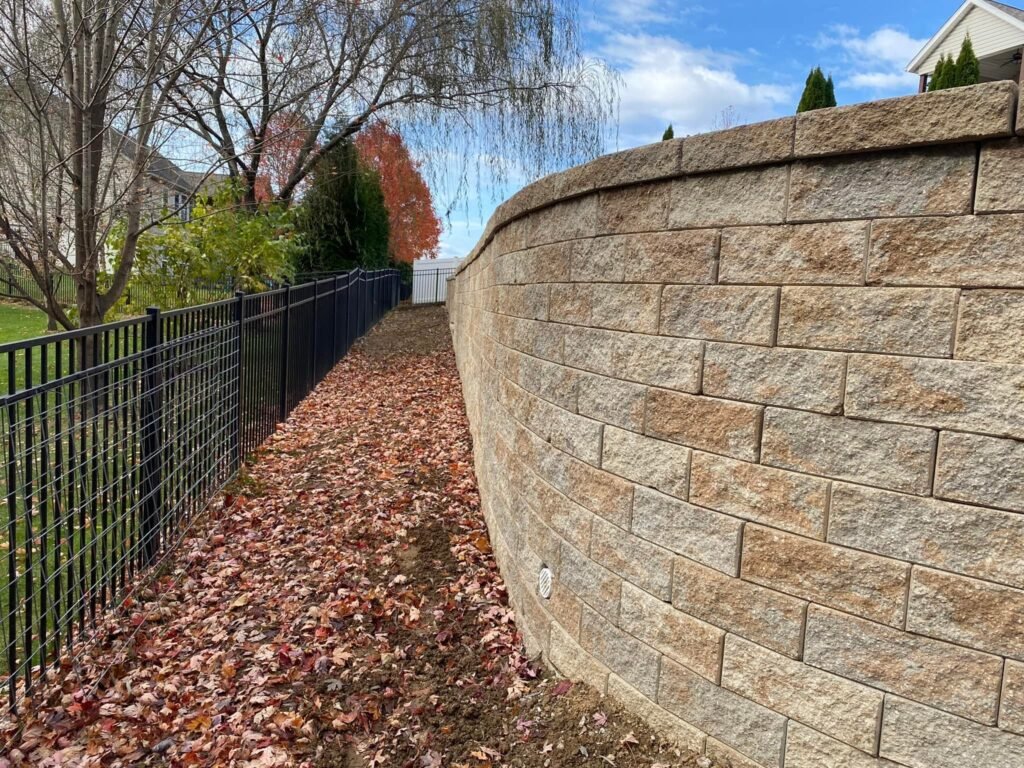
Pittsburgh sits on some of the steepest residential terrain in the country. Half the properties in the South Hills and North Hills are cut into a slope, and the walls holding those cuts back are doing structural work every single day. When one starts to lean, it is not a landscaping problem. It is a load problem.
That is the difference between a landscaper who sometimes stacks block and a retaining wall contractor. Anyone can lay a course of block. Getting a wall to survive twenty Pittsburgh freeze-thaw cycles takes a compacted base, the right drainage stone, geotextile behind the wall, and a drain line that actually exits somewhere. Skip any one of those and the wall fails, usually in year four or five.
We build walls that account for the water. In this climate water is what kills a wall, and it is the part nobody wants to pay for because you cannot see it once the job is done.
Our Retaining Wall Services
Retaining Wall Repair
Leaning, bulging, cracked or separating walls. We diagnose the cause before quoting a fix, because rebuilding a wall that failed from a drainage problem just buys you five more years. See our retaining wall repair service.
Retaining Wall Installation
New walls for terracing, driveways, patios and slope cuts. Engineered base, proper backfill, drainage built in from the first course. More on new wall installation.
Block & Segmental Walls
Versa-Lok, Allan Block, Keystone and Techo-Bloc systems. The most common wall in Pittsburgh and the most commonly built wrong. Block retaining wall options.
Concrete Retaining Walls
Poured, reinforced and CMU walls for taller cuts and structural applications where segmental block is not enough. Concrete wall details.
Timber & Railroad Tie Walls
Pittsburgh is full of railroad tie walls built in the 1970s and 80s. Most are now rotting from the bottom up. We replace them. Timber wall replacement.
Natural Stone & Boulder Walls
Dry-stack stone, armour stone and boulder walls where the wall is part of the landscape, not just holding it up. Stone wall work.
Drainage & Wall Waterproofing
French drains, weep systems, geotextile and regrading. The part behind the wall that determines whether it lasts. Retaining wall drainage.
Wall Anchors & Slope Stabilization
Helical anchors, geogrid reinforcement and hillside stabilization for properties on moving ground. Slope stabilization.
Commercial Retaining Walls
Parking lots, access drives, multi-unit properties and light commercial sites. Commercial wall projects.
Recent Retaining Wall Projects
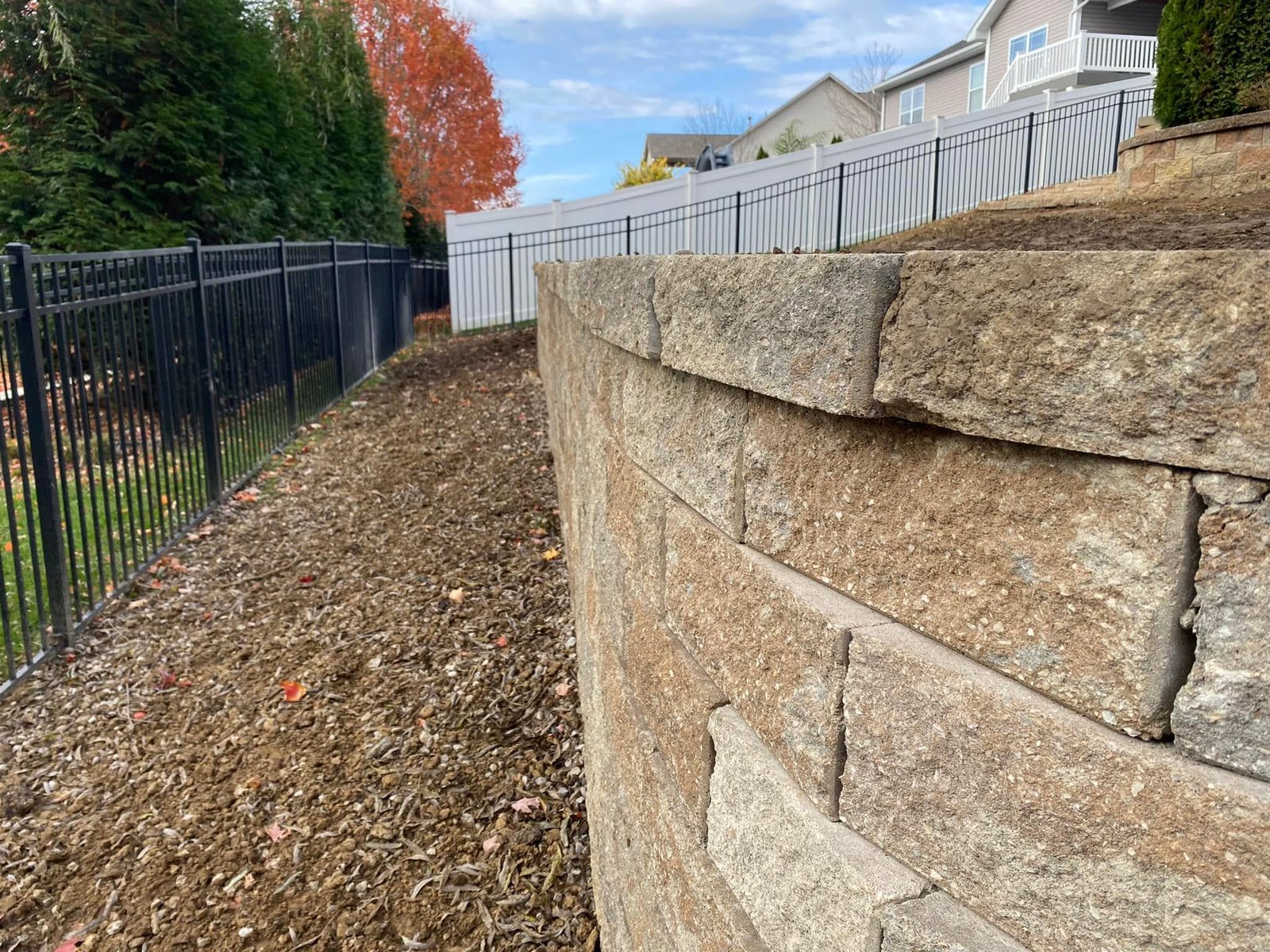
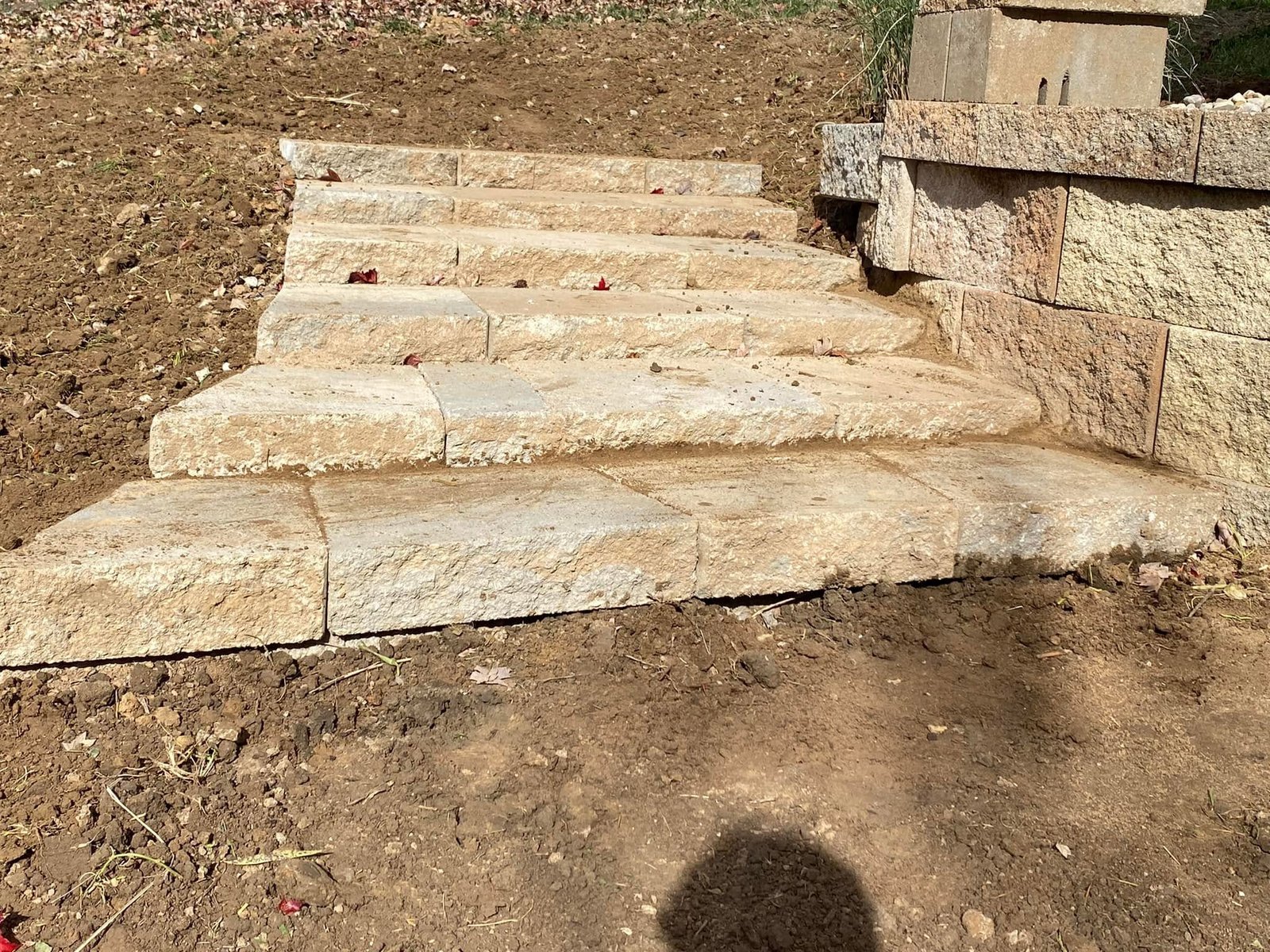
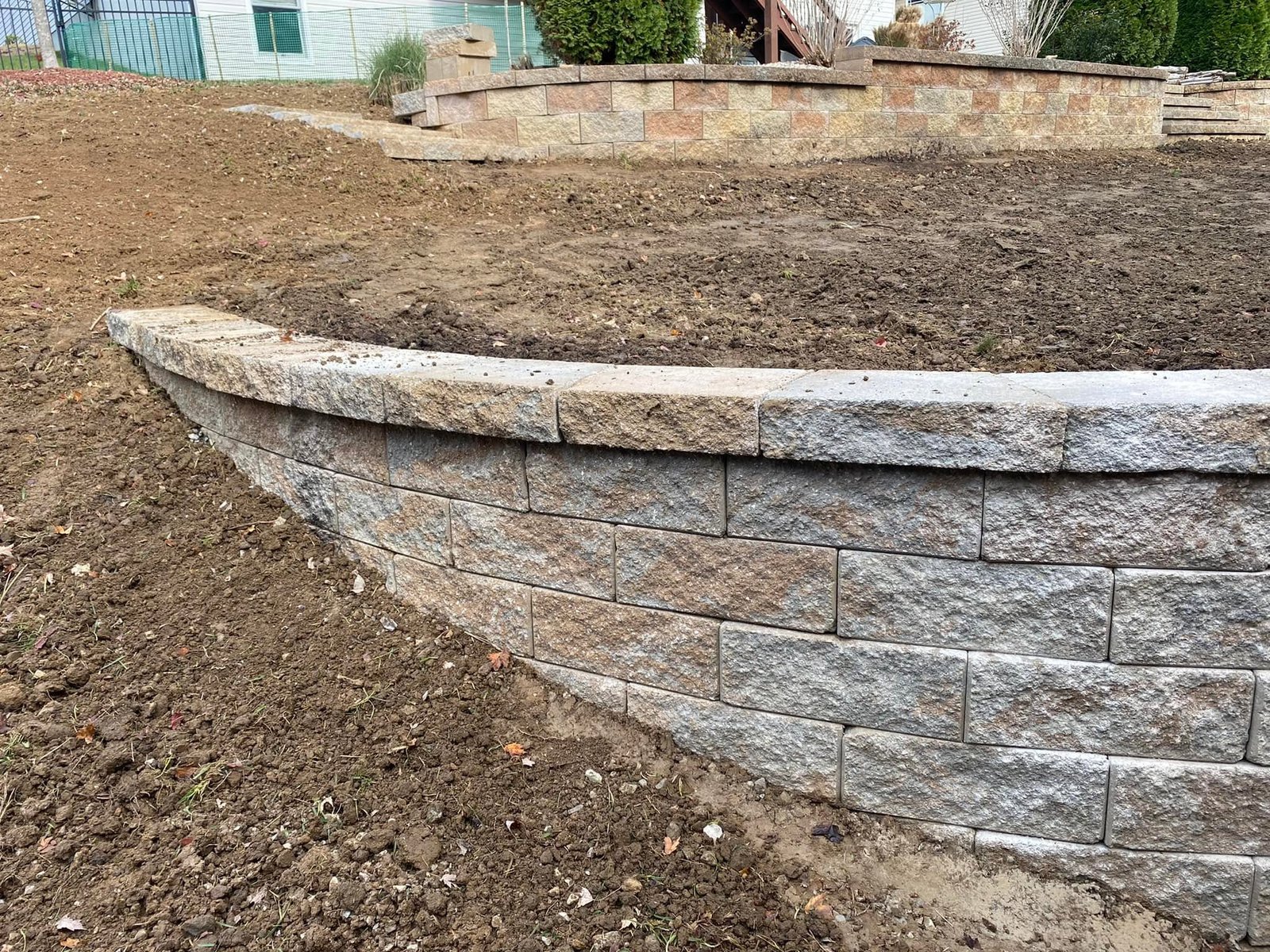
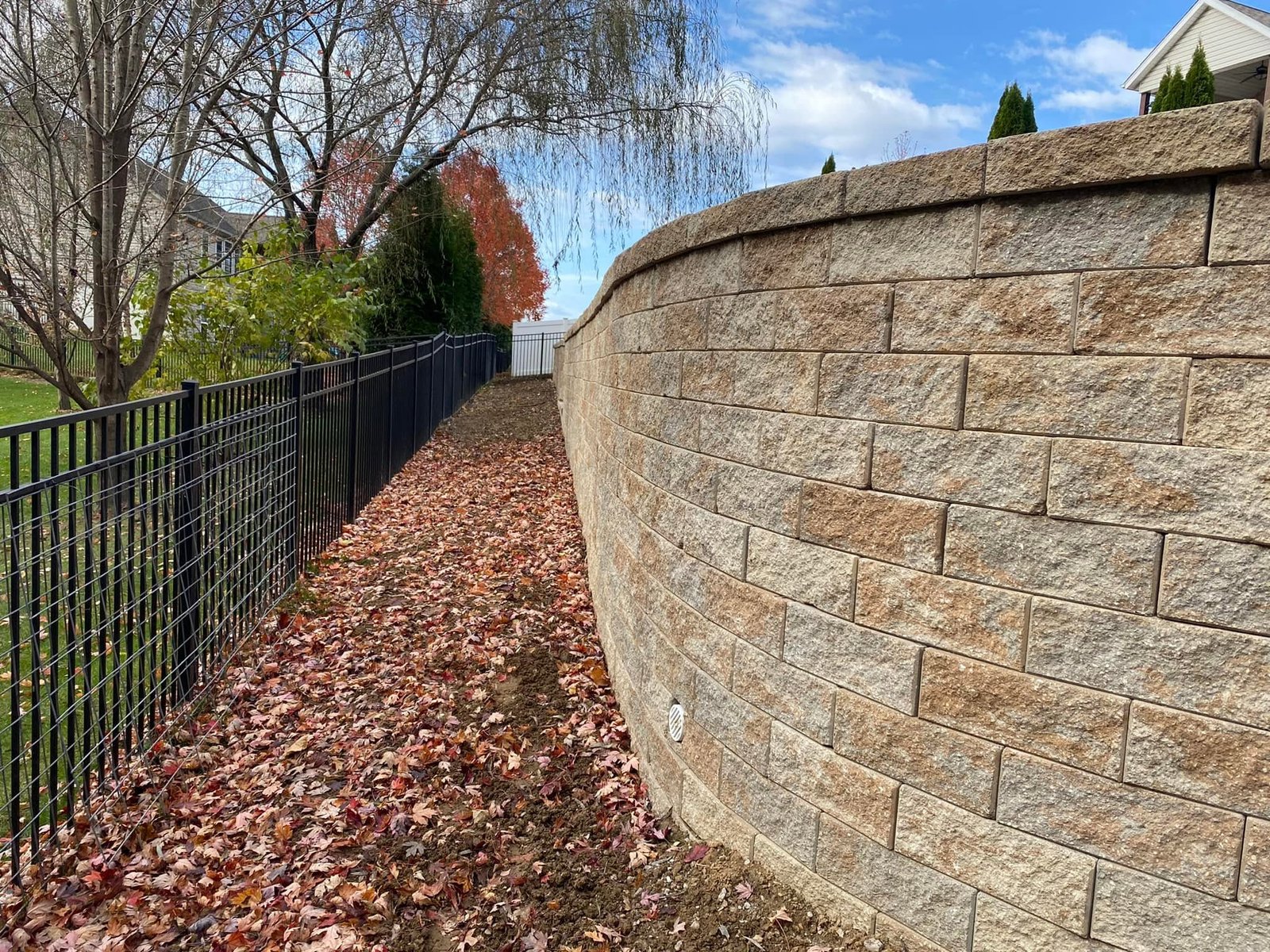
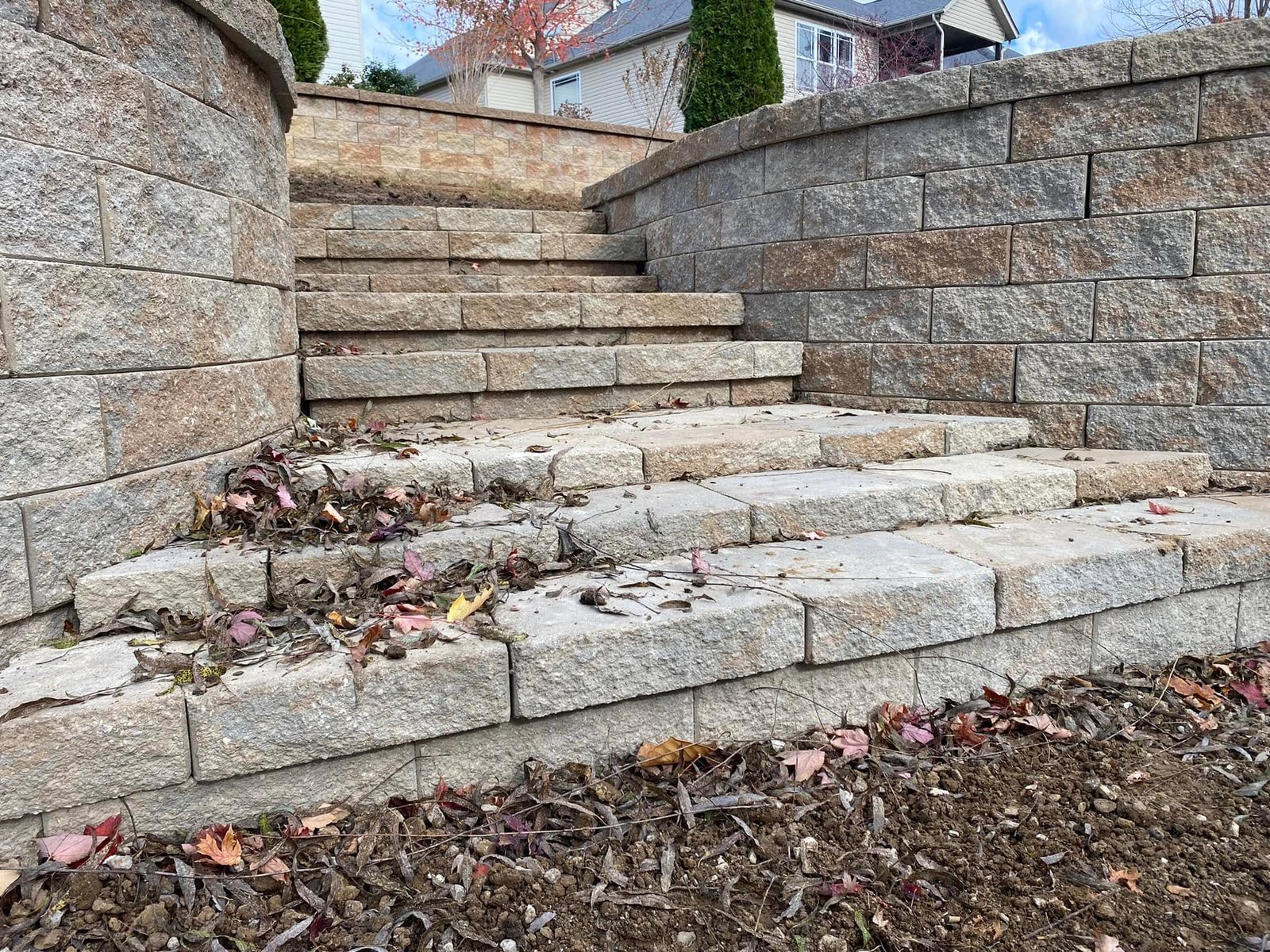
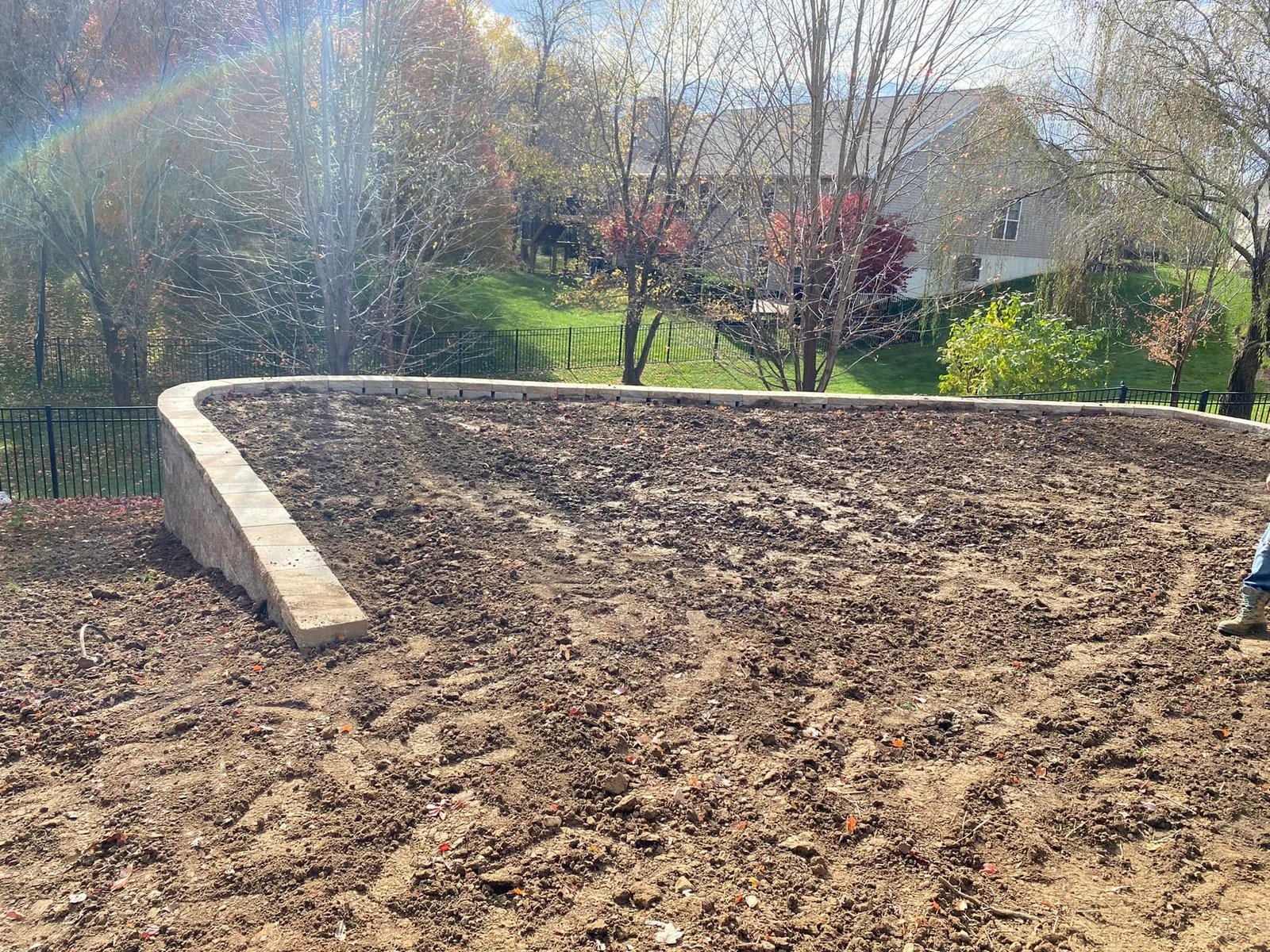
Block walls, terraced steps, seat walls and curved garden walls built across the Pittsburgh area.
Signs Your Wall Needs Attention Now
Walls rarely fail overnight. They give you warning for a year or two first. Call us if you are seeing any of these:
- The wall is leaning outward at the top, or bowing in the middle
- Blocks or ties are separating, sliding forward, or stepping out of line
- Cracks running vertically or in a stair-step pattern
- Soil, mulch or gravel washing out from behind or through the wall
- Water pooling at the base after rain, or seeping through the face
- The ground above the wall is sinking, or a fence line above it has tilted
- Timber ties that are soft, splitting, or crumbling at the soil line
A wall that has moved two inches can usually be repaired. One that has moved a foot usually cannot. The gap between those two states is often a single winter, which is why we tell people not to wait for spring to get it looked at.
How We Work
1. Site visit and assessment
We come out, look at the wall and the ground above and below it, and work out what is actually causing the problem. Drainage, base failure, height without reinforcement, or simple age.
2. Written estimate
A clear scope with the wall type, height, materials and drainage detail spelled out. If a repair will hold, we say so. If it will not, we say that too.
3. Permits and engineering where required
In Pennsylvania, walls over four feet generally need engineered drawings and a permit. We flag this before work starts, not after.
4. Excavation and base
Dig out, compact the base, and set the first course level. This is the step that determines whether the wall is still straight in fifteen years.
5. Build, drain and backfill
Course by course, with drainage stone, geotextile and a drain line running to daylight. Then compacted backfill and cleanup.
What Affects the Cost of a Retaining Wall
Nobody can quote a retaining wall over the phone honestly. What changes the number:
- Height. Past four feet the wall needs engineering and reinforcement, and the price per square foot climbs sharply.
- Material. Timber is cheapest up front and shortest lived. Segmental block sits in the middle. Poured concrete and natural stone are the top end.
- Access. A backyard a skid steer can reach costs a fraction of one where everything moves by wheelbarrow. This is a real factor on tight city lots.
- Drainage work. If there is no way to get water away from the wall, that has to be solved first.
- Removal. Tearing out a failed railroad tie or block wall adds disposal and labour before the new wall starts.
We give you the number in writing after seeing the site, with the drainage detail included rather than added later as a change order.
Areas We Serve Around Pittsburgh
Frequently Asked Questions
Do I need a permit for a retaining wall in Allegheny County?
In Pennsylvania, retaining walls over four feet in height generally require a permit and engineered drawings stamped by a licensed engineer. Individual municipalities set their own thresholds and some are stricter, so we confirm with your borough or township before starting. Walls under four feet usually do not need one.
Can a leaning retaining wall be repaired, or does it need replacing?
It depends on how far it has moved and why. A wall that has shifted an inch or two from a drainage problem can often be corrected by fixing the drainage and resetting the affected courses. A wall that is significantly out of plumb, or whose base has failed, generally needs rebuilding. We assess before quoting.
How long does a retaining wall last in Pittsburgh?
A properly built segmental block or concrete wall with working drainage should last thirty to fifty years here. Timber and railroad tie walls typically last fifteen to twenty. The variable is almost never the material, it is whether water can get away from behind the wall through our freeze-thaw winters.
What time of year can retaining walls be built?
We build from roughly March through late November. Once the ground freezes, excavation and base compaction cannot be done properly, so winter work is generally limited to assessment and planning. Spring books up quickly, so if you know you need a wall, getting on the schedule in winter is worth doing.
Why is my retaining wall bulging in the middle?
Bulging almost always means water pressure behind the wall. When drainage stone or the drain line is missing or clogged, saturated soil pushes outward with far more force than the wall was designed to hold. Fixing the face without fixing the drainage will not solve it.
Do you provide free estimates?
Yes. We come to the property, assess the wall and the surrounding grade, and provide a written estimate at no cost. There is no charge and no obligation for the visit.
Get Your Retaining Wall Looked At
Free on-site estimate anywhere in the Pittsburgh area. Call Retaining Wall Pittsburgh Pros and we will tell you straight whether it needs repair, rebuilding, or nothing at all yet.
Call (412) 484-3358