Retaining Wall Drainage & Waterproofing in Pittsburgh, PA
Retaining wall drainage Pittsburgh walls actually need: French drains, weep systems, geotextile and regrading. Water is what kills retaining walls in this climate, and drainage is the part that decides whether a wall lasts five years or fifty.
- Retaining Wall Repair
- Residential & Commercial
- Drainange and Water Proofing
- 200+ Five-Star Reviews
Why Drainage Is the Whole Ballgame in Pittsburgh
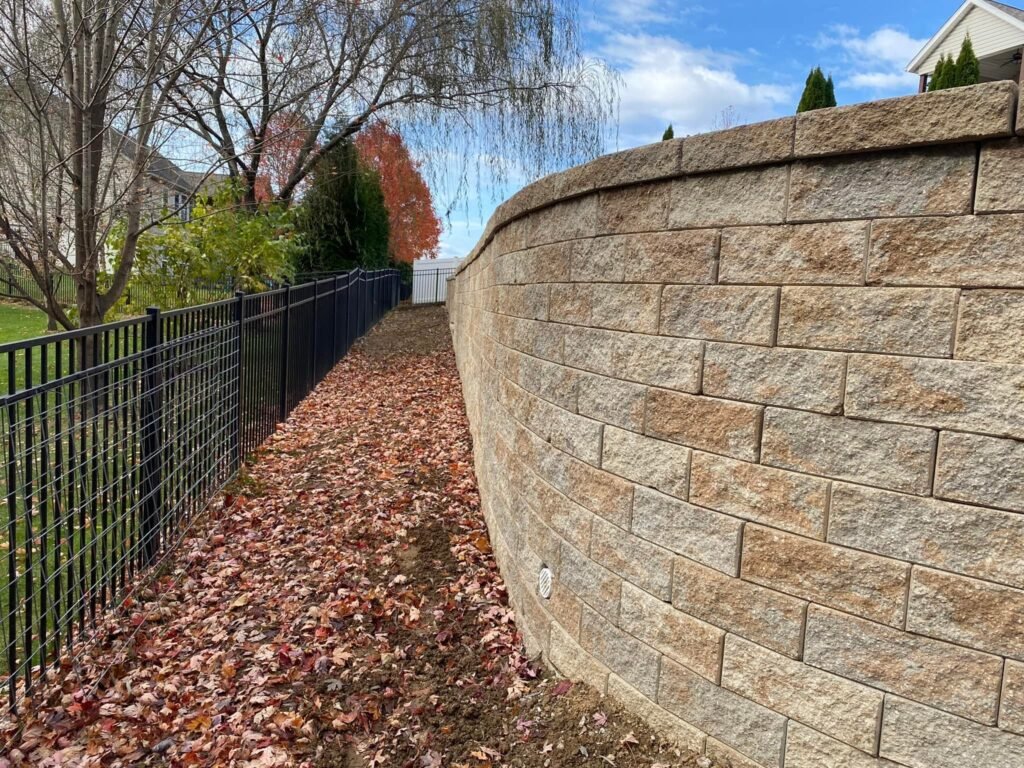
Almost every failed retaining wall we are called to look at failed because of water. Not because the blocks were wrong, not because it was built too tall, and not because it wore out. Water got behind it and had nowhere to go.
Here is the mechanism. Dry soil is heavy. Saturated soil is far heavier, and it behaves more like a liquid, pushing outward against the back of the wall with several times the force the wall was designed to resist. That alone will move a wall over time.
Then Pittsburgh winter arrives. The saturated soil freezes, water expands as it turns to ice, and it drives the wall outward. It thaws, the soil settles into the new position, and the wall does not come back. Repeat that through fifteen or twenty winters and a wall that was plumb when it was built is now two inches out and moving faster each year.
This is why we quote drainage as part of every wall rather than as an optional extra, and why a repair that resets the face without fixing the water is money spent twice.
Recent Retaining Wall Projects
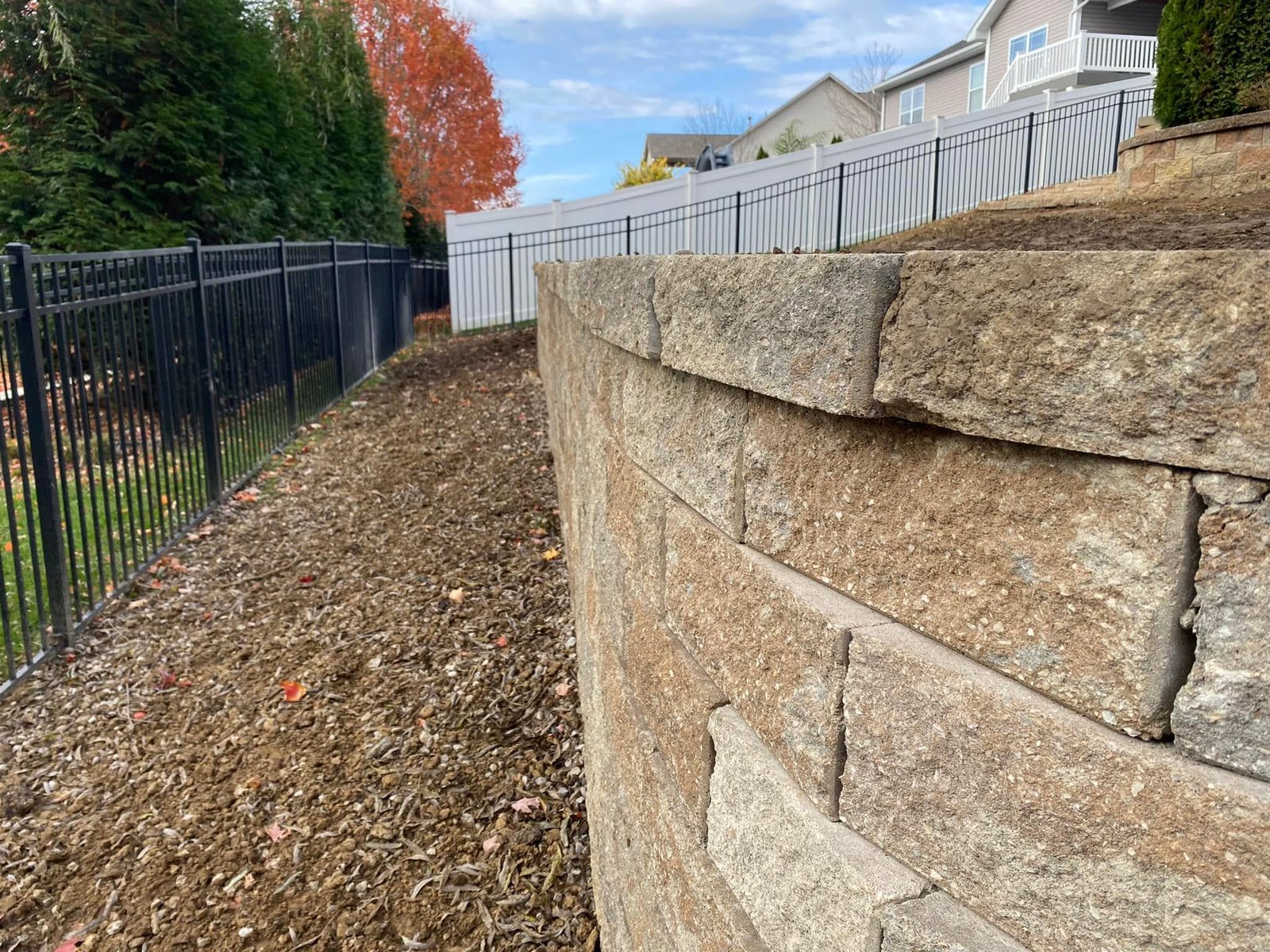
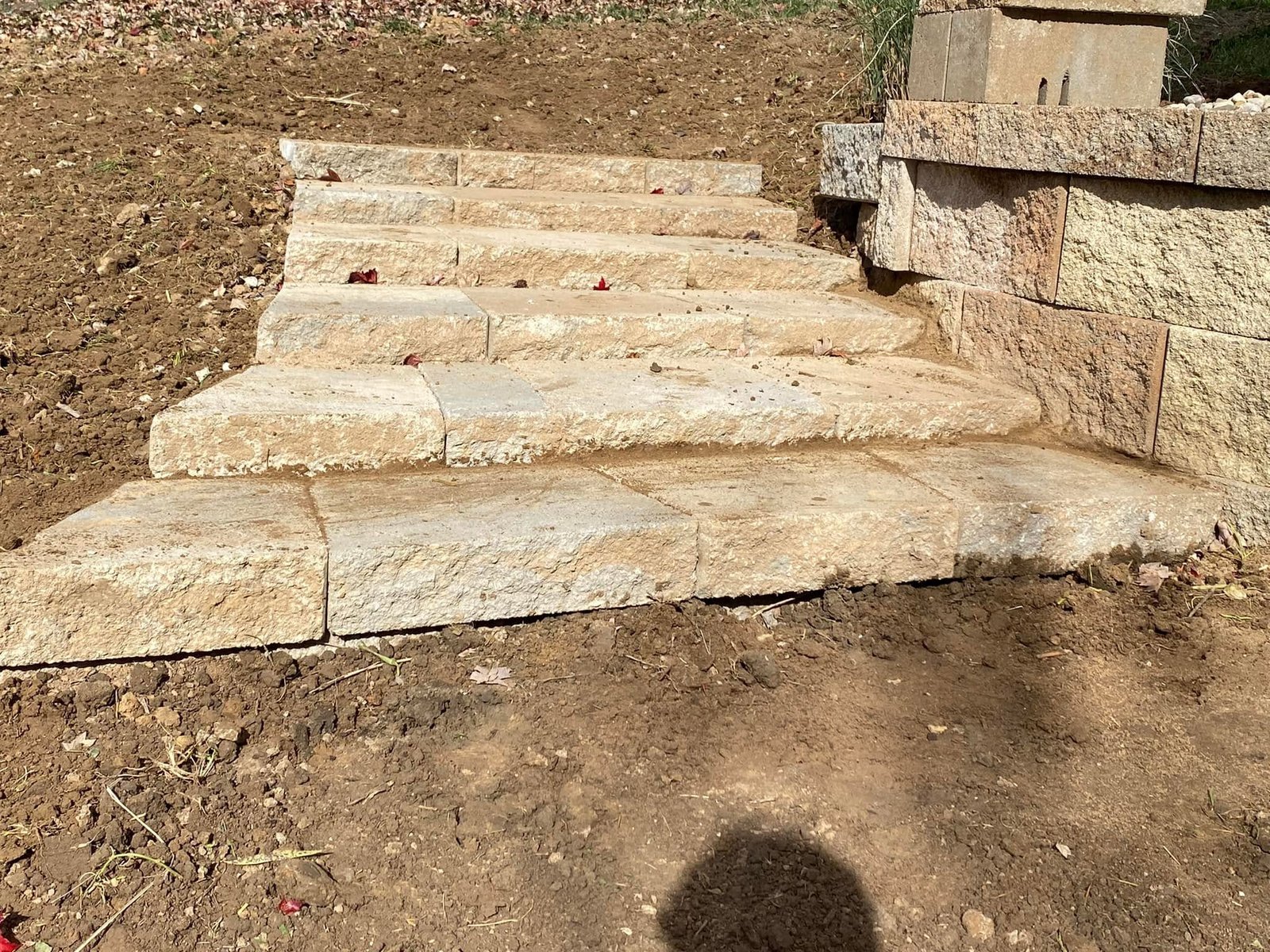
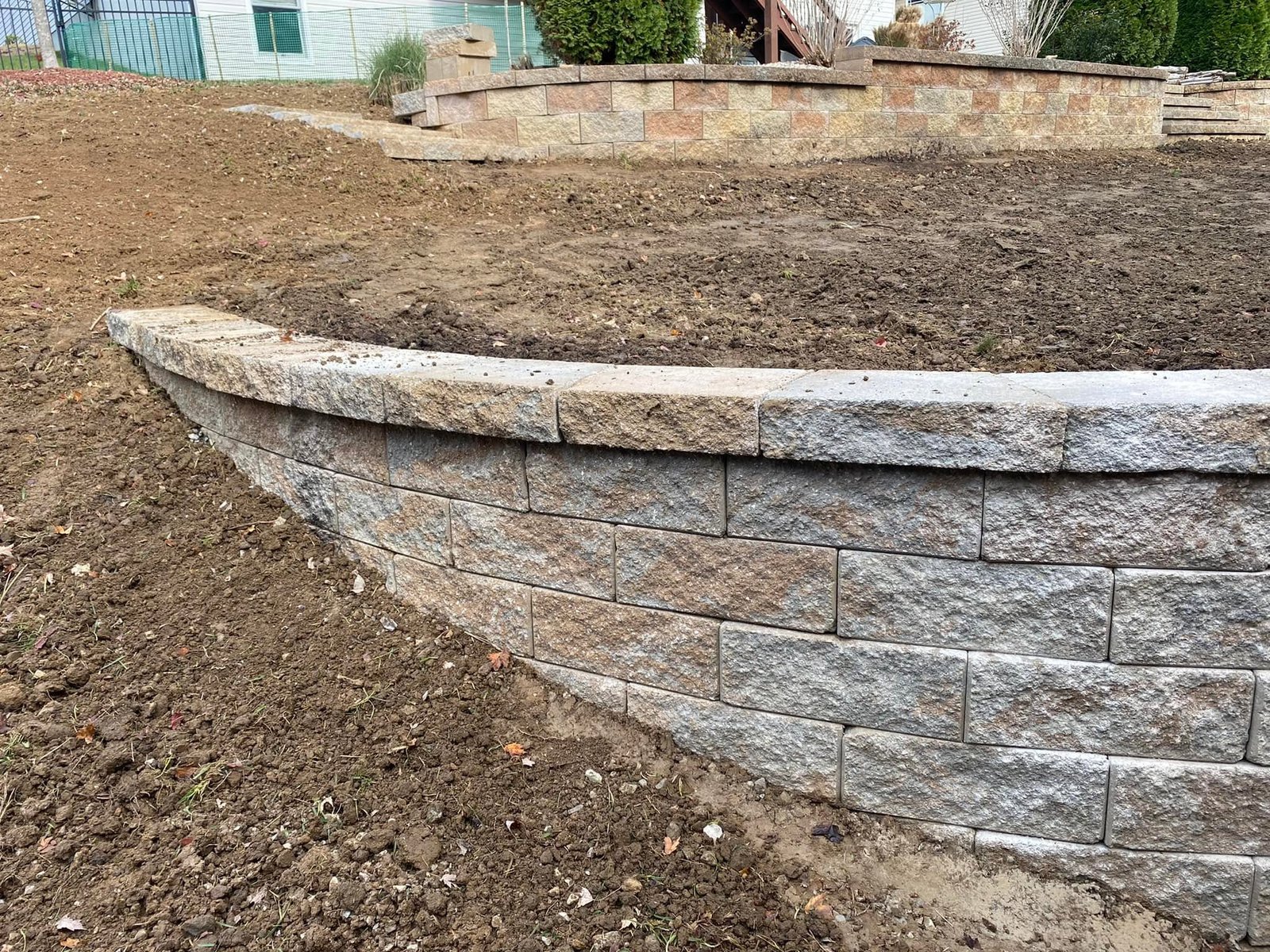
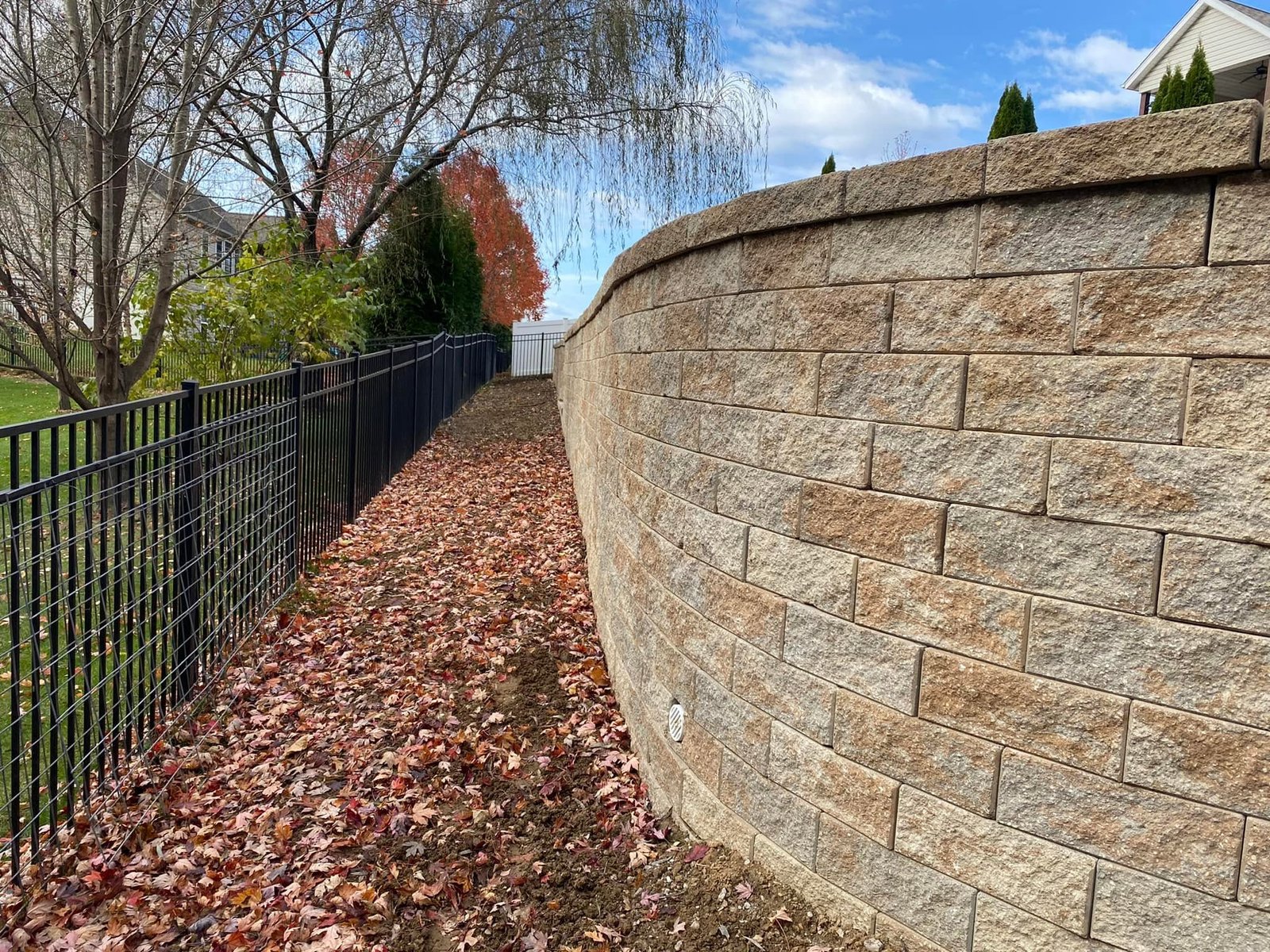
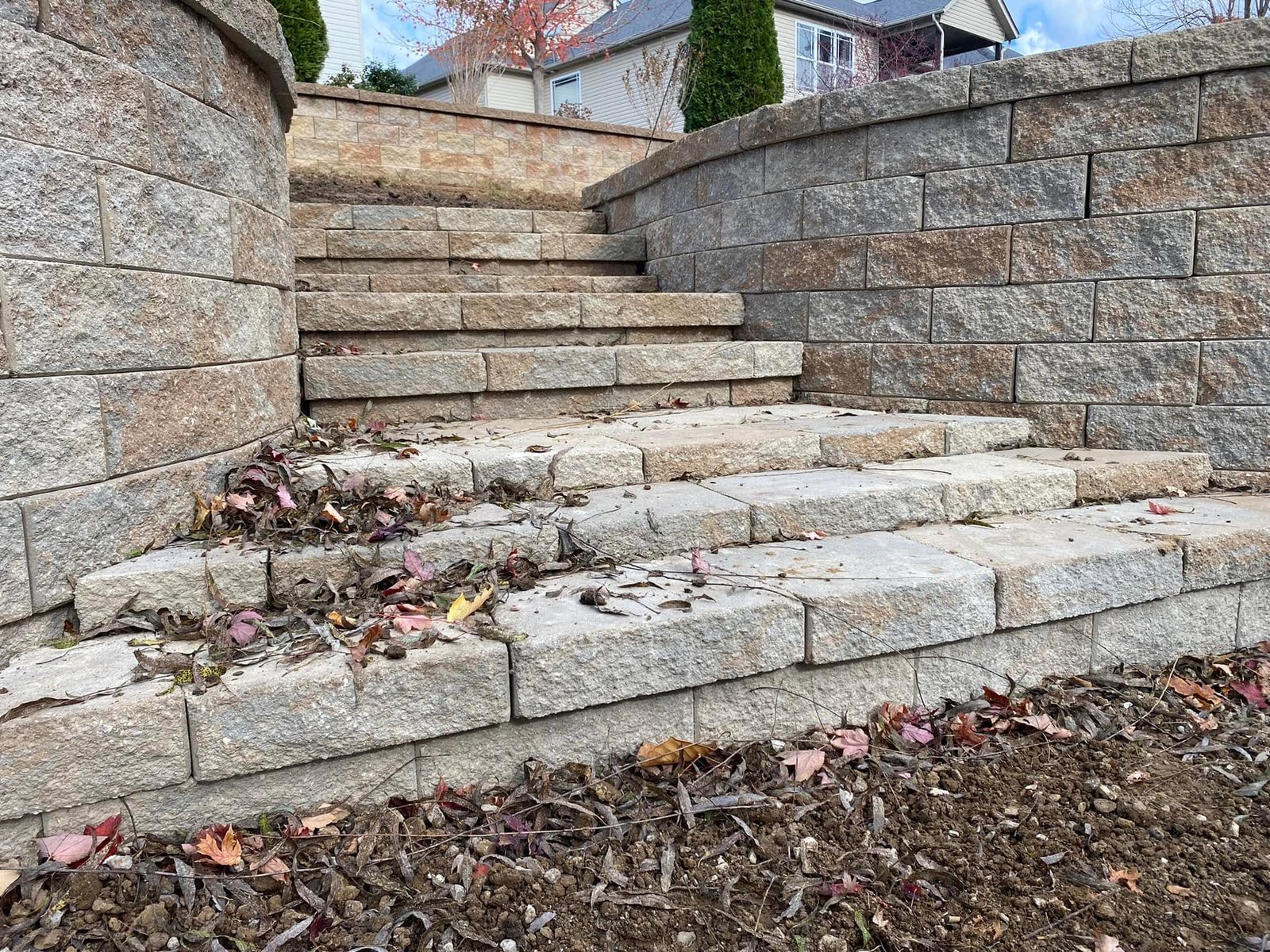
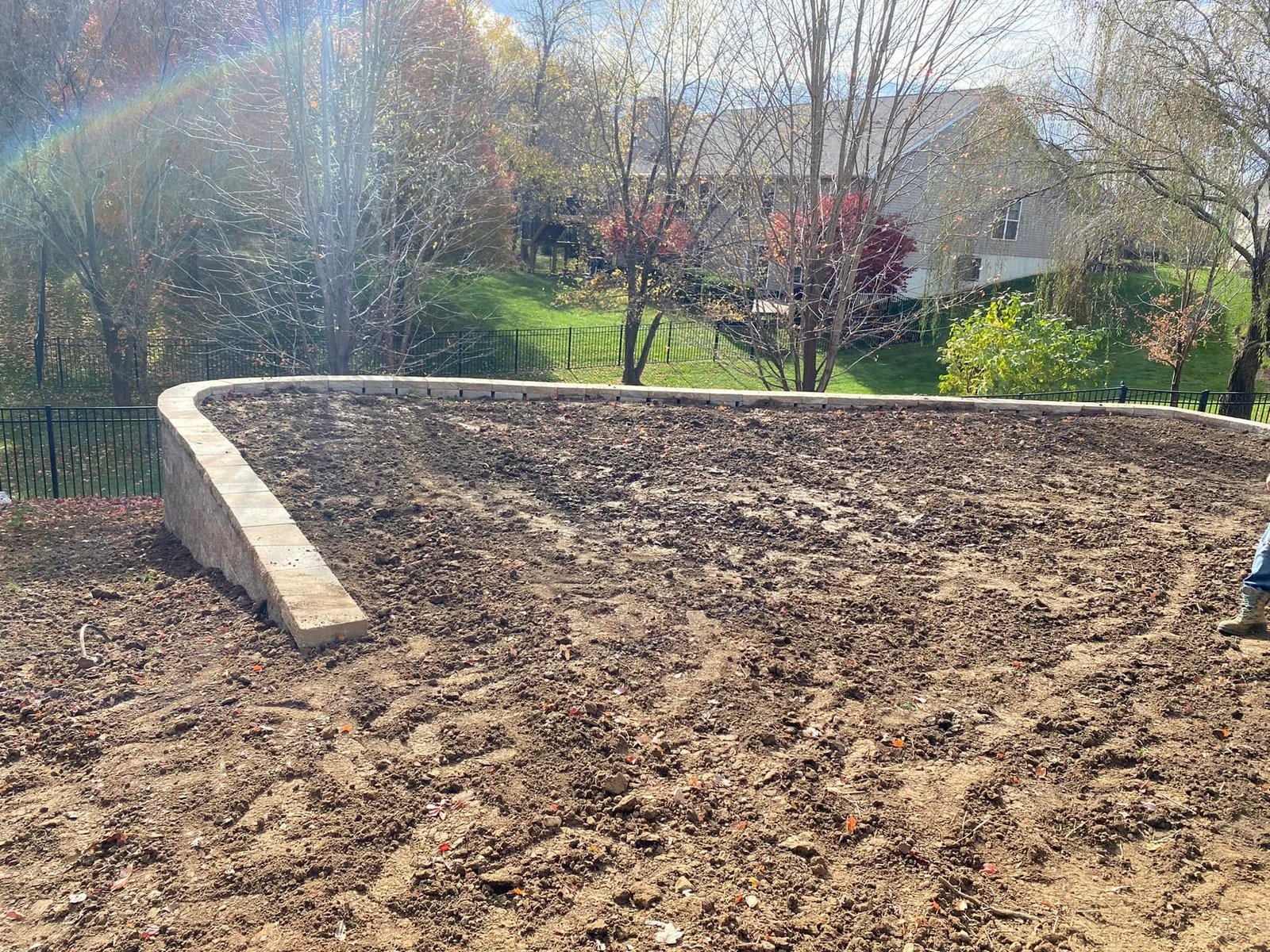
Block walls, terraced steps, seat walls and curved garden walls built across the Pittsburgh area.
What Proper Retaining Wall Drainage Looks Like
- Clean drainage stone behind the wall, typically twelve inches minimum of washed angular aggregate, not backfilled soil and not rounded pea gravel.
- Geotextile fabric separating that stone from the surrounding soil, so fine particles do not migrate in and clog the voids over time.
- A perforated drain line at the base, set in the drainage stone, sloped, and run to a point where water can actually discharge.
- A real outlet. A drain pipe that terminates in the middle of the backfill is decoration. It has to reach daylight, a swale, or a storm connection.
- Weep holes through the face on concrete and mortared walls, as a secondary path.
- Grading above the wall that moves surface water away rather than concentrating it at the top of the wall.
- Downspouts routed away. A single downspout discharging behind a retaining wall will destroy it faster than anything else on this list.
Drainage Services We Provide
- Drainage retrofit on existing walls. Excavating behind a wall that never had proper drainage, installing stone, fabric and a drain line, and backfilling correctly. Often stops movement without rebuilding the wall.
- French drain installation. Perforated pipe in a stone-filled trench, wrapped in fabric, intercepting water before it reaches the wall or the house.
- Downspout rerouting. Getting roof water away from the wall and the foundation, underground where it needs to be.
- Yard drainage and regrading. Correcting slopes that direct water into a wall or a low spot.
- Waterproofing membrane on the back face of concrete and CMU walls, protecting the concrete itself from constant saturation.
- Weep hole installation on existing walls where retrofitting full drainage is not practical.
- Catch basins and drain outlets, where surface water needs collecting and directing.
Signs Your Wall Has a Drainage Problem
Any of these on a wall that is also moving means drainage is the cause, not a coincidence. See retaining wall repair.
- Water seeping or weeping through the wall face after rain
- Water pooling at the base of the wall, or ground that stays soft there
- Efflorescence, the white powdery deposit on block or concrete, which means water is passing through
- The wall bulging in the middle while holding at the ends
- Soil or mulch washing out from behind or through the wall
- Ground above the wall staying saturated long after rain elsewhere has drained
- Moss or algae growth on the wall face
- A downspout discharging anywhere near the top of the wall
Retrofitting Drainage Without Rebuilding the Wall
This is one of the more useful things we do, and few contractors offer it as a service in its own right.
Where a wall is structurally sound but moving because water has nowhere to go, we can often excavate behind it, install the drainage that should have been there, and backfill properly, without dismantling the wall face. On segmental block walls this frequently arrests the movement completely, and it costs a fraction of a rebuild.
It is not always possible. Very tall walls, restricted access, or a wall that has already moved too far will need proper repair or replacement instead. But it is always the first thing we assess, because when it works it is by far the best outcome for the property owner.
Areas We Serve Around Pittsburgh
Related Services
- Wall already moving: retaining wall repair.
- New wall with drainage built in from the first course: retaining wall installation.
- Ground moving as well as the wall: wall anchors and slope stabilization.
Frequently Asked Questions
Do all retaining walls need drainage?
Effectively yes. Dry-stack stone walls drain through their own face and need less behind them, but every other wall type needs drainage stone, geotextile separation and a drain line to daylight. Undrained walls in a freeze-thaw climate are the single most common failure we are called to fix.
What is a French drain behind a retaining wall?
A perforated pipe laid in a trench of clean stone, wrapped in geotextile fabric, running along the base behind the wall and sloped toward an outlet. It collects water in the backfill and carries it away before it can build pressure against the wall.
Can drainage be added to an existing retaining wall?
Often yes. Where the wall is structurally sound, we can excavate behind it, install drainage stone, fabric and a drain line, and backfill correctly without taking the face down. On block walls this frequently stops movement at a fraction of the cost of rebuilding.
Why is water coming through my retaining wall?
Because it has no better route. Water always finds the path of least resistance, and if the drainage stone or drain line behind the wall is missing, crushed or clogged, the wall face becomes that path. Seepage through the face is a symptom of failed drainage, not of a porous wall.
Where should a retaining wall drain pipe discharge?
Somewhere the water can leave, at a lower elevation than the pipe. Daylight on a slope, a swale, a dry well, or a storm connection where permitted. What it must not do is terminate inside the backfill or discharge against a foundation or a neighbouring property.
How much does retaining wall drainage cost?
It depends on length, depth, access and whether the wall face has to come down to reach the back. Retrofit drainage on a sound wall is usually a fraction of the cost of rebuilding it, which is why we assess for that option first. We quote it in writing after seeing the site.
Get a Free Drainage & Wall Waterproofing Quote in Pittsburgh
Free on-site assessment anywhere in the Pittsburgh area. We will look at the site, tell you what is actually needed, and put the figure in writing.
Call (412) 484-3358