Wall Anchors & Slope Stabilization in Pittsburgh, PA
Among the wall anchor companies Pittsburgh PA property owners can call, we handle helical and plate anchors, geogrid reinforcement, soil nails and hillside stabilization. For walls that are moving and ground that will not stay put.
- Retaining Wall Repair
- Residential & Commercial
- Drainange and Water Proofing
- 200+ Five-Star Reviews
Pittsburgh Sits on Ground That Moves
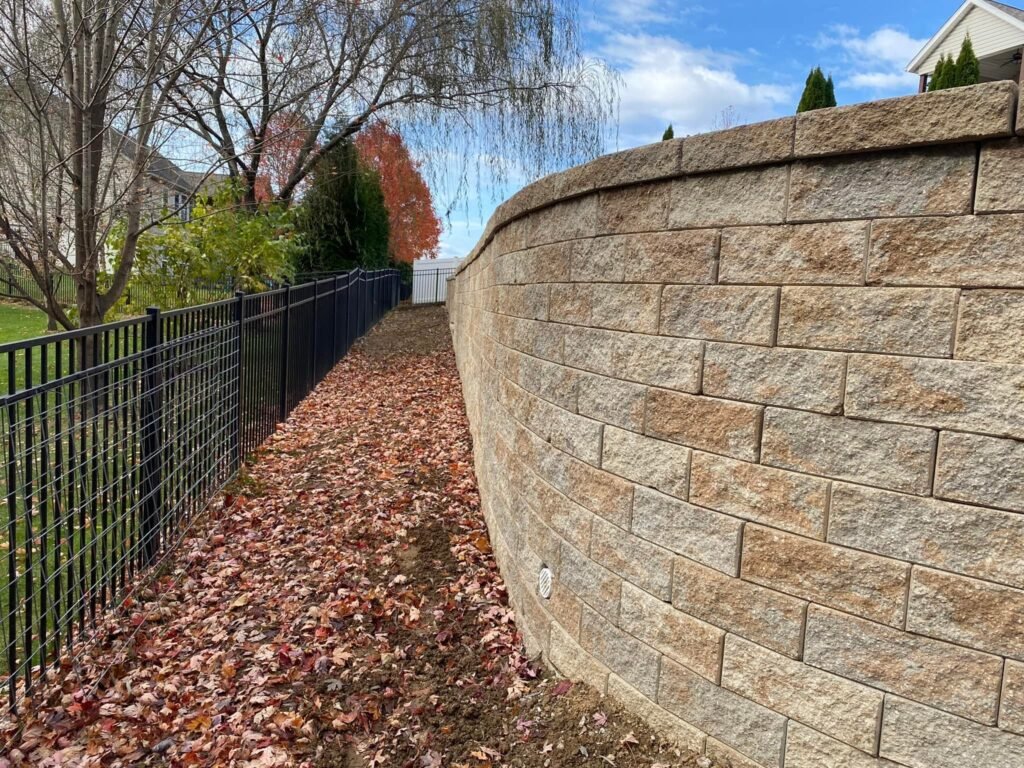
This is not true of most cities. Allegheny County has documented landslide-prone terrain, driven by a specific geology: steep slopes, and layers of clay-rich shale that lose strength dramatically when they get wet. Add heavy rain to a cut slope and the ground can move as a mass, taking whatever is on it along.
Hillside properties across the county deal with the consequences. Ground creep that slowly pushes a wall out. Slope failures after a wet spring. Walls that were built correctly, drained correctly, and are still moving because the problem is not the wall, it is the hill.
That is a different problem from a failed retaining wall, and it needs different solutions. Rebuilding a wall on ground that is sliding just gives you a new wall to watch move.
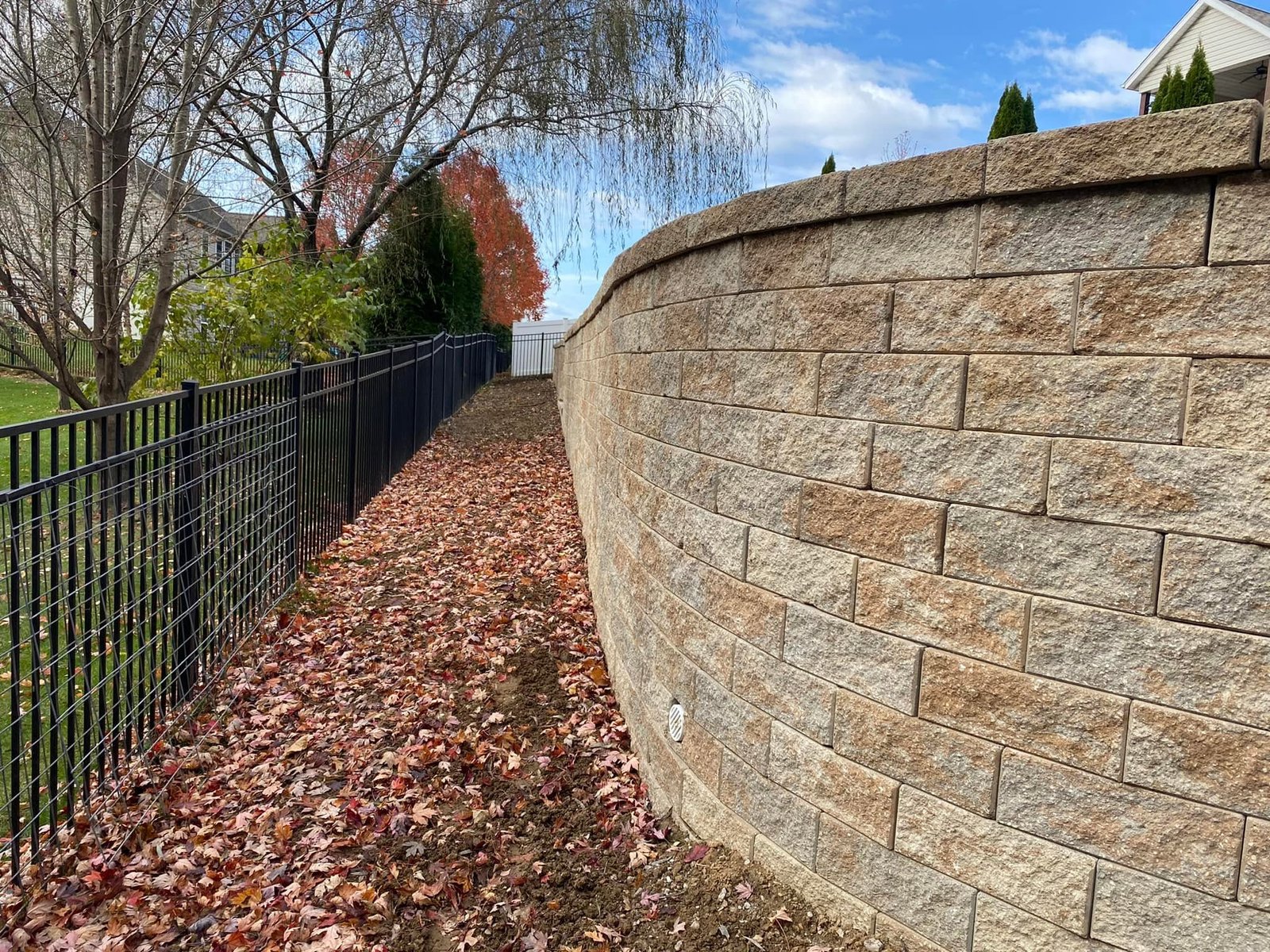
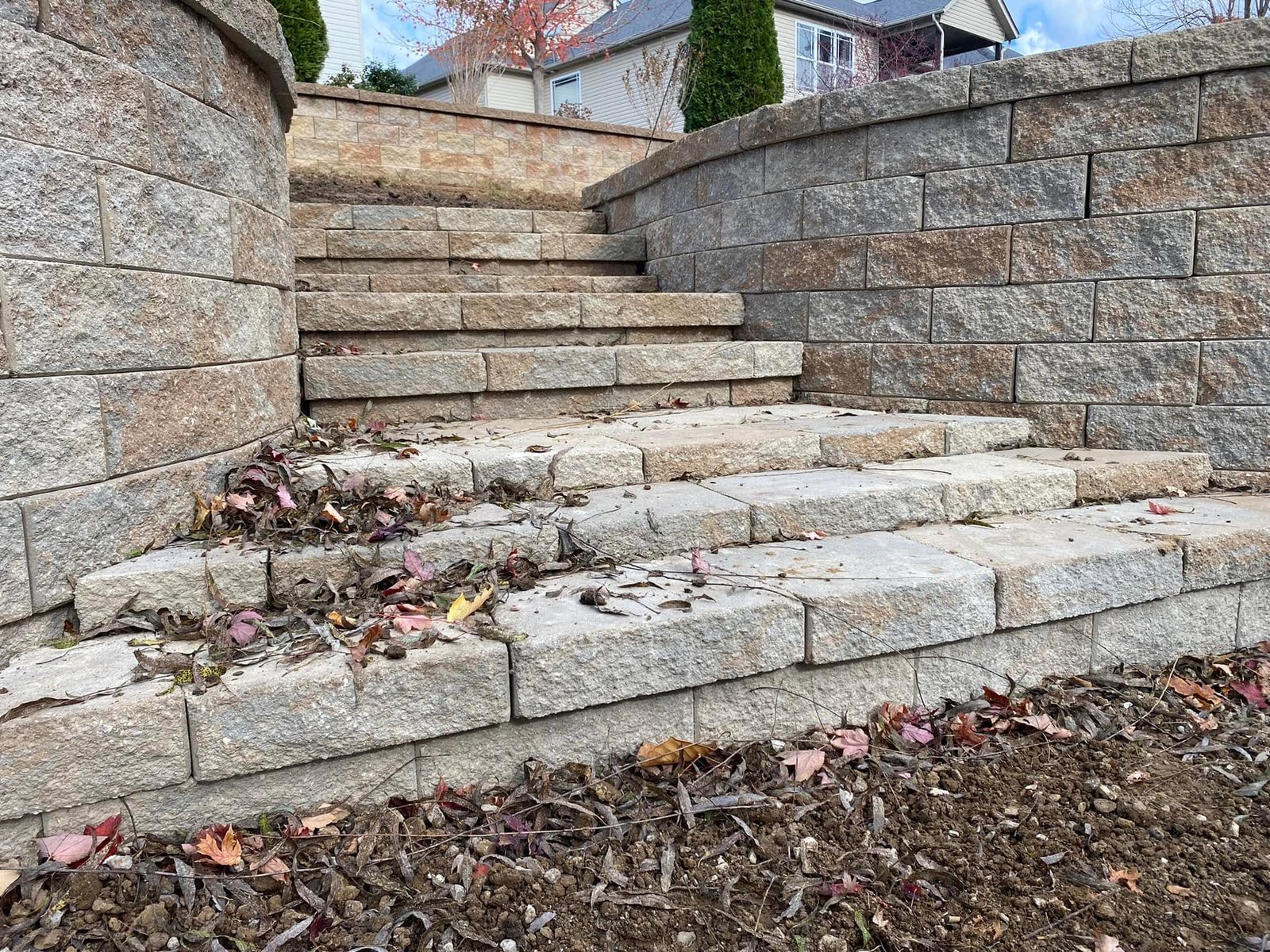
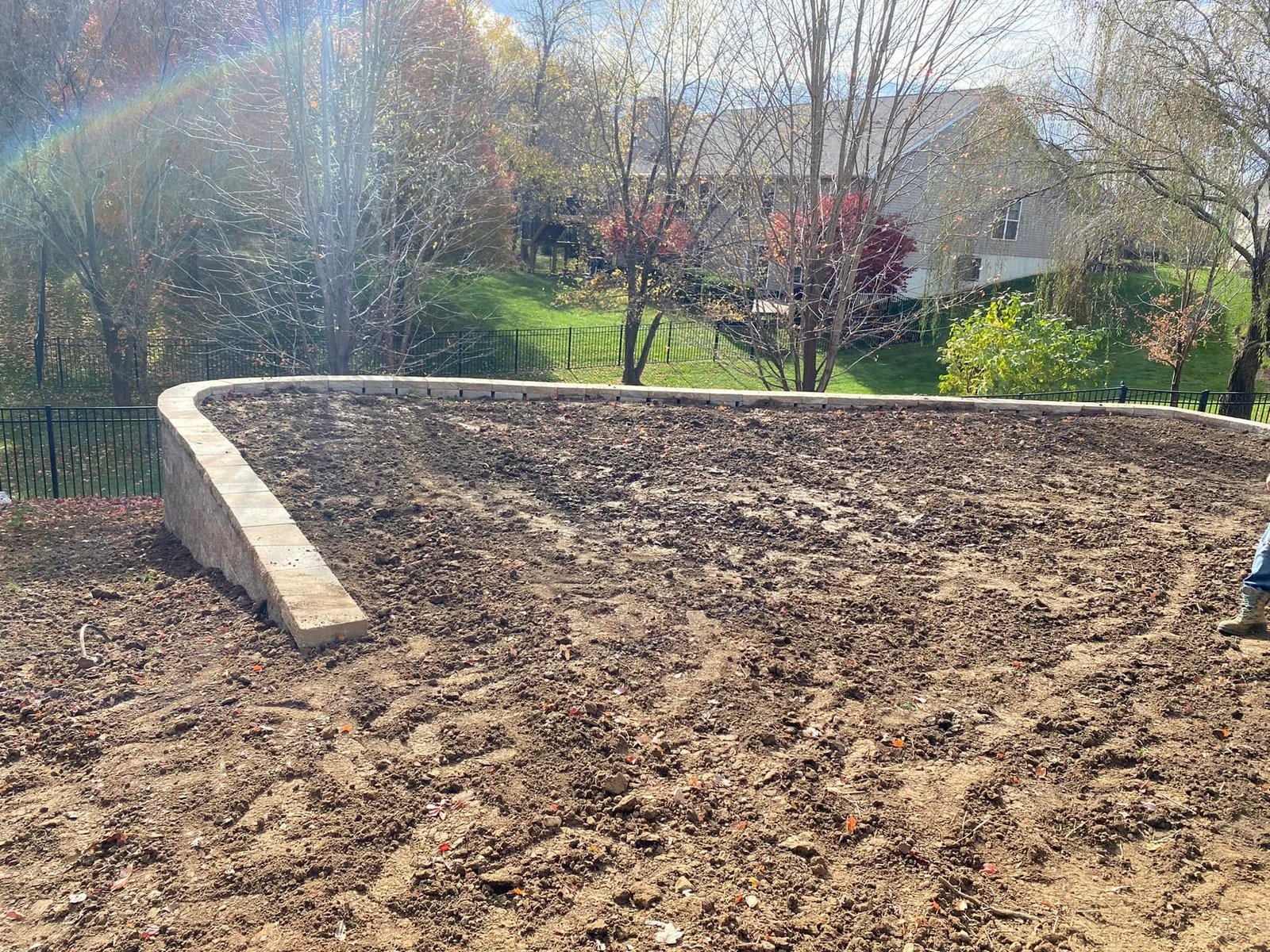
Recent Retaining Wall Projects
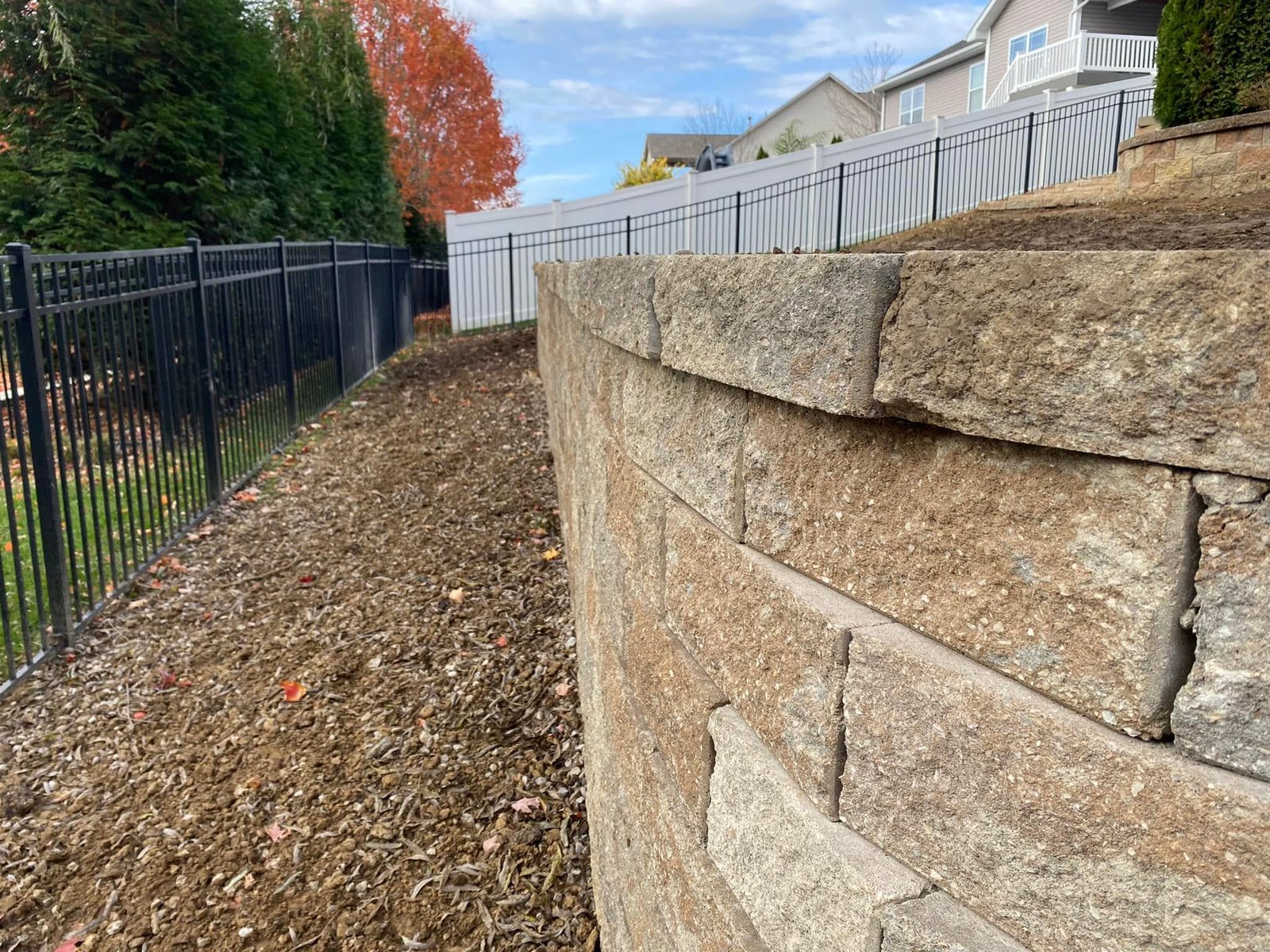
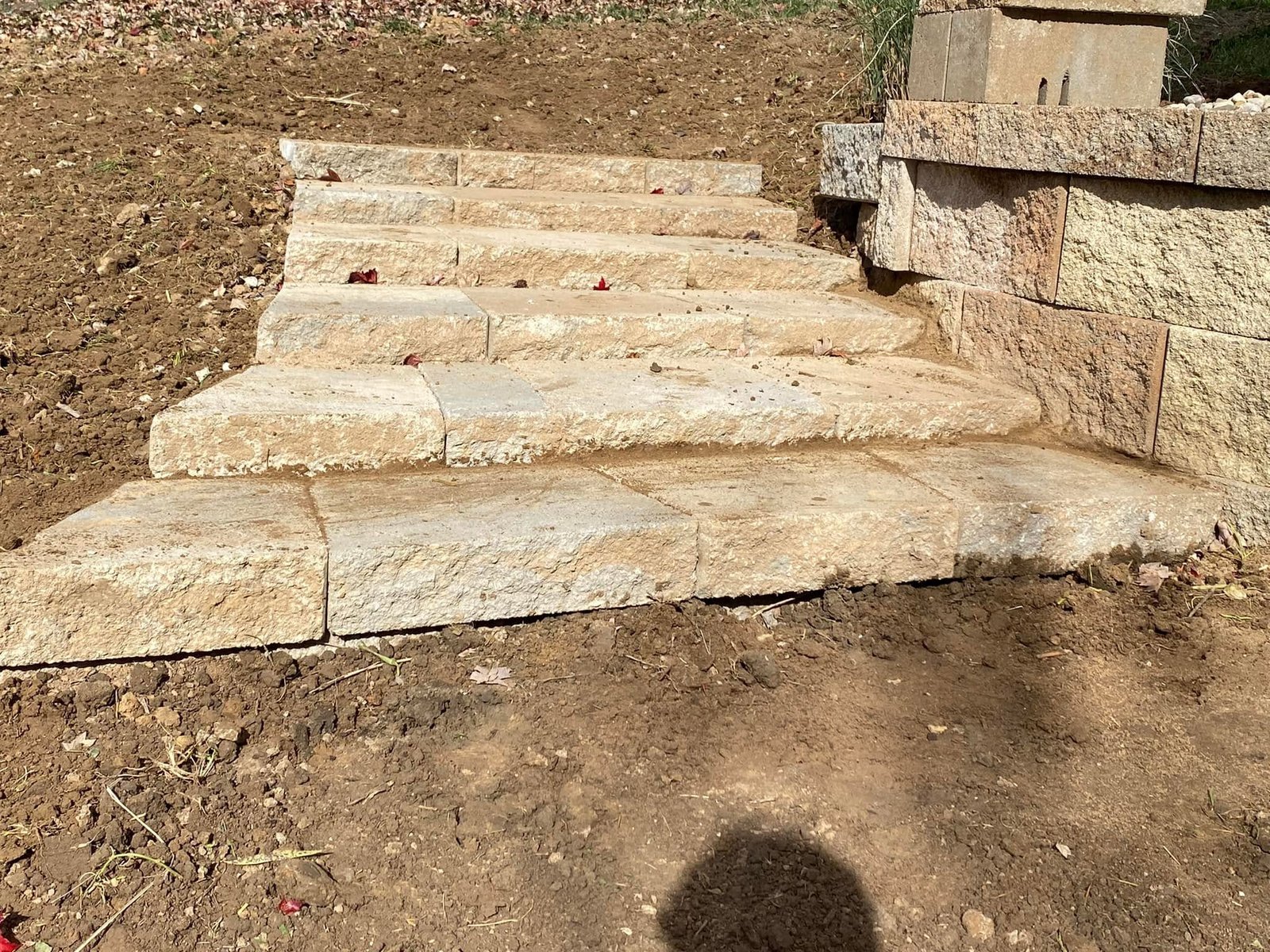
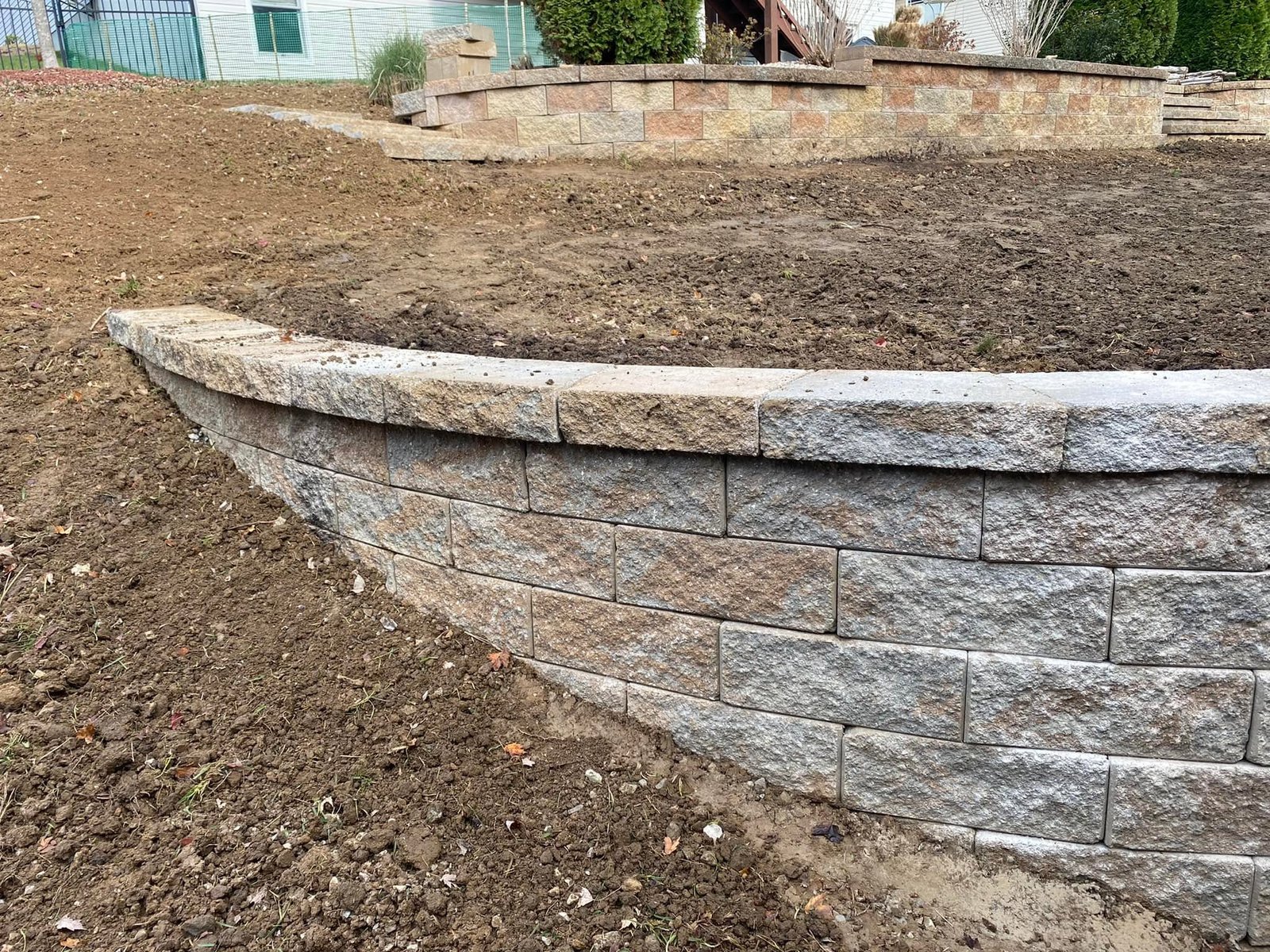
Block walls, terraced steps, seat walls and curved garden walls built across the Pittsburgh area.
Stabilization Methods We Use
- Helical anchors. Steel shafts with helical plates screwed into stable ground behind the failure plane, then tied back to the wall face. Installed with relatively small equipment, so they suit restricted access sites.
- Plate and deadman anchors. Anchor plates set in stable soil behind the wall, connected by tie rods. A long-established method for stabilising walls that are rotating outward.
- Geogrid reinforcement. Layers of high-tensile geosynthetic laid into the backfill at intervals, tying the wall and the retained soil into a single reinforced mass. Standard practice on taller segmental block walls.
- Soil nails. Steel bars grouted into a slope face at intervals, reinforcing the soil mass in place. Used where excavation and rebuilding is not viable.
- Gabion structures. Wire baskets filled with stone. Heavy, free draining and flexible, so they tolerate ground movement that would crack a rigid wall.
- Riprap and erosion control. Armouring slopes and channels where water is the erosive force.
- Engineered regrading. Sometimes the correct answer is to change the slope angle rather than to hold it.
When You Need Stabilization Rather Than Wall Repair
Where several of these are present, rebuilding the wall alone will not solve it. See retaining wall repair for how we tell the two apart on site.
- The wall is moving even though it has working drainage and a sound base
- Ground above or below the wall is cracking, stepping or slumping
- Trees on the slope are leaning, or curved at the base in the direction of movement
- Fence lines, driveways or patios above the wall are cracking or tilting
- Movement accelerates noticeably after heavy rain or snowmelt
- A previous wall was rebuilt on the same spot and has moved again
- Utilities, steps or paths across the slope are pulling apart
Engineering Is Not Optional Here
Slope stabilization is one area where we will not work from judgement on site. Anchor spacing, anchor depth, the location of the failure plane, and the loads involved all come from geotechnical assessment and engineered design.
For significant slope work we coordinate with a licensed engineer, and where the situation warrants it, a geotechnical investigation. That costs money before any construction happens, and we would rather tell you that up front than discover mid-job that we are guessing.
If a contractor offers to stabilise a moving hillside without engineering, that is the point at which to get a second opinion.
Areas We Serve Around Pittsburgh
Related Services
- Wall moving but ground is stable: retaining wall repair.
- Water is usually a factor in slope movement: drainage and wall waterproofing.
- Rebuilding after stabilization: retaining wall installation.
Frequently Asked Questions
What are retaining wall anchors and how do they work?
Anchors are steel elements installed through or behind a wall into stable ground beyond the zone that is moving. They are then tensioned and tied to the wall face, transferring the load from the failing soil into ground that is not moving. It stabilises the wall in place rather than rebuilding it.
What are helical anchors?
Steel shafts with helical plates welded to them, screwed into the ground with hydraulic equipment until they reach load-bearing capacity in stable soil. They install quickly, need relatively small machinery, and can be loaded immediately, which makes them well suited to constrained residential sites.
Is Pittsburgh really landslide prone?
Yes. Allegheny County has well-documented landslide susceptibility, driven by steep slopes combined with clay-rich shale layers that lose strength when saturated. Slope movement affects properties across the county, particularly after heavy or prolonged rainfall.
What is geogrid and when is it needed?
Geogrid is a high-tensile synthetic mesh laid in horizontal layers into the backfill behind a wall. It ties the wall and the retained soil together so they act as a single reinforced mass. It is generally required on segmental block walls above about four feet, and the spacing comes from the engineered design.
How do I know if my slope is moving or just my wall?
The clearest indicators are outside the wall itself. Cracking or stepping in the ground above, trees leaning or curved at the base, driveways and patios pulling apart, and movement that accelerates after heavy rain all point to the slope rather than the wall. We assess both when we visit.
Do I need an engineer for slope stabilization?
For anything beyond minor work, yes. Anchor depth and spacing depend on where the failure plane sits and what loads are involved, and those come from geotechnical assessment rather than experience on site. We coordinate with a licensed engineer on this work as a matter of course.
Get a Free Wall Anchors & Slope Stabilization Quote in Pittsburgh
Free on-site assessment anywhere in the Pittsburgh area. We will look at the site, tell you what is actually needed, and put the figure in writing.
Call (412) 484-3358