Natural Stone & Boulder Retaining Walls in Pittsburgh, PA
Stone retaining walls Pittsburgh properties are built for: dry-stack, armour stone, boulder and veneered, across Allegheny County. Where the wall is part of the landscape, not just holding it up.
- Retaining Wall Repair
- Residential & Commercial
- Drainange and Water Proofing
- 200+ Five-Star Reviews
Stone Walls Are a Different Kind of Project
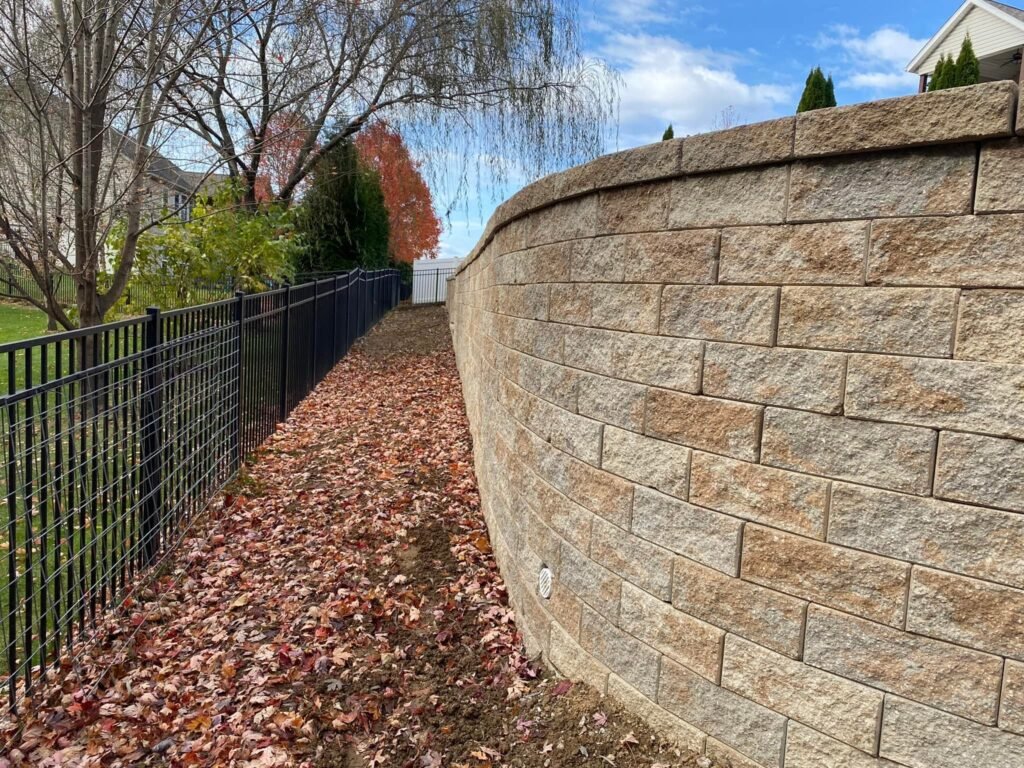
Segmental block is engineered to make wall building repeatable. Every unit is identical, the setback is fixed, and the result is predictable. Natural stone is the opposite. Every piece is a different shape, and the wall is assembled rather than stacked.
That is why stone walls cost more and take longer, and why the person building it matters far more than with block. A dry-stack stone wall holds because of how the stones bear on each other, how they are tilted back into the slope, and how the hearting behind the face is packed. Done well it will outlive everything else on the property. Done badly it is a pile of expensive rock that moves the first hard winter.
Recent Retaining Wall Projects
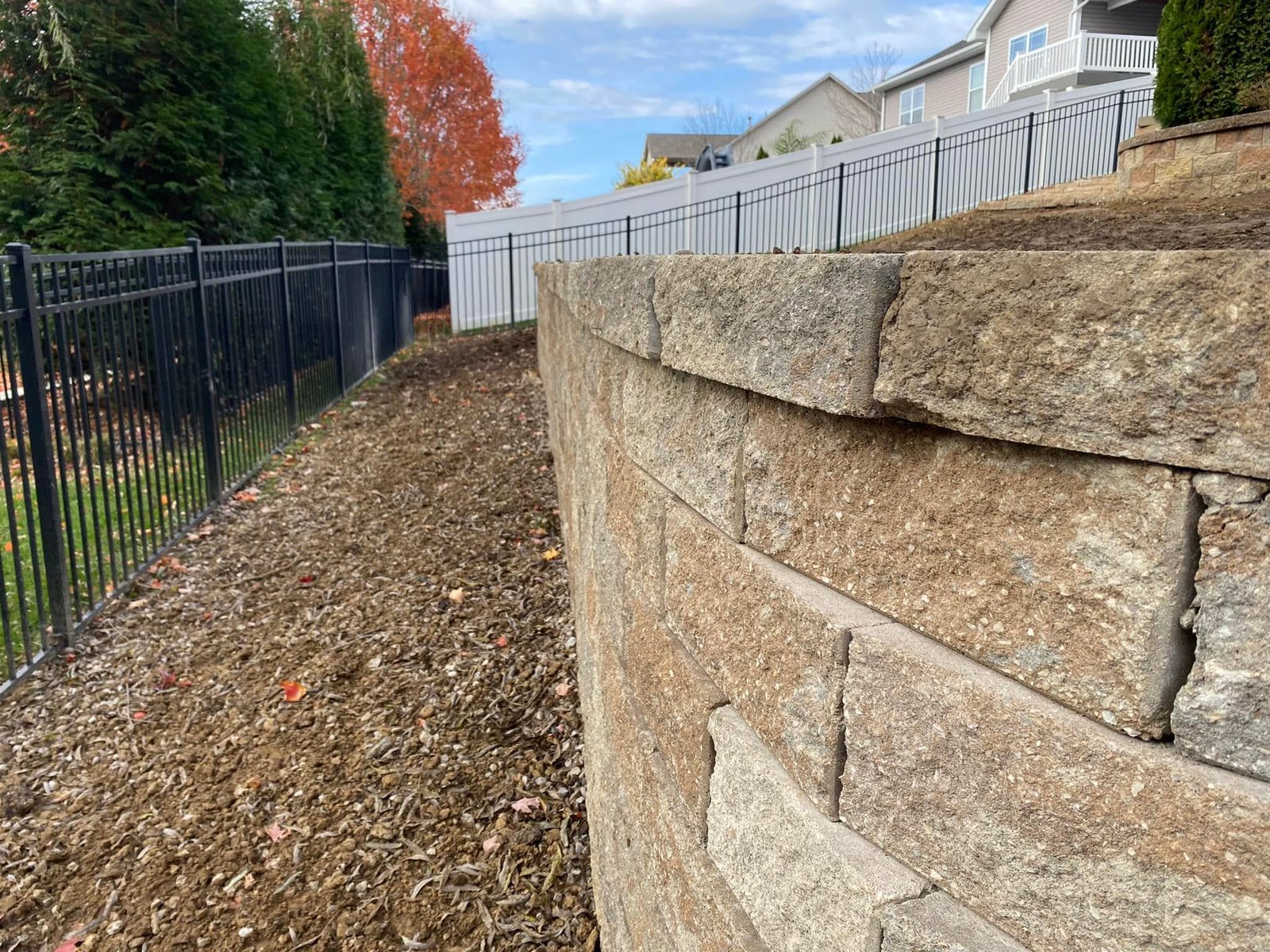
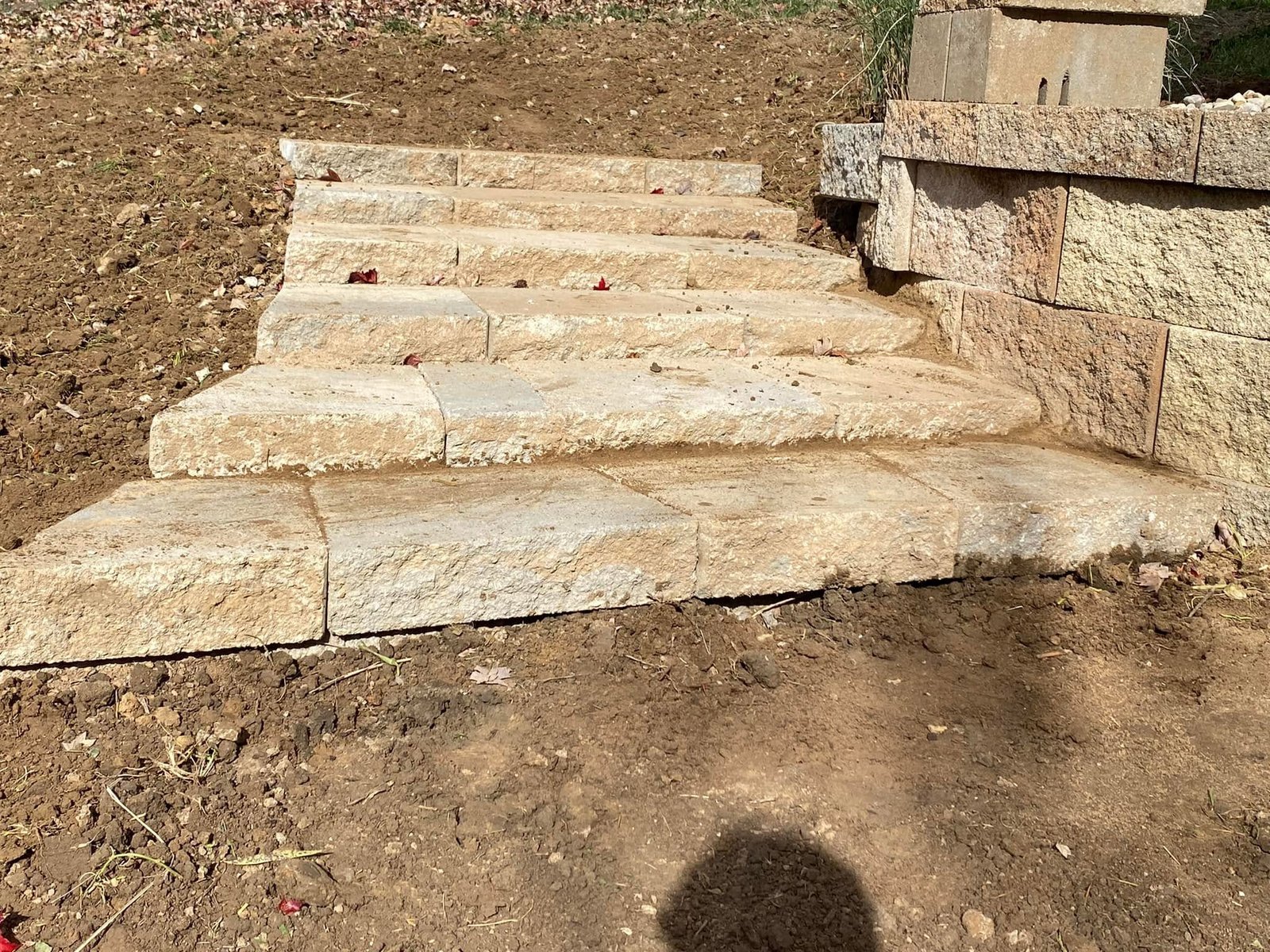
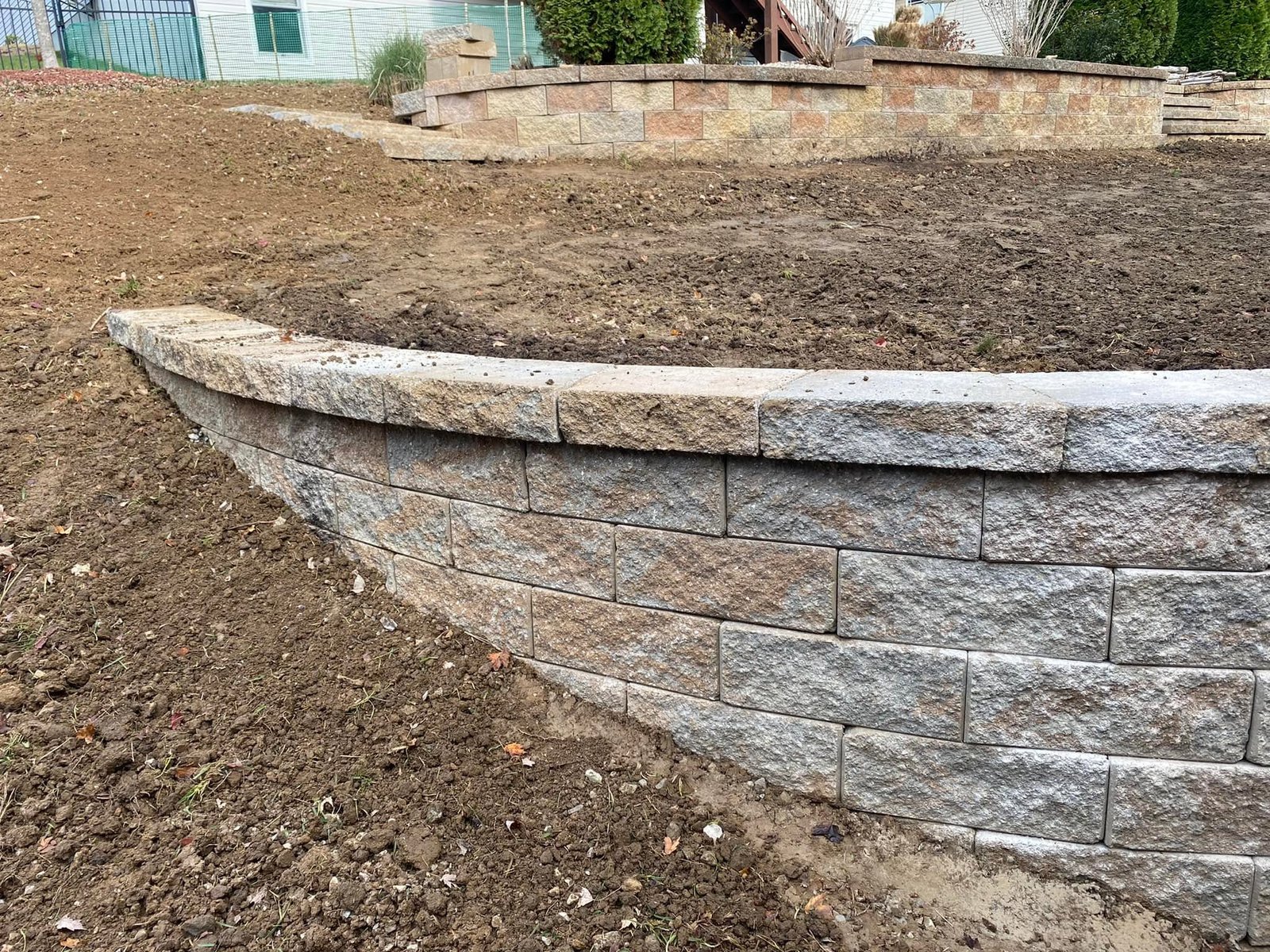
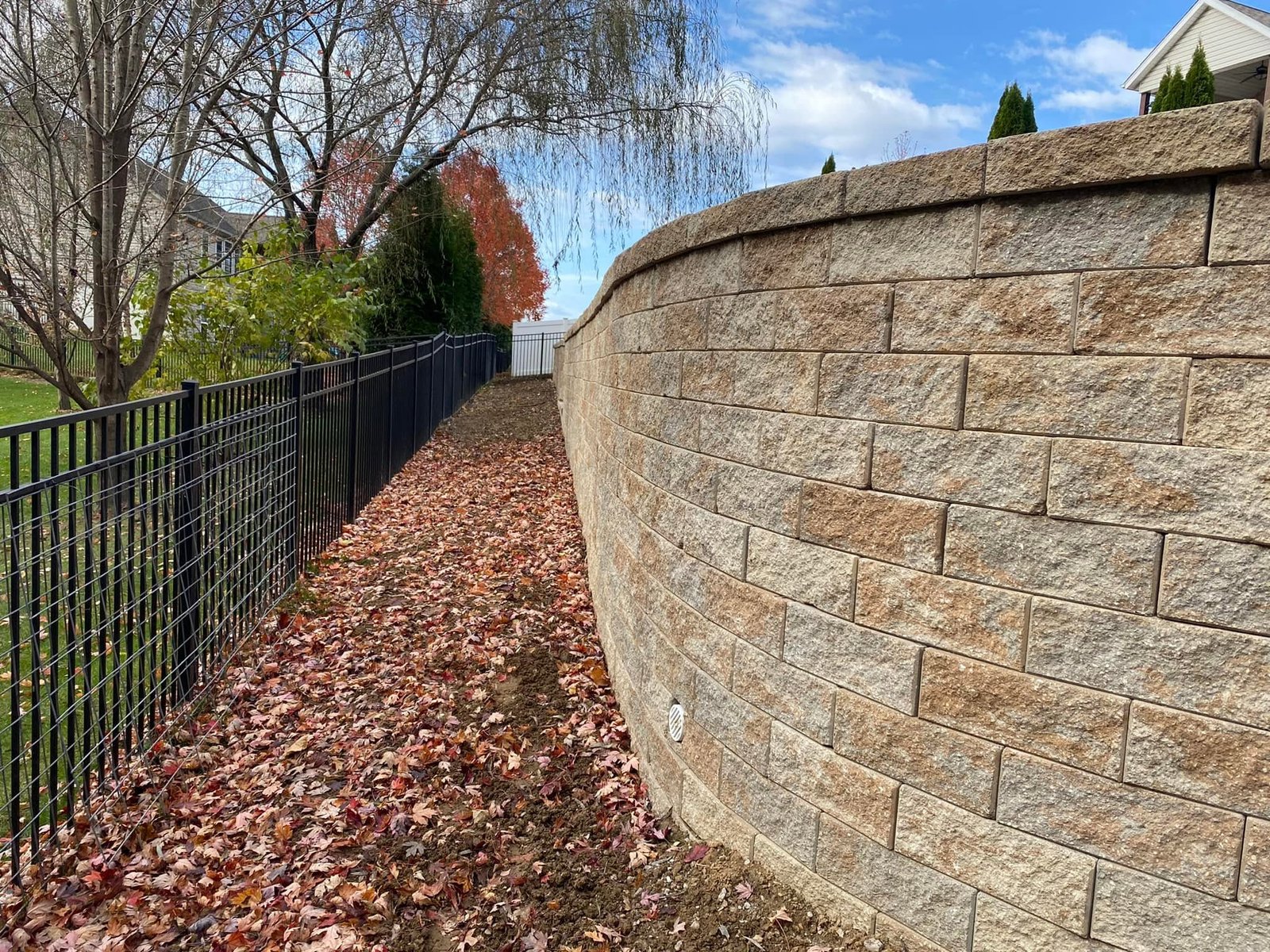
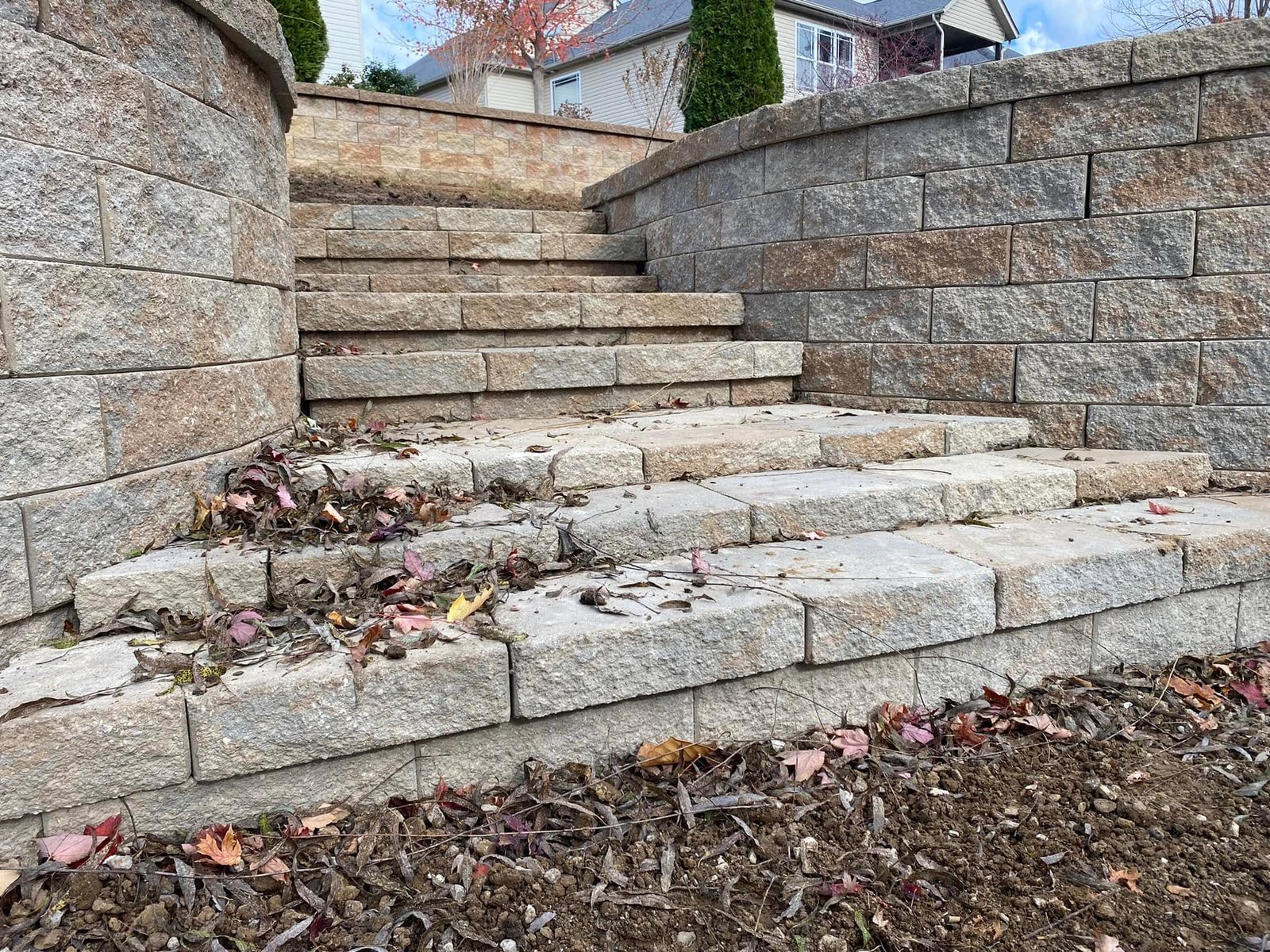
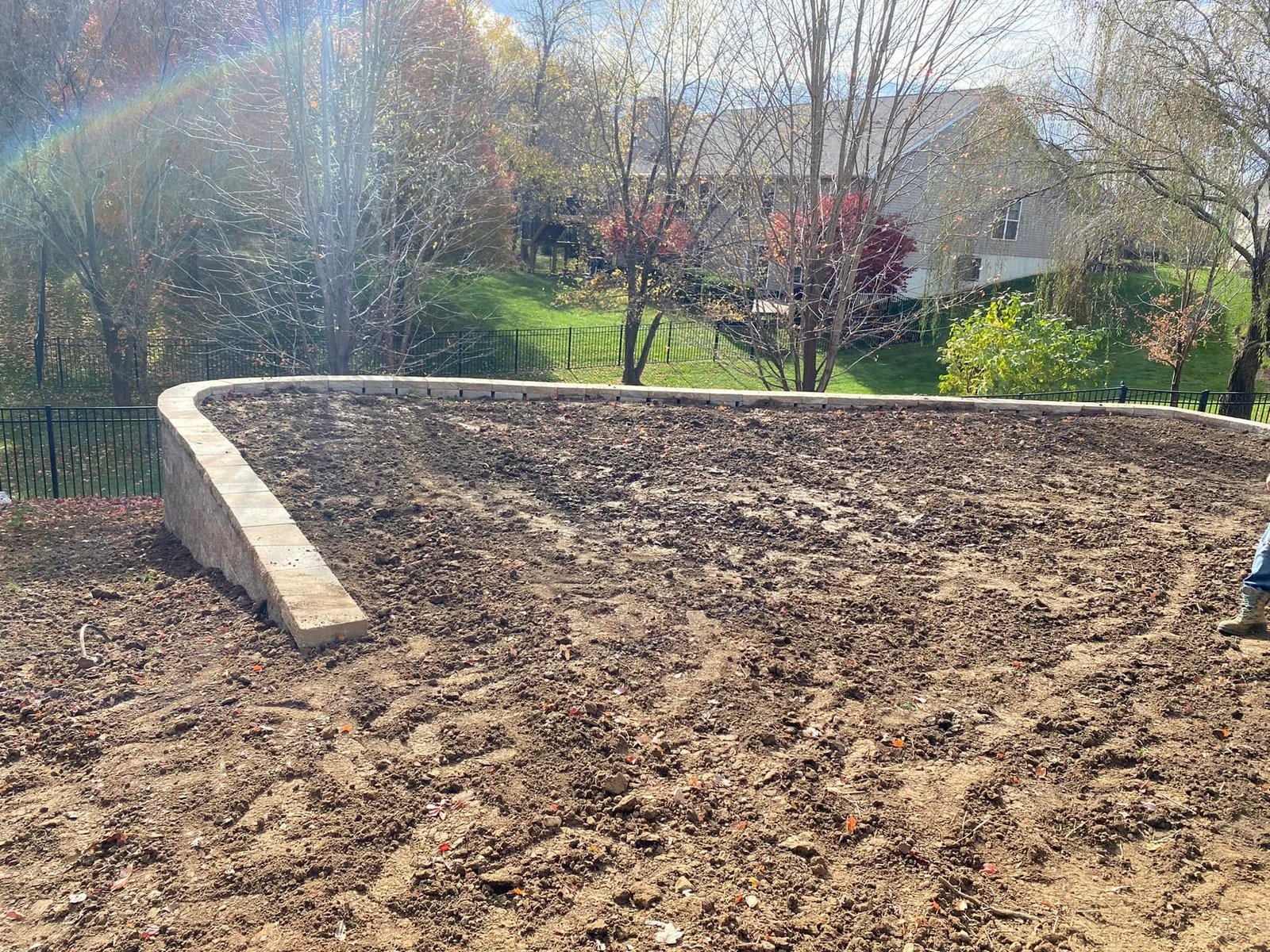
Block walls, terraced steps, seat walls and curved garden walls built across the Pittsburgh area.
Types of Stone Wall We Build
- Dry-stack stone. No mortar. The wall holds by weight, friction and careful fitting, and it drains through its whole face. The traditional method and still the best where it suits.
- Armour stone. Large rectangular quarried blocks, set with machinery. Fast to build for the height achieved, strong, and increasingly popular for taller residential walls.
- Boulder walls. Rounded or irregular boulders set into the slope. Natural appearance, well suited to informal and woodland settings.
- Mortared stone. Stone set in mortar over a structural core. Used where the wall must be tighter than dry-stack allows, and where drainage is handled behind rather than through the face.
- Stone veneer over concrete or block. Structural strength from concrete or block with a natural stone face. Often the practical answer on tall walls where solid stone is not viable.
Stone in Pittsburgh Landscapes
Stone walls suit this region particularly well. Pittsburgh has a long history of stone construction, and the older neighbourhoods are full of stone walls that have been standing since before anyone reading this was born. On properties in Fox Chapel, Sewickley, Upper St Clair and the older parts of Mt Lebanon, a stone wall reads as belonging in a way that a manufactured block wall does not.
Sandstone and limestone are both readily available in Western Pennsylvania, which keeps material costs more reasonable here than in regions where stone has to be shipped. Fieldstone gathered locally has a softer, more weathered character. Quarried stone gives cleaner lines and more predictable coursing.
Drainage in Stone Walls
Dry-stack stone has a real advantage here. Because there is no mortar, water passes through the wall face rather than building up behind it, which removes most of the hydrostatic pressure that kills block and concrete walls in this climate.
That does not mean drainage can be ignored. Behind the face we still want clean stone hearting and geotextile separation so that soil does not wash into and clog the voids. Mortared stone walls need full drainage detail like any impermeable wall. See drainage and wall waterproofing.
Stone Wall Repair and Restoration
Older stone walls are frequently repairable when a block wall of the same age would not be. Stones can be reset, the hearting repacked, and sections rebuilt using the original material. On historic properties this matters, because the weathered face of a hundred-year-old wall cannot be bought.
We reset dry-stack walls that have bellied or slumped, repoint mortared stone, and rebuild collapsed sections using salvaged stone where possible. See retaining wall repair.
Areas We Serve Around Pittsburgh
Related Services
- Lower cost alternative with similar structural performance: block and segmental retaining walls.
- New wall on a fresh site: retaining wall installation.
- Boulder work on unstable slopes: wall anchors and slope stabilization.
Frequently Asked Questions
How much more does a stone retaining wall cost than block?
Natural stone typically runs significantly higher than segmental block for the same wall face area. The material costs more, and the labour is the larger factor, because each stone is fitted individually rather than stacked. Armour stone narrows the gap somewhat because machinery does more of the work.
How long do dry-stack stone walls last?
Longer than any other wall type we build. Properly constructed dry-stack stone walls in this region routinely stand for a century or more, because there is no mortar to fail and water passes through rather than building up behind. Occasional resetting of stones is normal maintenance rather than failure.
Do stone retaining walls need drainage?
Dry-stack walls drain through their own face, which is a large part of their durability, but they still need clean stone hearting and geotextile behind so soil does not wash into the voids. Mortared stone walls are effectively impermeable and need full drainage detail behind them.
What is armour stone?
Large quarried blocks of stone, typically rectangular, set with an excavator. They achieve substantial wall height quickly and give a heavy, natural appearance. They are a good middle ground between the cost of fitted stone and the uniformity of manufactured block.
Can a stone wall be built on a steep slope?
Yes, and stone often suits steep ground well because a boulder or armour stone wall can be set into the slope in a way that follows its contours. Very steep or previously slipped ground may need stabilization work first, regardless of what the wall is built from.
Is boulder wall the same as a retaining wall?
A boulder wall is one type of retaining wall. It uses large stones set into and against the slope, holding by weight and placement rather than by an engineered unit system. It works well on informal and naturalistic sites and less well where a precise line or a tall vertical face is required.
Get a Free Natural Stone & Boulder Walls Quote in Pittsburgh
Free on-site assessment anywhere in the Pittsburgh area. We will look at the site, tell you what is actually needed, and put the figure in writing.
Call (412) 484-3358