Timber & Railroad Tie Retaining Walls in Pittsburgh, PA
A wood retaining wall contractor Pittsburgh homeowners call for timber builds, and for replacement of the railroad tie walls that went up across Pittsburgh in the 1970s and 80s. Most of them are now failing from the bottom up.
- Retaining Wall Repair
- Residential & Commercial
- Drainange and Water Proofing
- 200+ Five-Star Reviews
Pittsburgh Has a Railroad Tie Wall Problem
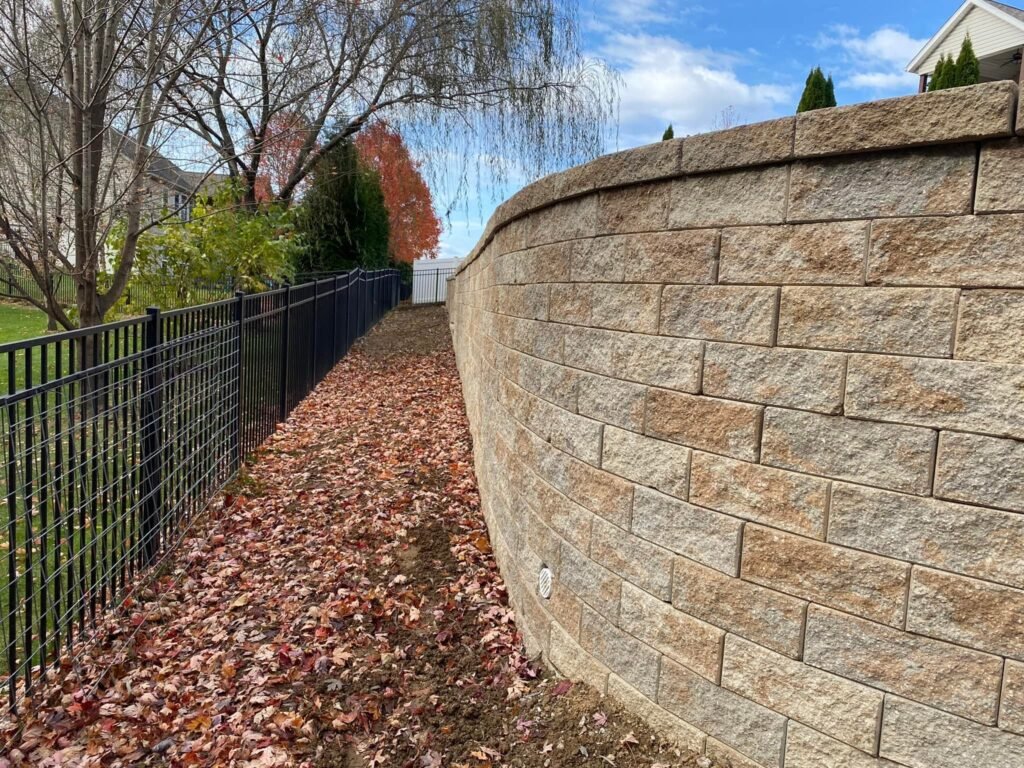
Drive through the older suburbs south and east of the city and you will see them everywhere. Railroad tie and timber retaining walls, built through the 1970s and 80s when they were the cheap, fast way to terrace a sloped lot. Tens of thousands of them.
They are all reaching the end of their lives at roughly the same time. Treated timber in contact with soil in a freeze-thaw climate lasts fifteen to twenty five years. The oldest of these walls are now past fifty. What we get called to look at is rarely a wall that has suddenly failed. It is a wall that rotted through years ago and has been held up by the soil behind it and by luck.
The failure mode is specific and worth knowing. Timber walls rot at and below the soil line, where you cannot see it. The face above ground can look sound while the buried portion of the ties and the deadmen anchoring them back into the slope have turned to compost.
Recent Retaining Wall Projects
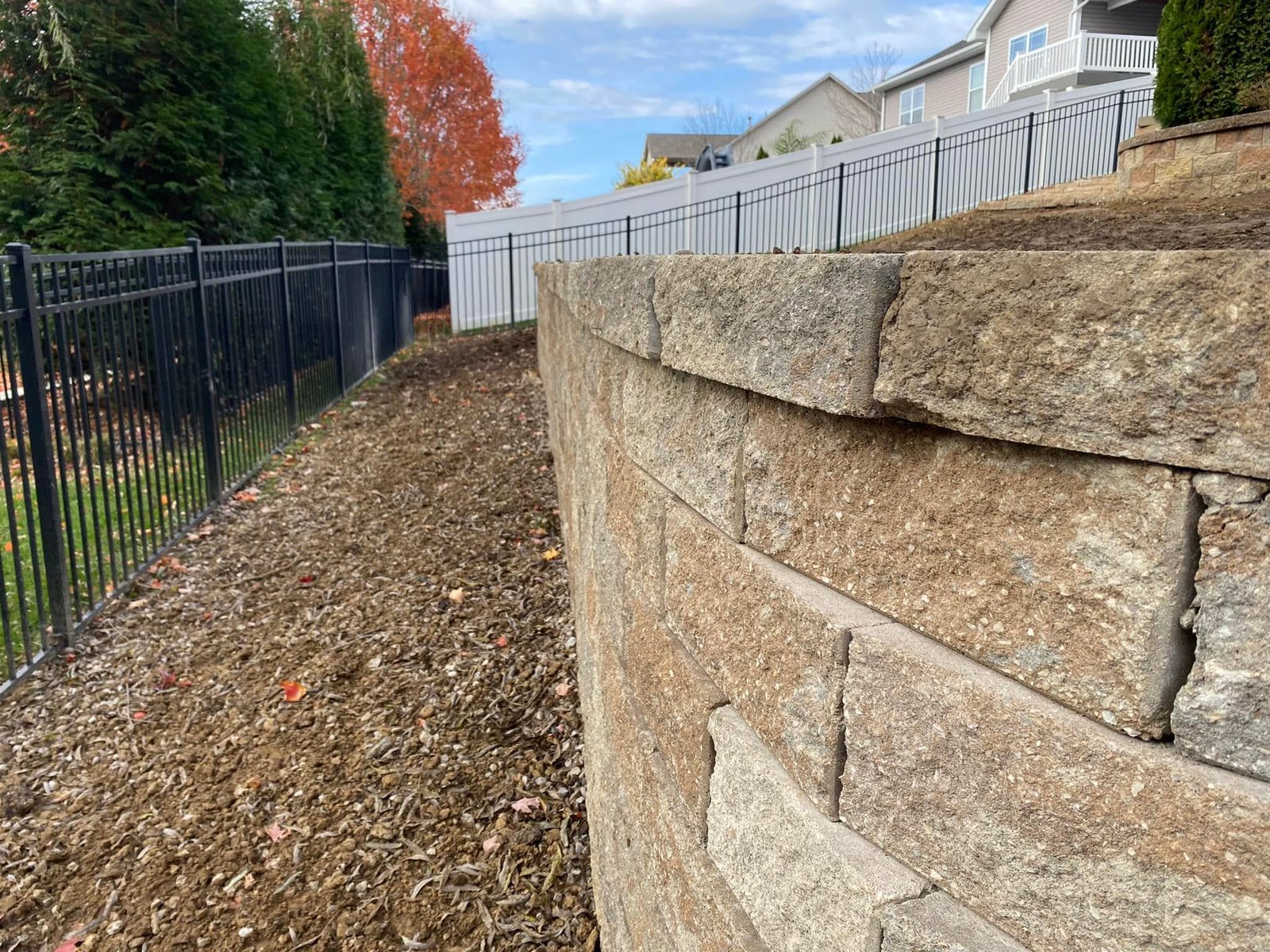
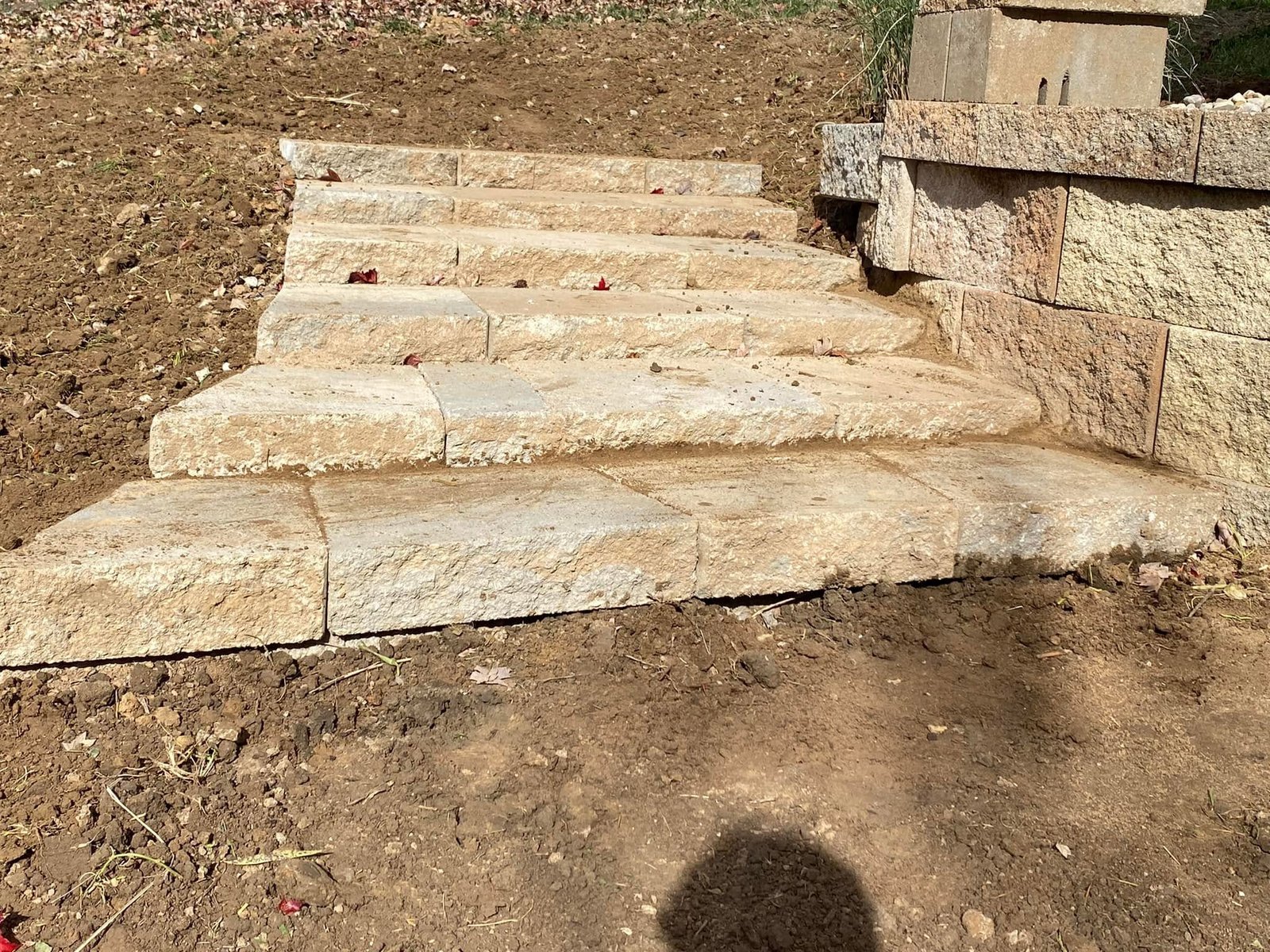
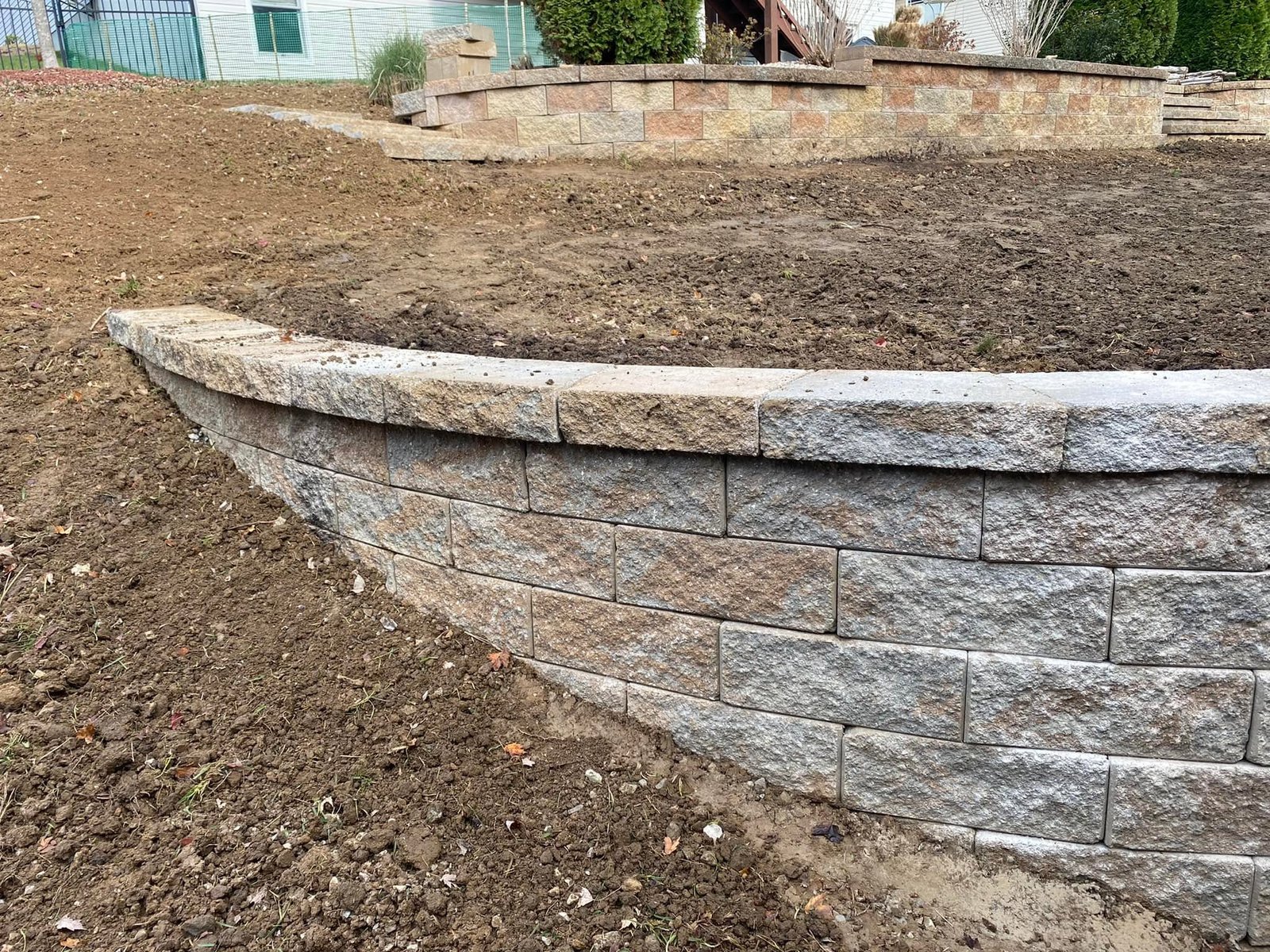
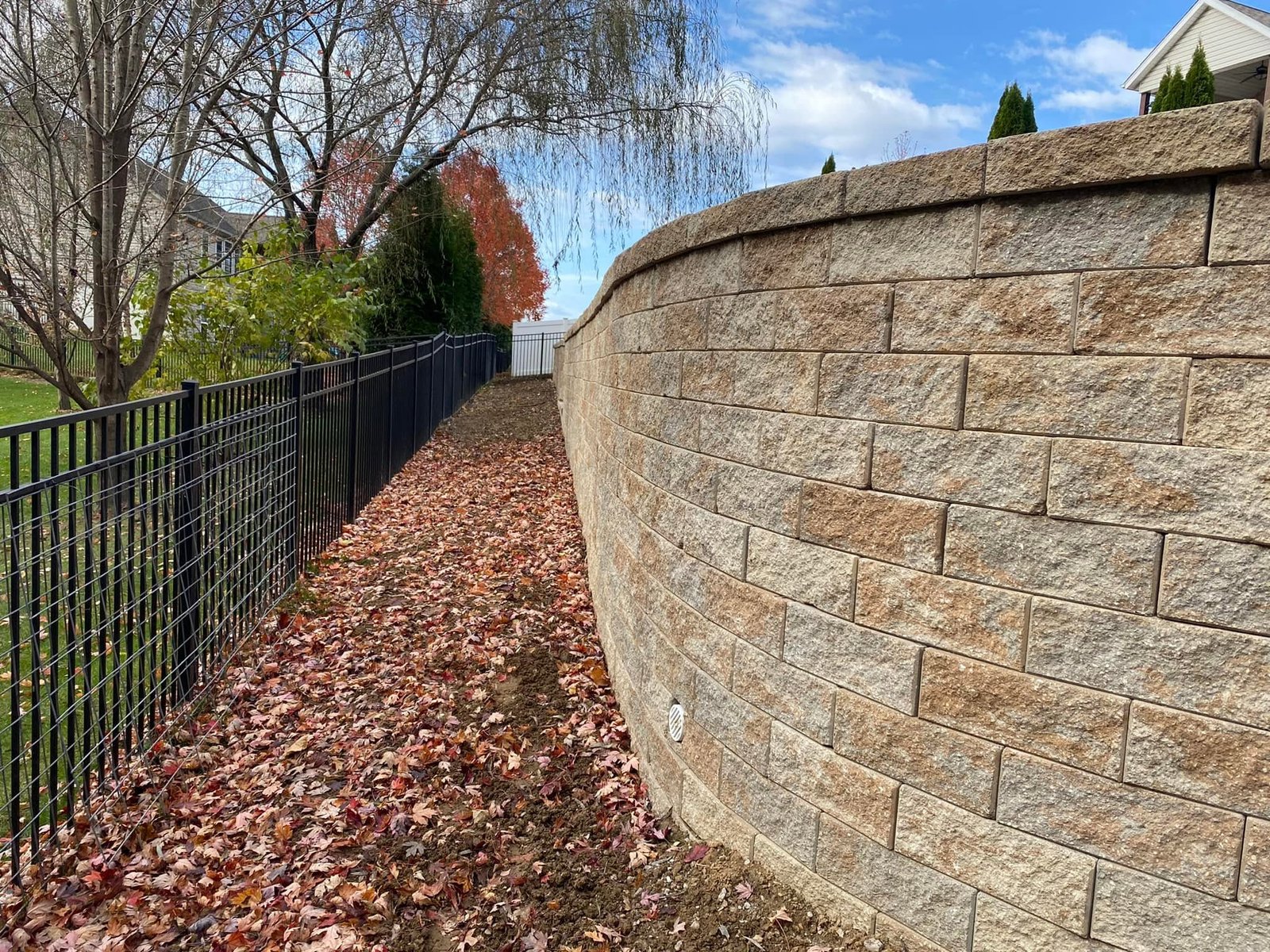
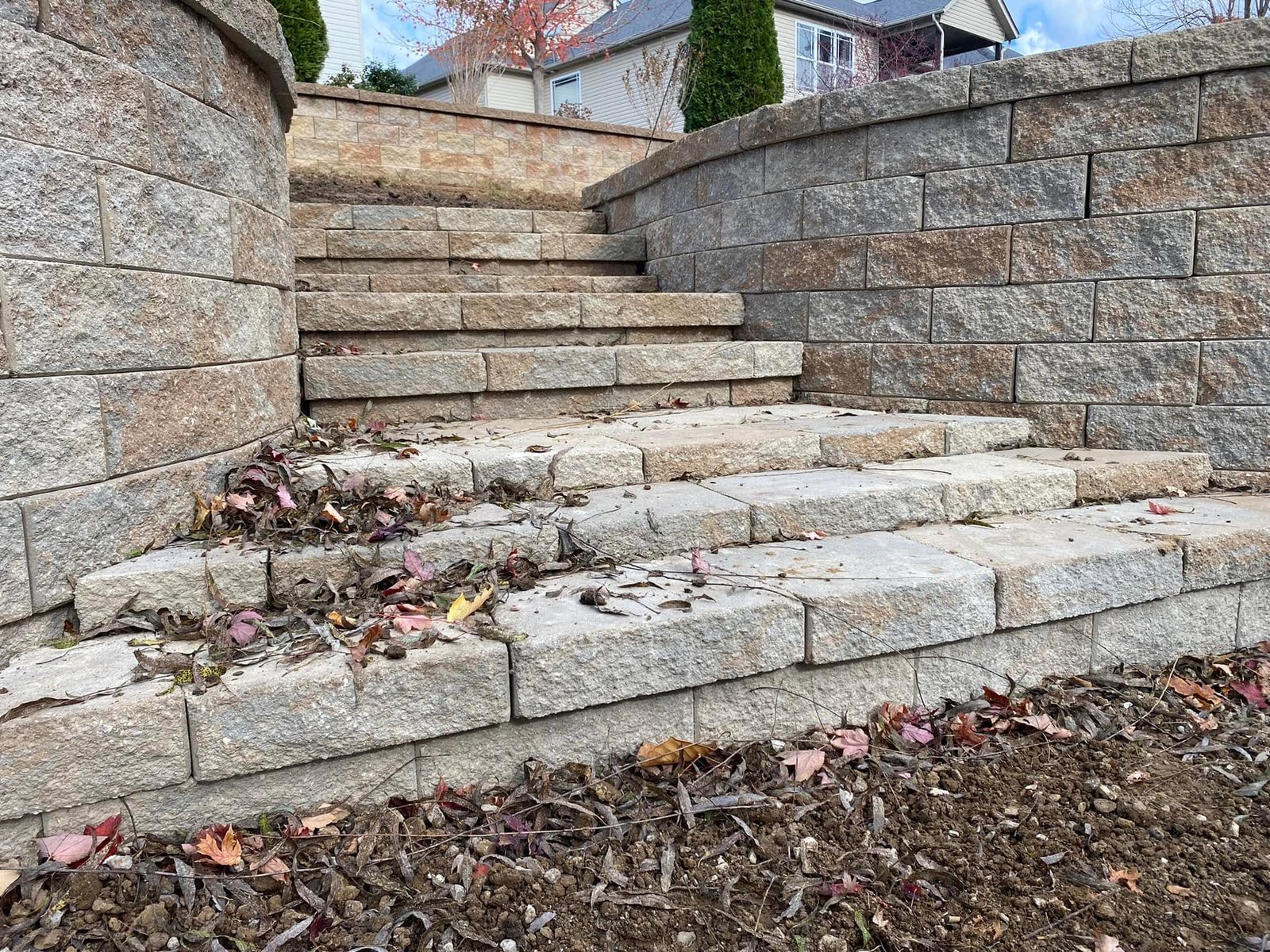
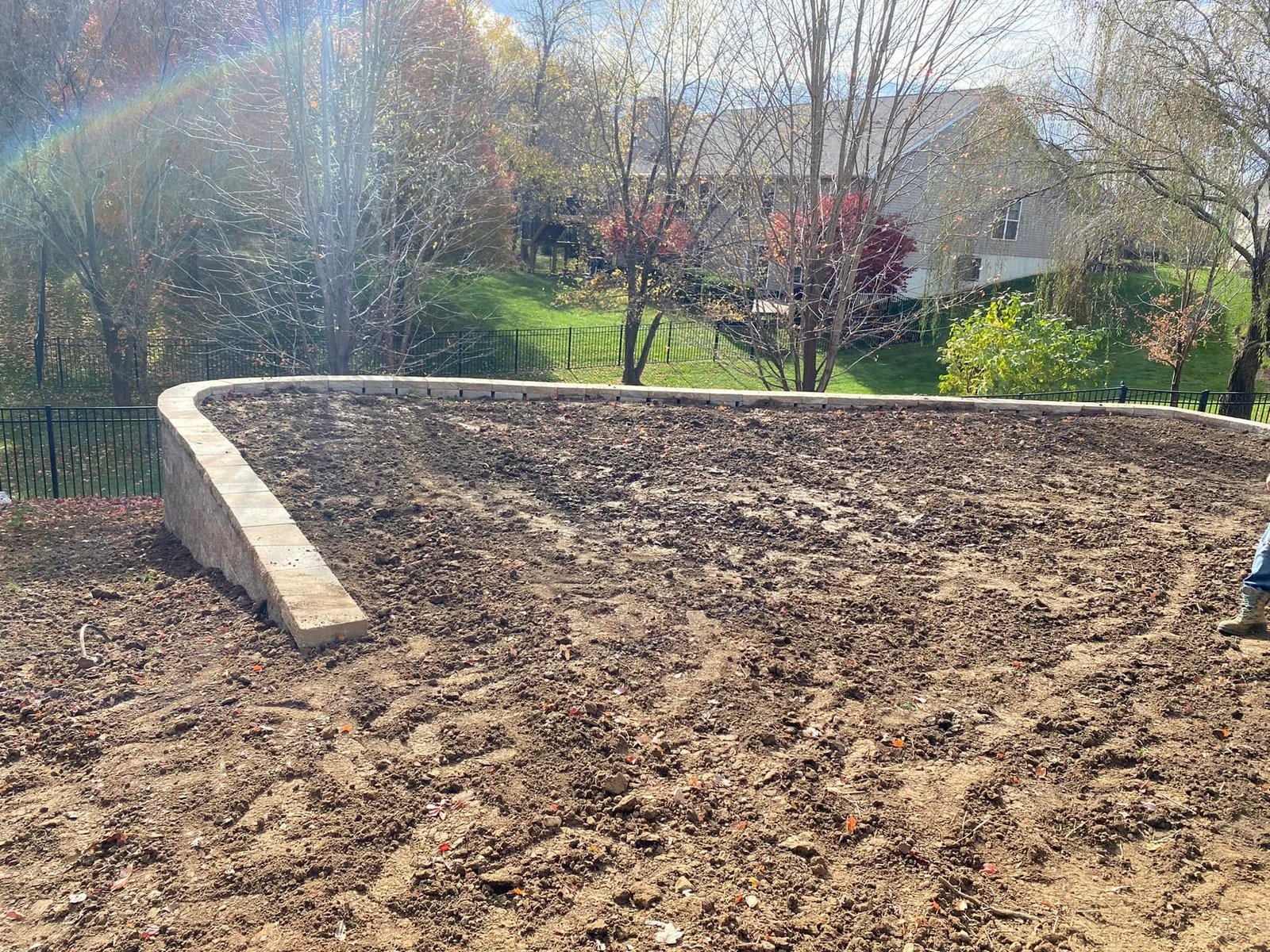
Block walls, terraced steps, seat walls and curved garden walls built across the Pittsburgh area.
How to Tell If Your Timber Wall Is Done
If you are seeing several of these together, the wall is not a repair candidate. See retaining wall repair for how we assess borderline cases.
- Push a screwdriver into the tie at the soil line. If it sinks in easily, the timber is gone there.
- The wall is leaning forward at the top. The deadmen holding it back have rotted through.
- Ties are separating or sliding out of line, particularly in the lower courses.
- Spikes or rebar pins standing proud of the timber face. The wood has shrunk and decayed around them.
- Soil washing through the gaps between ties.
- Soft, spongy or crumbling timber, or visible fungal growth on the face.
- Ground sinking behind the wall, or a fence above it leaning.
Why We Usually Recommend Replacing Rather Than Repairing
Timber walls can be patched, and we understand why people want to. It is cheaper this year. But replacing individual rotted ties on a wall whose deadmen have also rotted buys a season or two and leaves you paying twice.
The other issue is that the failure is not visible. When we take a rotted tie wall apart, what is behind it is usually worse than the face suggested, and the deadmen are frequently gone entirely. There is no way to price that accurately as a repair, because nobody knows what is there until it comes down.
So our default recommendation on a failing tie wall is replacement, most often in segmental block, which lasts two to three times as long in this climate for a comparable installed cost over the wall’s life.
New Timber Retaining Walls
We do still build timber walls, and there are situations where they are the right call. Low garden and planter walls, rustic settings where block would look wrong, budget-constrained projects, and places where the wall genuinely is not holding significant load.
When we build in timber we use properly rated ground-contact pressure treated lumber, deadmen tied back into the slope at proper intervals, drainage stone and a drain line behind the wall, and geotextile separation. Built that way a timber wall in Pittsburgh should give you twenty years or so.
What we will not do is quote a timber wall for a tall structural application and let you think it is a long-term solution. We would rather tell you the lifespan up front.
Railroad Tie Disposal
Old creosote-treated railroad ties are not ordinary construction waste. Creosote is a regulated material and ties cannot simply go in a general dumpster or be burned. Disposal has to go through facilities that accept treated timber, and it is a genuine line item on a tie wall replacement rather than an afterthought. We include it in the quote so it does not appear later.
Areas We Serve Around Pittsburgh
Related Services
- Replacement in block is usually the recommendation: block and segmental retaining walls.
- For a new wall from scratch: retaining wall installation.
- Drainage is what killed the original wall: drainage and wall waterproofing.
Frequently Asked Questions
How long do railroad tie retaining walls last?
Fifteen to twenty five years is typical in the Pittsburgh climate, sometimes a little longer for heavily creosoted ties. Most of the tie walls in the older suburbs went up in the 1970s and 80s, which puts them well past their design life now.
Can a rotted railroad tie wall be repaired?
Rarely in a way that lasts. The ties rot at the soil line and the deadmen anchoring the wall back into the slope rot at the same time, out of sight. Replacing visible ties on a wall whose anchors are gone buys a season or two. We usually recommend replacement.
What should I replace a railroad tie wall with?
Segmental block is the most common replacement here. It costs more up front than timber but lasts two to three times as long in this climate, which makes it cheaper over the life of the wall. Poured concrete or natural stone suit taller or more visible applications.
Are old railroad ties dangerous?
Creosote-treated ties are regulated as hazardous material and should not be burned, cut without protection, or used near vegetable gardens or play areas. They also cannot go in general construction waste. Disposal has to go through a facility that accepts treated timber.
What is the best wood for a retaining wall?
Ground-contact rated pressure treated lumber, typically southern yellow pine treated to the retention level specified for soil contact. Standard above-ground treated lumber is not adequate. Cedar and black locust resist rot naturally but cost considerably more and are less commonly used structurally here.
Why is my timber retaining wall leaning forward?
Almost always because the deadmen have rotted. Timber walls are held back by ties running perpendicular into the slope, anchored behind the wall. When those decay, nothing resists the soil pressure and the wall rotates forward at the top. It is a sign the wall is at the end of its life.
Get a Free Timber & Railroad Tie Walls Quote in Pittsburgh
Free on-site assessment anywhere in the Pittsburgh area. We will look at the site, tell you what is actually needed, and put the figure in writing.
Call (412) 484-3358