Concrete Retaining Walls in Pittsburgh, PA
Poured, reinforced and CMU concrete retaining walls for taller cuts and structural applications where segmental block is not enough. Built to engineered drawings across Allegheny County.
- Retaining Wall Repair
- Residential & Commercial
- Drainange and Water Proofing
- 200+ Five-Star Reviews
When Concrete Is the Right Choice Over Block
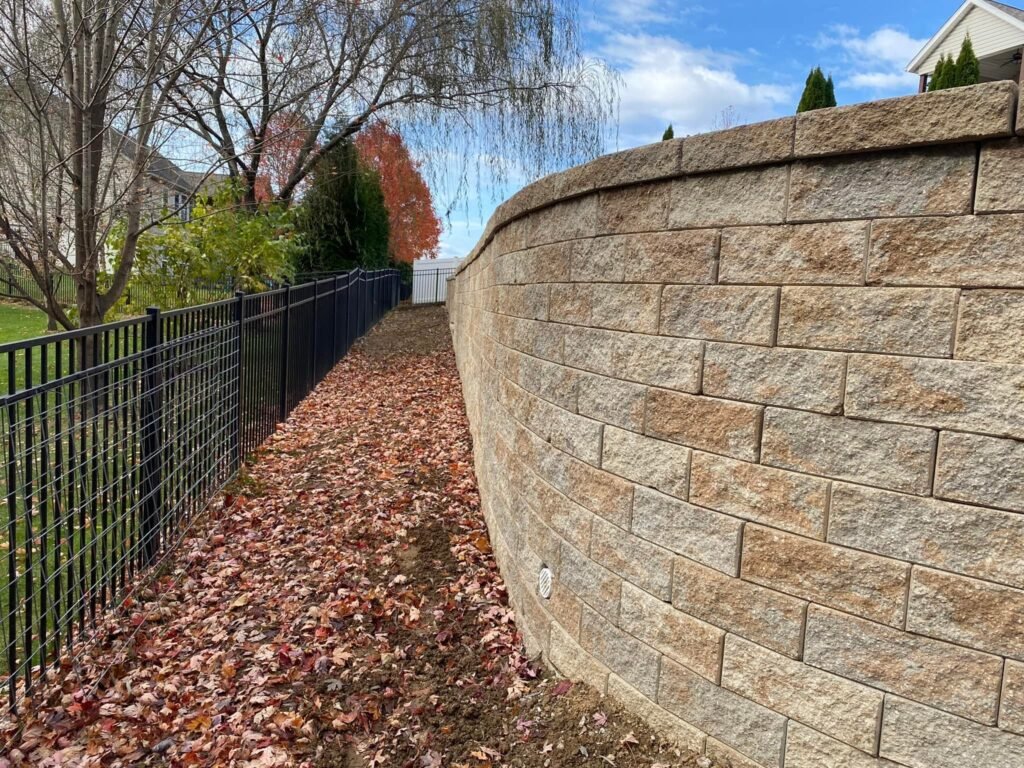
Segmental block handles most residential retaining wall work in Pittsburgh. Concrete comes into its own where block runs out of capacity or space.
A poured reinforced wall carries far more load for its thickness, which matters when you are holding a driveway, a structure, or a cut that a block wall would need a substantial reinforced zone behind it to manage. It also has a much smaller footprint, so on tight urban lots where there is no room to excavate a wide reinforced backfill zone, poured concrete may be the only thing that fits.
The trade-offs are real. Concrete costs more, takes longer, needs formwork and cure time, and it cracks rather than flexes if the ground moves. It is the right answer for the right job, not a default upgrade.
Recent Retaining Wall Projects
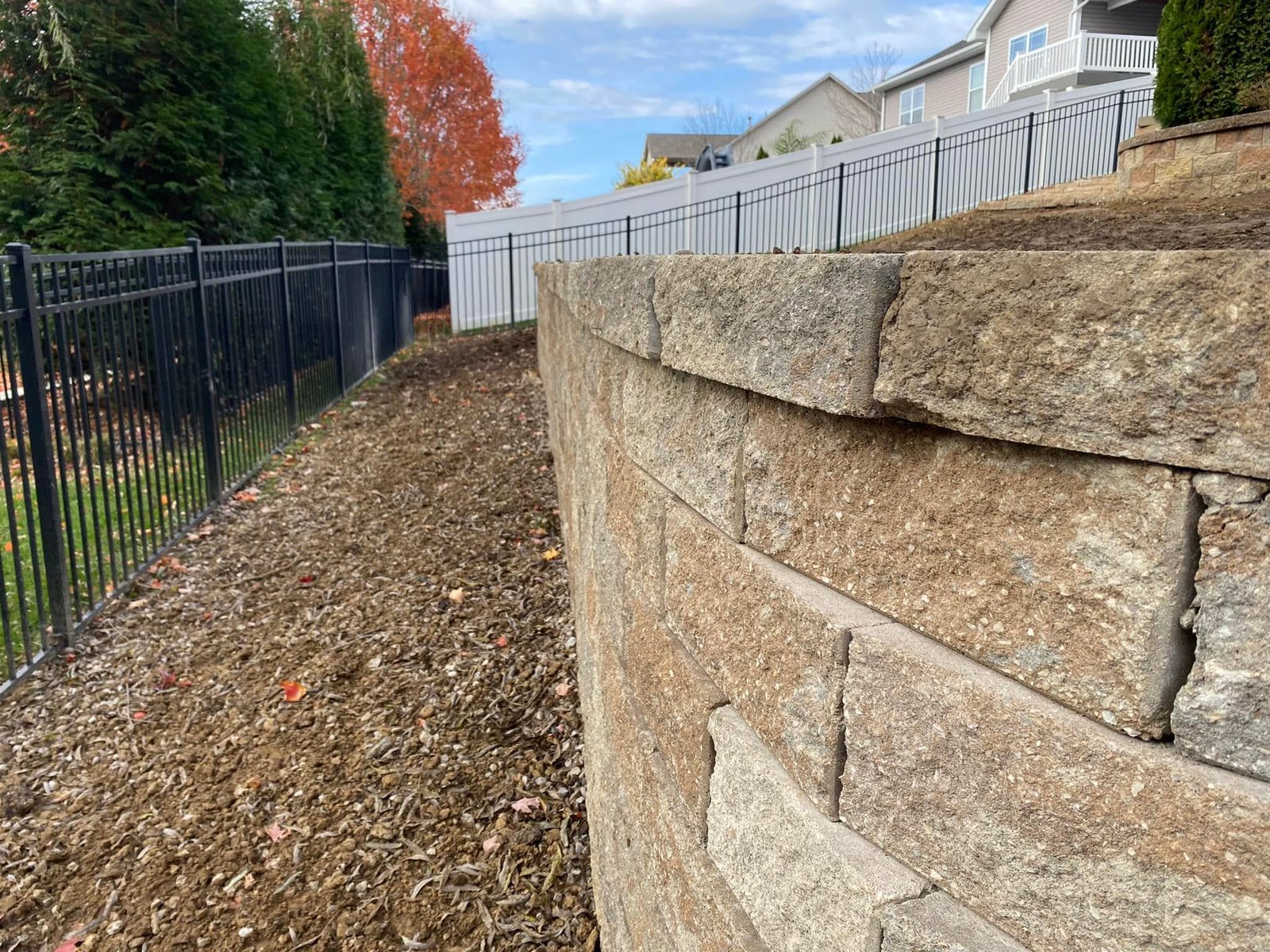
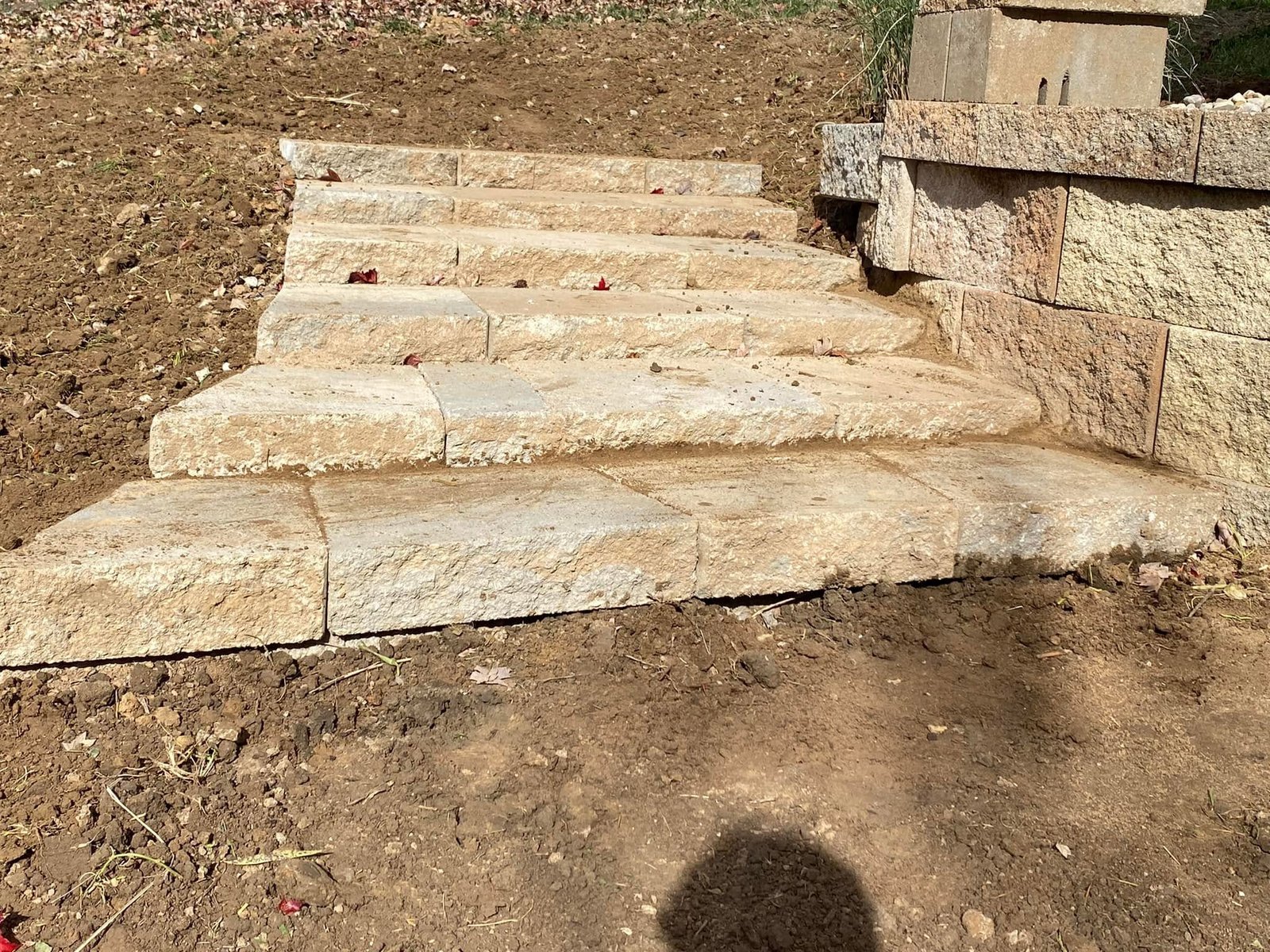
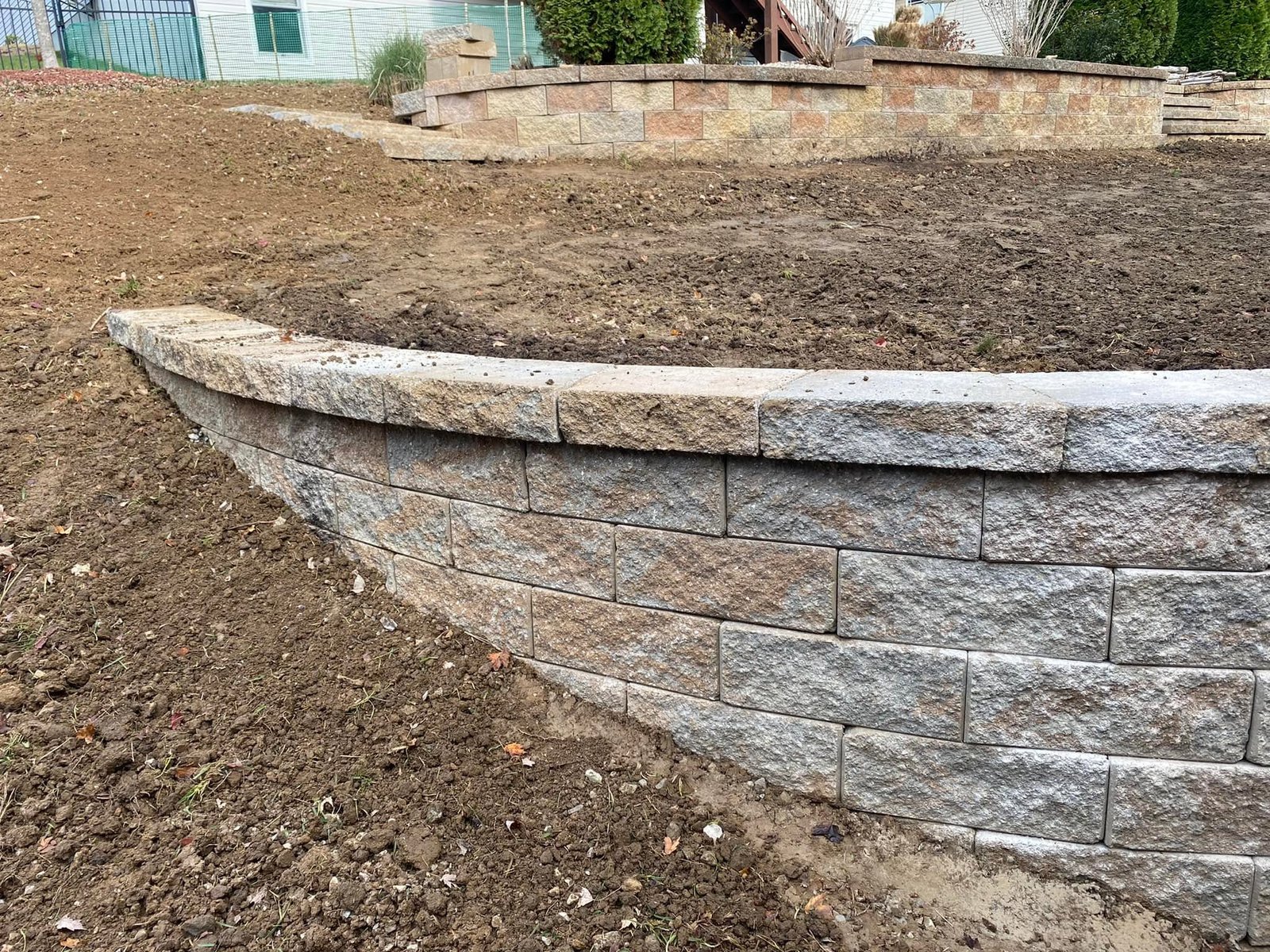
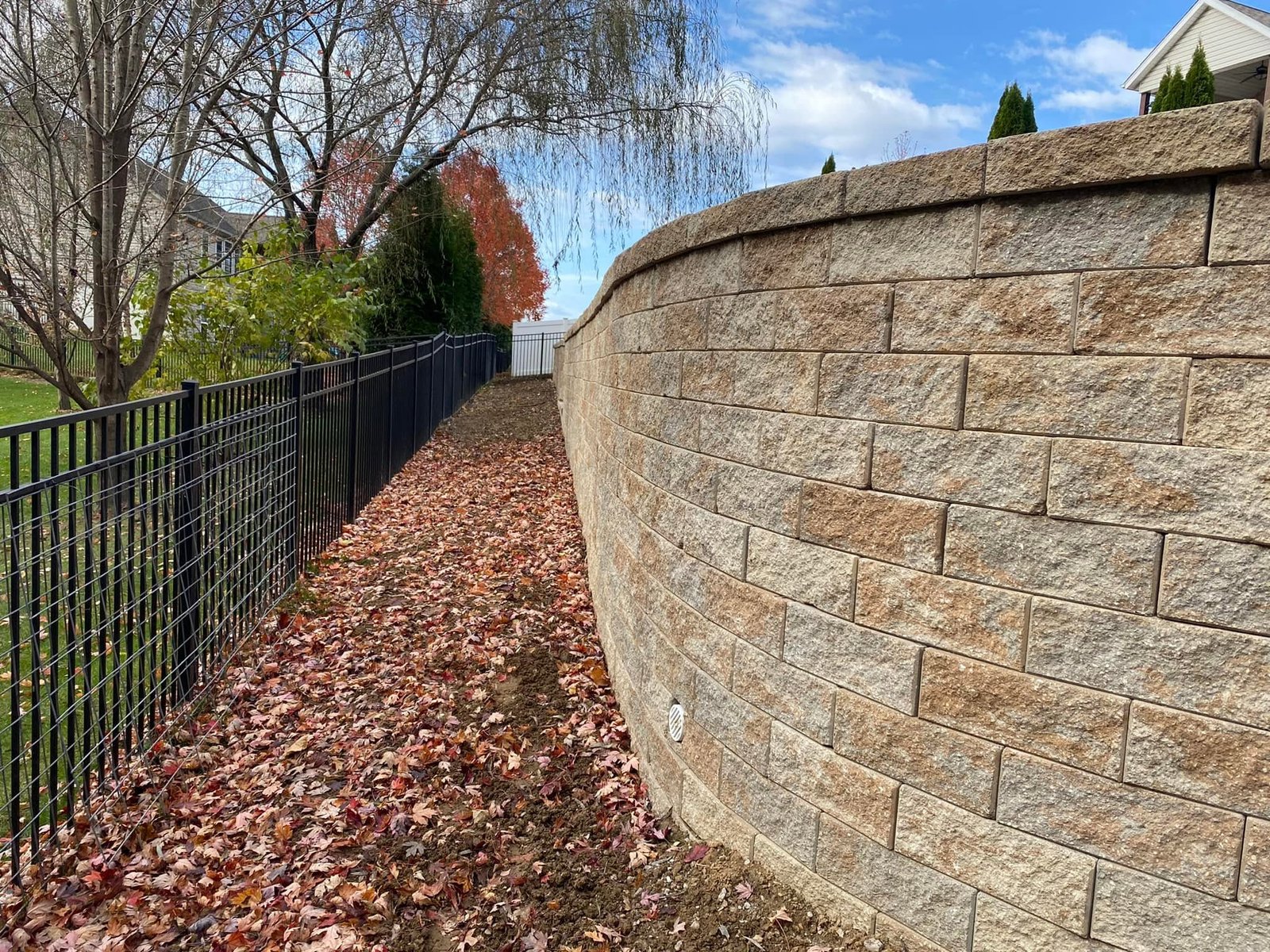
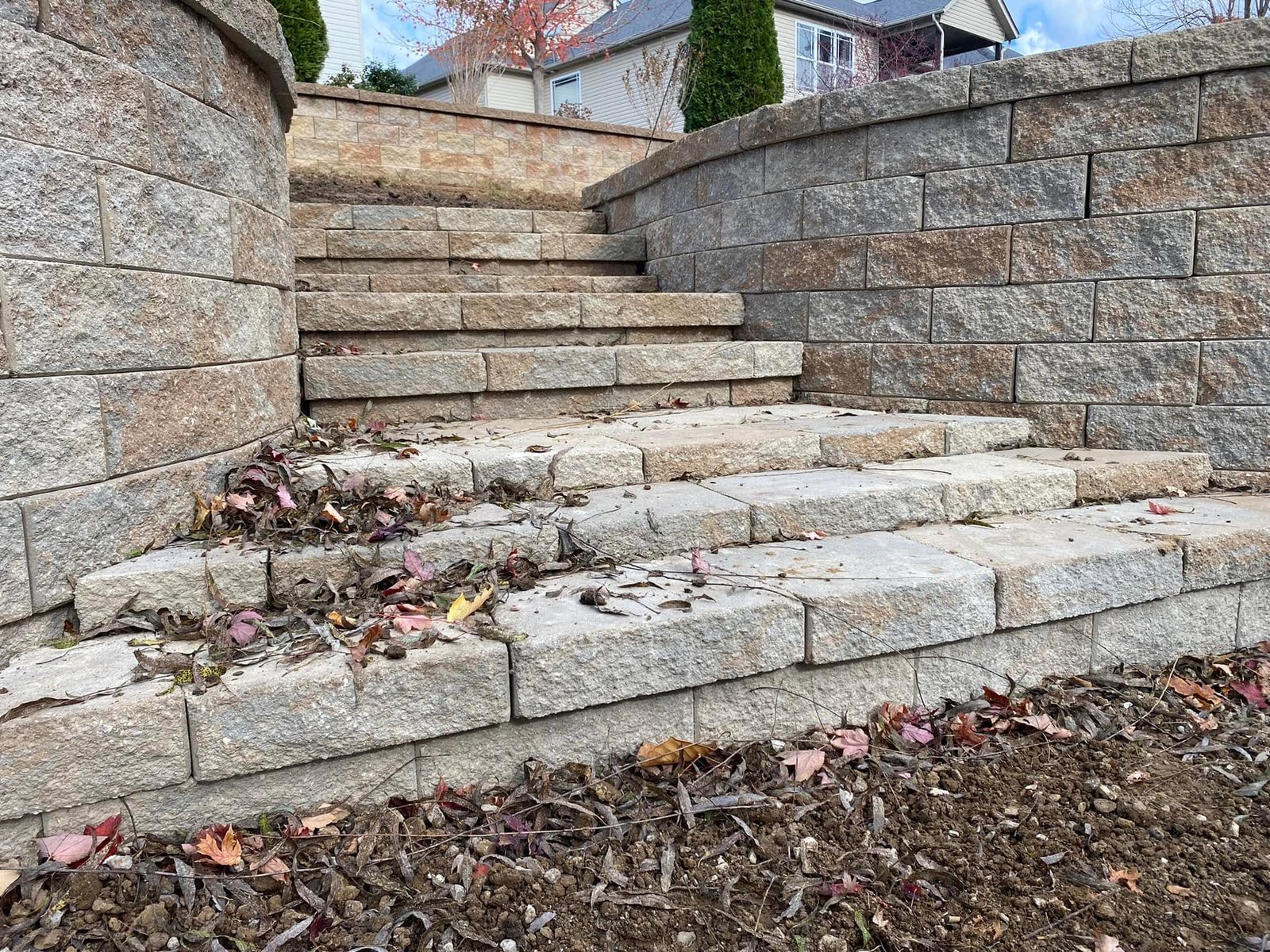
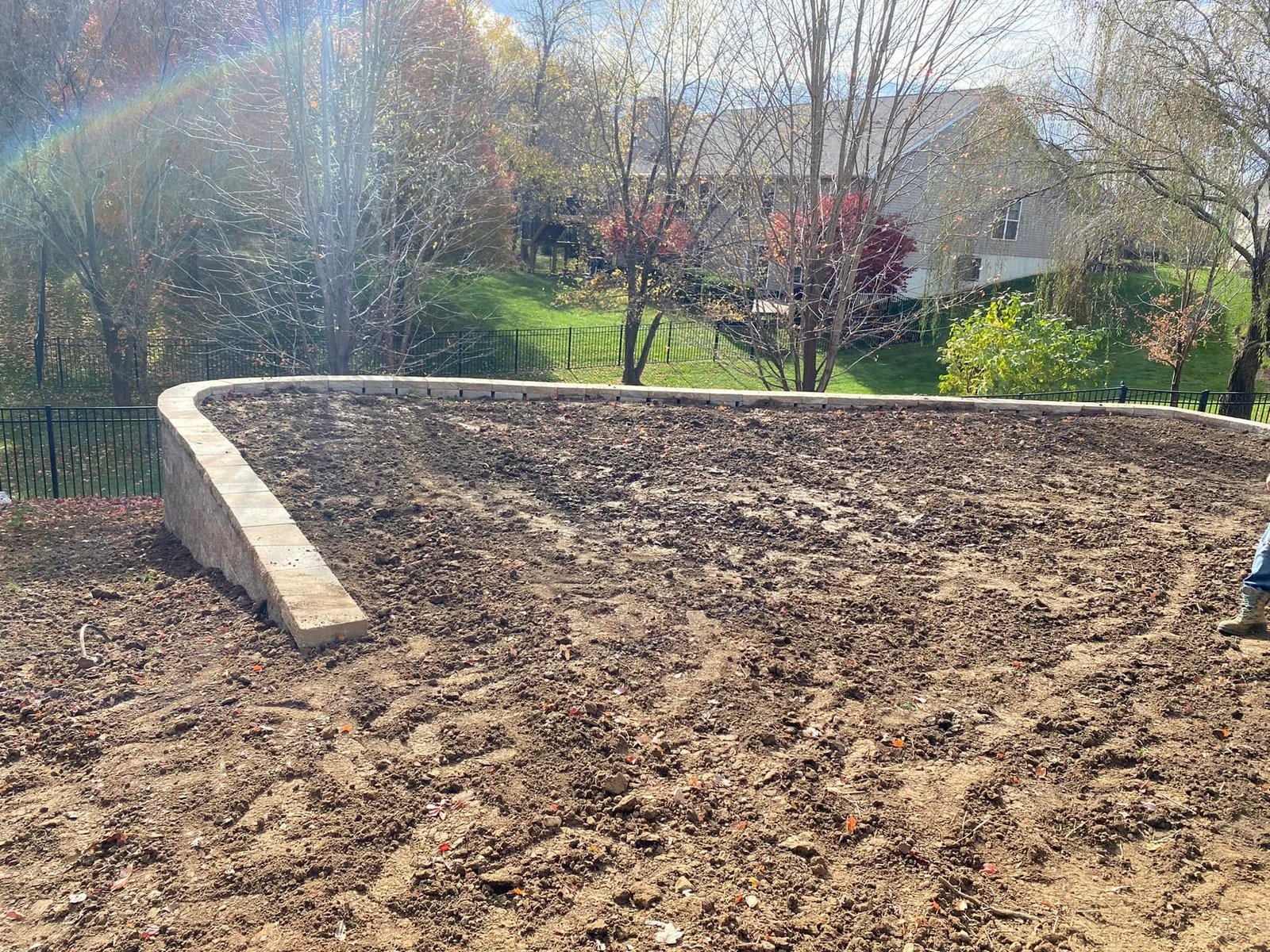
Block walls, terraced steps, seat walls and curved garden walls built across the Pittsburgh area.
Concrete Wall Types We Build
- Poured reinforced walls. Steel reinforced, formed and poured on site. The strongest option and the standard for tall or structural applications.
- Cantilever walls. An L or T shaped footing that uses the weight of the soil above it to resist overturning. Efficient for taller residential and light commercial walls.
- CMU block walls. Concrete masonry units, reinforced with rebar and filled with grout. Faster than pouring, strong, often used where a poured wall is not practical.
- Gravity walls. Mass concrete walls that resist by sheer weight, used at lower heights where a footing extension is not practical.
- Faced concrete walls. Structural concrete with a stone or veneer face, where you want poured strength and a natural look. Ties in with natural stone and boulder walls.
Engineering and Permits
Most concrete retaining wall work in Pennsylvania falls above the four foot threshold where a permit and stamped engineered drawings are required. That is not a formality. A poured wall is designed around calculated soil loads, surcharge from anything above it, and footing dimensions, and those calculations determine the rebar schedule and the footing size.
We work to the engineer’s drawings. If a contractor offers to pour a six foot wall without them, that is the whole warning sign you need.
Drainage in Concrete Walls
Concrete is effectively impermeable, which makes drainage more important rather than less. Without a path out, water sits against the back face, builds hydrostatic pressure, and in Pittsburgh winters freezes and expands against a material that cannot flex.
A properly built concrete retaining wall has drainage stone behind it, geotextile separation, a perforated drain line to daylight, and usually weep holes through the face as a secondary path. Waterproofing membrane on the back face protects the concrete itself from constant saturation. See drainage and wall waterproofing for detail on how we handle this.
Concrete Wall Repair
Concrete walls fail differently from block. Instead of leaning gradually, they crack, spall, or rotate at the footing. Hairline surface cracking is often cosmetic. Stair-step cracking, a wall that has rotated forward at the top, or exposed rusting rebar all mean structural attention.
Repair options include crack injection, face resurfacing, drainage retrofit, and anchoring. Where the footing has failed, replacement is usually the honest answer. See retaining wall repair.
Areas We Serve Around Pittsburgh
Related Services
- Most residential walls are better suited to block and segmental retaining walls.
- Commercial and parking applications: commercial retaining walls.
- Existing wall rotating or cracking: wall anchors and slope stabilization.
Frequently Asked Questions
How much does a concrete retaining wall cost compared to block?
Poured concrete typically costs meaningfully more than segmental block for the same wall face area, because of formwork, reinforcement, concrete supply and cure time. It becomes the economical choice when height, load or a restricted footprint mean a block wall would need extensive reinforcement to do the same job.
How long do concrete retaining walls last?
A properly engineered and drained poured concrete wall can last fifty years or more. Lifespan is governed by water. Concrete kept saturated through repeated freeze-thaw cycles will spall and deteriorate, which is why drainage and back-face waterproofing matter so much here.
Do concrete retaining walls crack?
Some surface cracking is normal as concrete cures and is usually cosmetic. Structural cracking, meaning stair-step patterns, wide cracks, or displacement across the crack, indicates footing movement or load beyond design. Those need assessment rather than filling.
What is a cantilever retaining wall?
A reinforced concrete wall with an L or T shaped footing extending back under the retained soil. The weight of that soil sitting on the footing helps resist overturning, so the wall uses the load against itself. It is an efficient design for taller walls.
Can a concrete retaining wall be built against an existing structure?
Sometimes, but it needs care. A wall tied to or bearing near a foundation transfers load into that structure, and drainage has to be handled so water is not directed against the building. This is a case for engineered design rather than judgement on site.
How thick does a concrete retaining wall need to be?
That comes from the engineering, not a rule of thumb. Thickness depends on height, soil type, whether there is surcharge load above, and the reinforcement schedule. A stamped design will specify wall thickness, footing dimensions and rebar layout together.
Get a Free Concrete Retaining Walls Quote in Pittsburgh
Free on-site assessment anywhere in the Pittsburgh area. We will look at the site, tell you what is actually needed, and put the figure in writing.
Call (412) 484-3358