Retaining Wall Repair in Pittsburgh, PA
Retaining wall repair Pittsburgh property owners can rely on. Leaning, bulging, cracked or separating walls fixed across Allegheny County. We find out why the wall moved before we quote a fix, because a rebuild that ignores the cause just fails again.
- Retaining Wall Repair
- Residential & Commercial
- Drainange and Water Proofing
- 200+ Five-Star Reviews
Most Retaining Wall Repairs Fail Because Nobody Asked Why It Moved
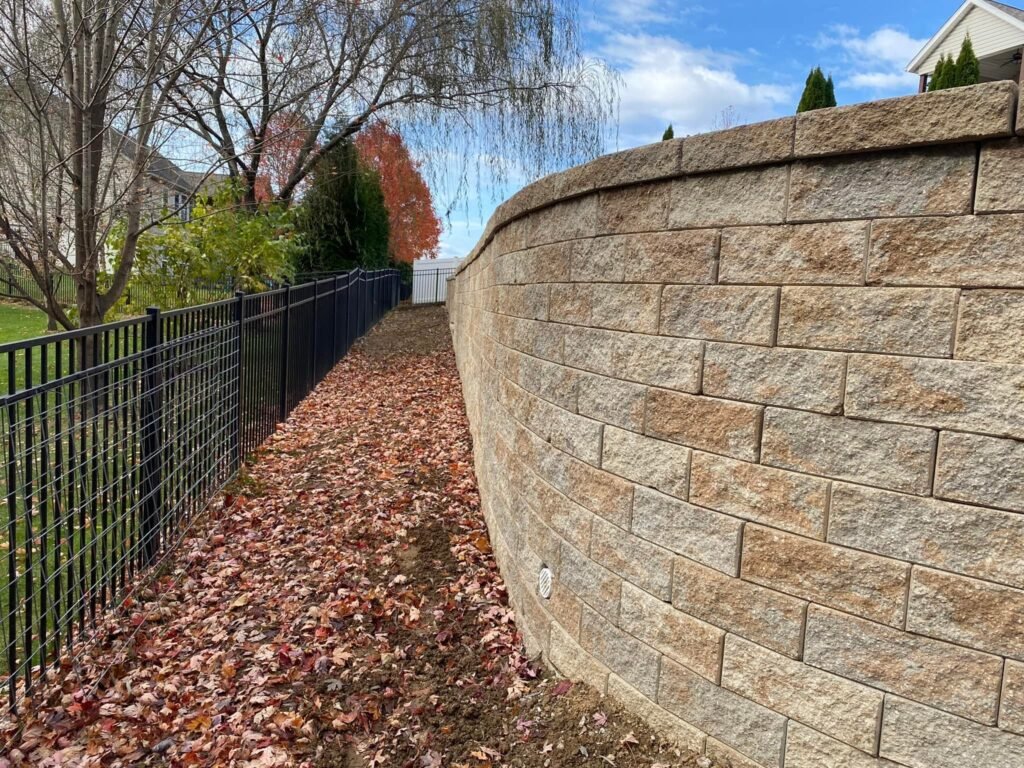
A retaining wall that starts leaning is telling you something specific. It is not wearing out. Something changed in the balance between what is pushing on it and what is holding it back, and until that changes back, resetting the blocks is decorative work.
In Pittsburgh, the cause is water almost every time. Rain soaks the soil behind the wall. If there is no drainage stone, no geotextile, or the drain line is crushed or was never run to daylight, that soil holds the water. Saturated soil weighs far more than dry soil and pushes with several times the force the wall was designed for. Then winter comes, the water freezes, expands, and drives the wall out a little further. Repeat that fifteen or twenty times and a wall that was plumb in 2010 is two inches out today.
So the first thing we do is figure out where the water is going. That determines whether you need a repair, a rebuild, or drainage work and nothing else.
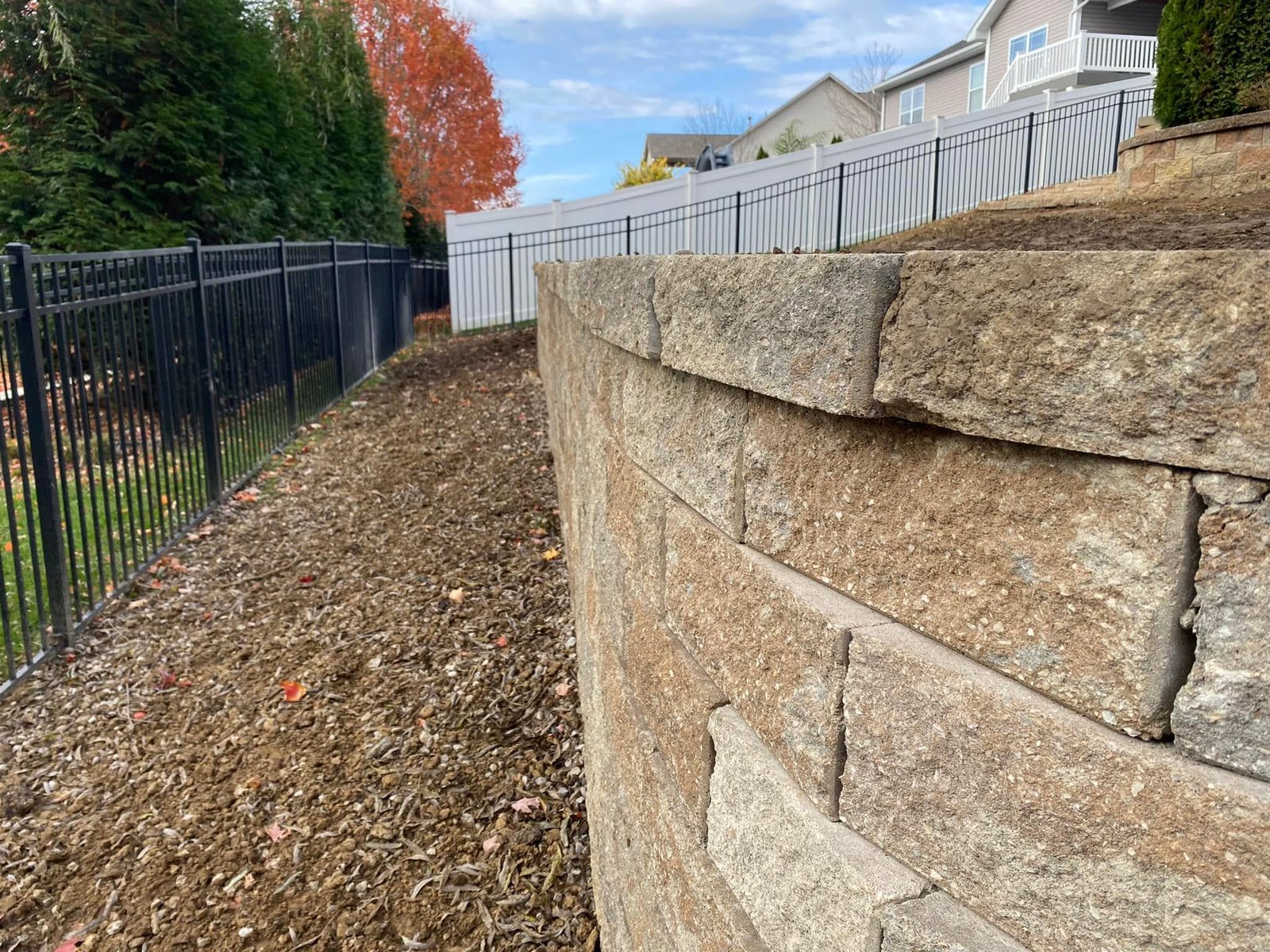
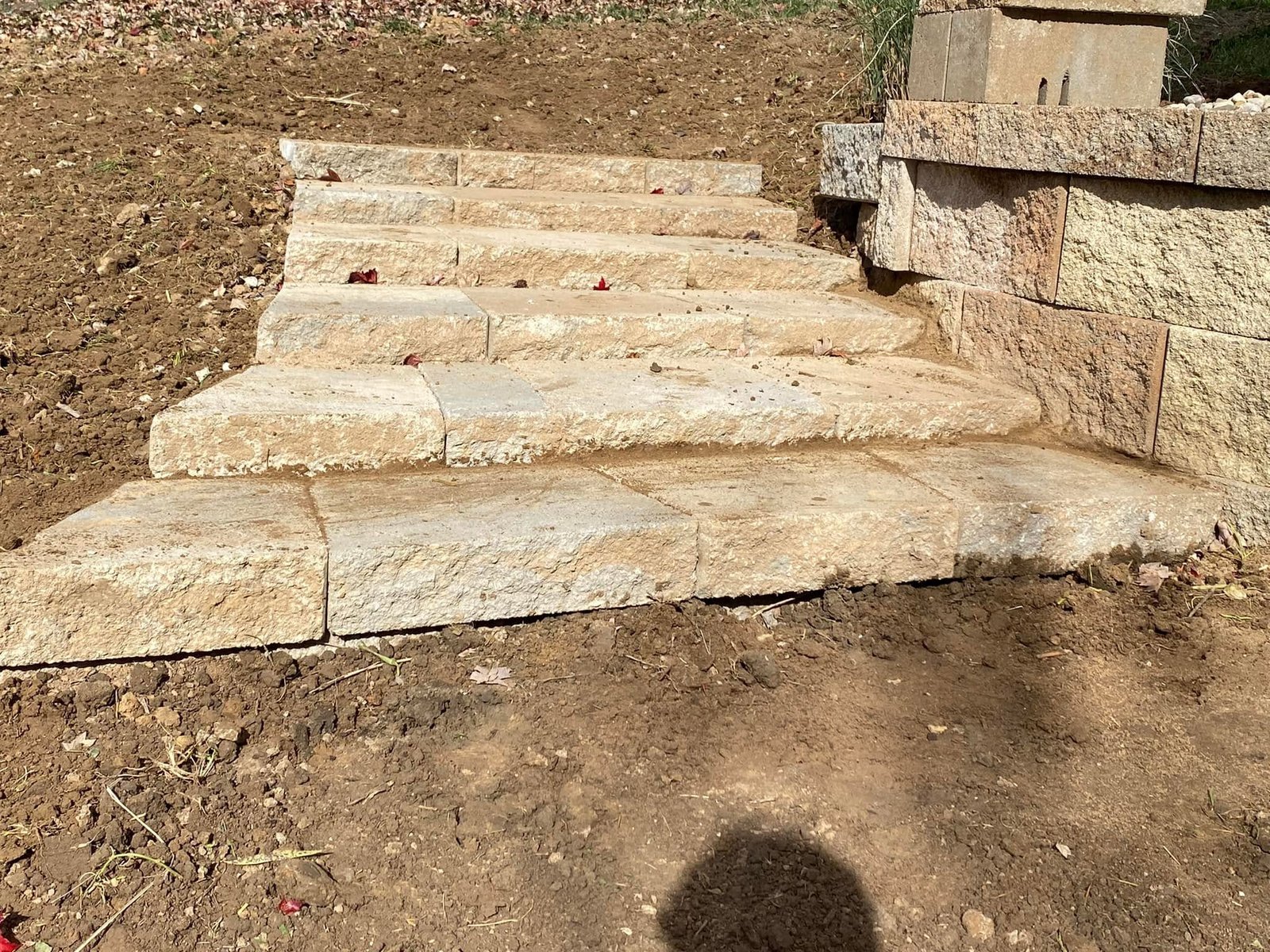
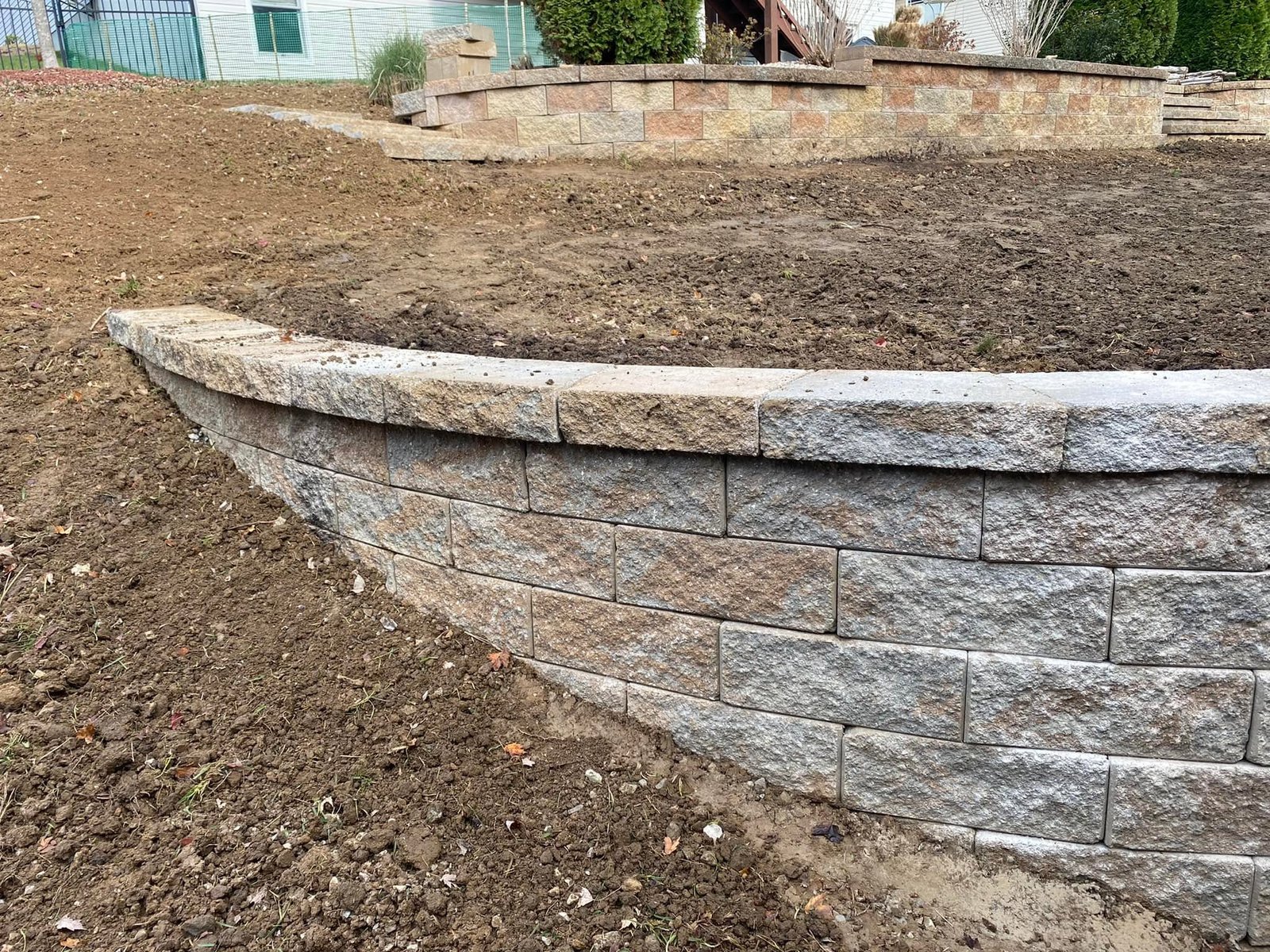
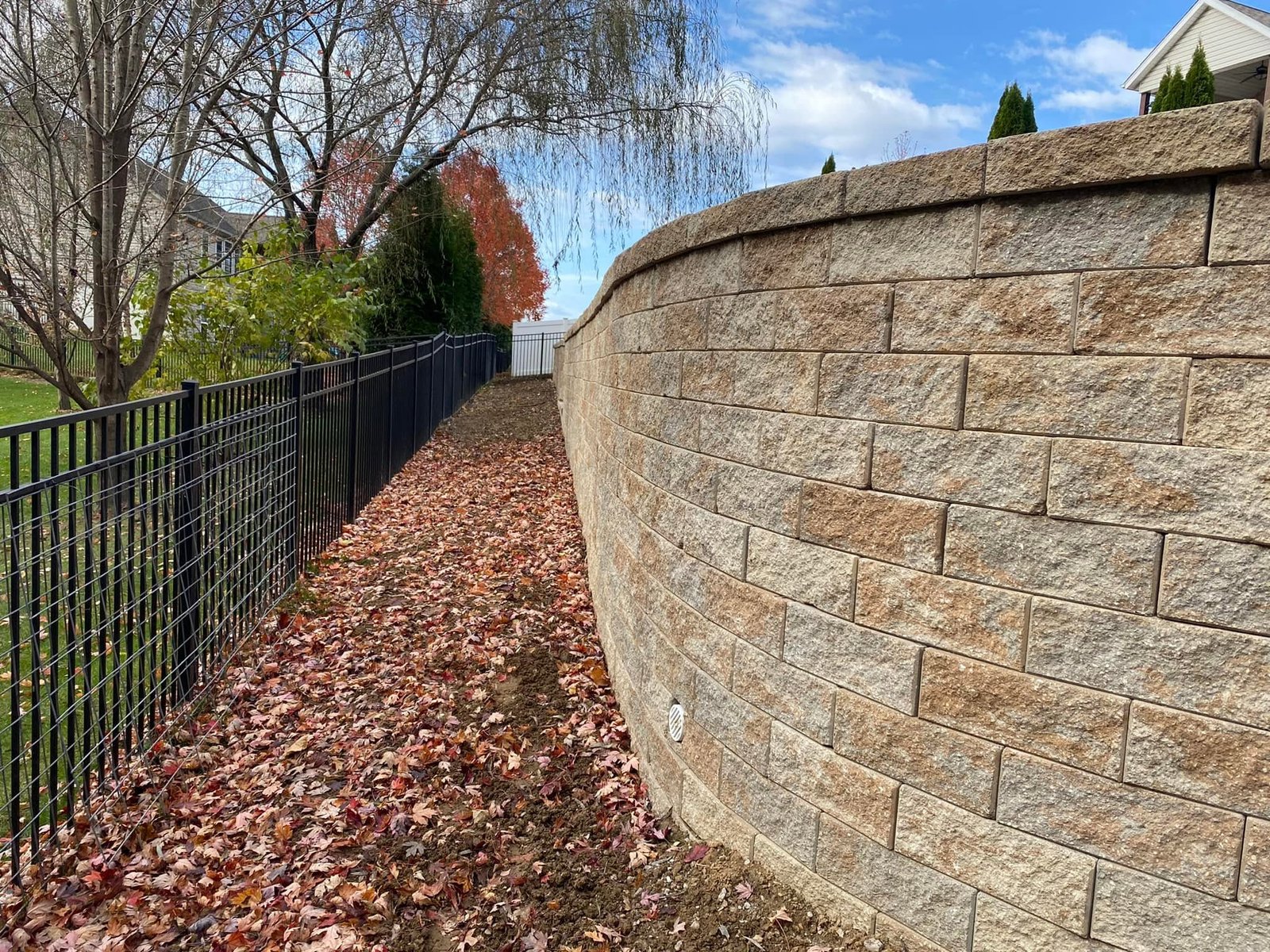
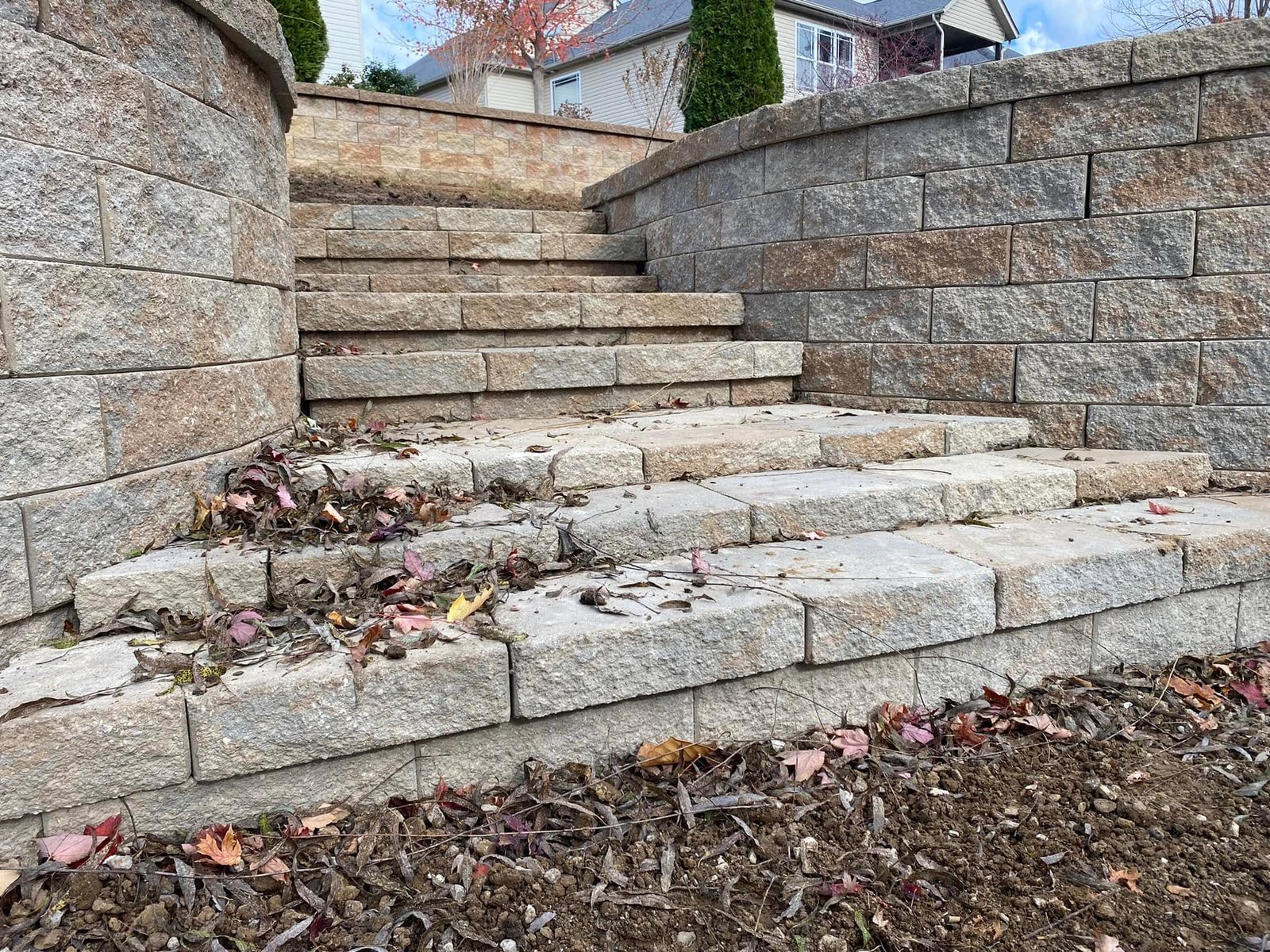
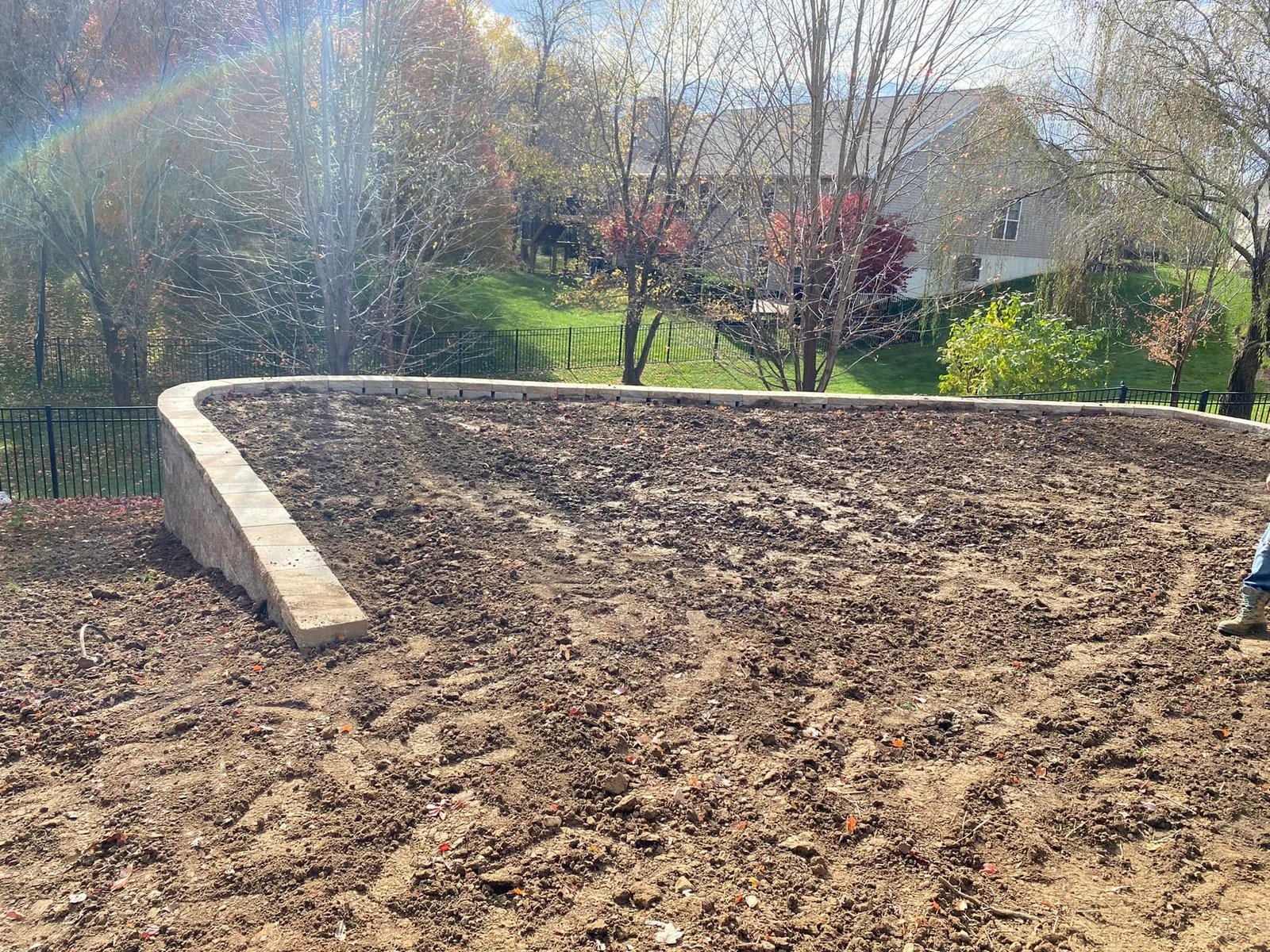
Recent Retaining Wall Projects
Block walls, terraced steps, seat walls and curved garden walls built across the Pittsburgh area.
Signs Your Retaining Wall Needs Repair
Walls give warning long before they come down. If you are seeing any of these, get it looked at now rather than next spring:
- Leaning outward at the top. Hold a level against the face. Any lean away from the slope means the wall is losing the argument with the soil.
- Bulging in the middle. The most reliable sign of trapped water. The wall is holding at the ends and giving way where the pressure is highest.
- Blocks sliding forward or stepping out of line. The courses are no longer locking together.
- Stair-step or vertical cracking. On block and concrete walls this usually means the base has settled unevenly.
- Soil or mulch washing through or over the wall. The backfill is migrating, which means voids are forming behind the face.
- Water seeping through the face or pooling at the base. Water is finding its own way out because the drainage is not doing it.
- Sinking ground or a tilting fence above the wall. The soil the wall supports is moving.
- Soft or crumbling timber at the soil line. Railroad tie and timber walls rot from the bottom, where you cannot see it.
Move Fast on a Moving Wall
A wall that has shifted an inch or two can usually be repaired. Once it is several inches out of plumb, or the base has failed, repair stops being an option and you are paying for a full rebuild. That gap is often a single Pittsburgh winter, which is why we tell people not to wait for spring to get it assessed.
Repairs We Carry Out
- Leaning and bulging wall correction. Dismantle the affected courses, correct the drainage and backfill behind them, and reset the block on a sound base. Where the lean is confined to the upper courses this is far cheaper than a rebuild.
- Partial rebuild. When one section has failed but the rest of the wall is sound, we take down and rebuild only that run, tying the new work into the existing courses so it does not read as a patch.
- Full wall replacement. If the base has gone or the wall is badly out of plumb, replacement is the honest answer. See retaining wall installation.
- Drainage retrofit. Sometimes the wall is fine and the drainage never was. See drainage and wall waterproofing.
- Wall anchors and reinforcement. For taller walls where taking the whole thing down is not practical. See wall anchors and slope stabilization.
- Timber and railroad tie replacement. Rotted timber walls cannot be repaired in any meaningful sense. See timber and railroad tie walls.
Repair or Replace? How We Decide
There is no single rule, but these are the factors that decide it:
- How far it has moved. An inch or two is usually correctable. Six inches usually is not.
- Whether the base is intact. If the bottom course has settled or rotated, everything above it is compromised and repair will not hold.
- How much of the wall is affected. One bad section can be rebuilt. Movement along the whole length points to a base or drainage problem across the entire wall.
- Wall height. Over four feet the stakes and the engineering requirements both go up, and we are more conservative about recommending repair.
- Material condition. Block can usually be reused. Rotted timber cannot. Spalling concrete depends on how deep it goes.
- Whether drainage can be fixed. If there is nowhere for water to go, no repair will last, and that has to be solved first regardless.
Our Repair Process
- Assessment
We measure the lean, check the base, look at the grade above and below, and work out where the water goes. This visit is free.
- Written estimate with the cause named
You get the scope in writing, including what caused the failure and what we are doing about it. If drainage work is needed, it is in the quote, not added later.
- Careful dismantling
Block is taken down and set aside for reuse where it is sound. We only remove as much as the repair actually requires.
- Fix the base and the drainage
Recompact the base, install drainage stone and geotextile, and run a drain line to daylight. This is the part that determines whether the repair lasts.
- Rebuild, backfill and clean up
Reset the courses plumb, backfill in compacted lifts, restore the grade above, and take the debris with us.
What Retaining Wall Repair Costs in Pittsburgh
Repair pricing varies more than new construction, because we are working around what is already there. What moves the number:
- How much has to come down. Resetting three upper courses is a different job from taking the wall to the footing.
- Whether drainage has to be retrofitted. Usually the largest single line item, and usually the one that makes the repair worth doing.
- Access. If a skid steer can reach the wall the job is far cheaper than one where block and stone move by wheelbarrow.
- Whether the existing block is reusable. Sound block goes back in. Cracked or discontinued block has to be matched or replaced.
- Height and engineering. Walls over four feet may need a stamped design even for a rebuild.
- Disposal. Old timber and broken block have to go somewhere.
Repair is almost always cheaper than replacement, but only while repair is still an option. Waiting is the expensive choice.
Areas We Serve Around Pittsburgh
Related Services
- Wall beyond saving? See retaining wall installation.
- Water is the usual cause: drainage and wall waterproofing.
- Ground moving as well as the wall: wall anchors and slope stabilization.
- Rebuilding in block: block and segmental retaining walls.
Frequently Asked Questions
Can a leaning retaining wall be repaired, or does it need replacing?
It depends on how far it has moved and why. A wall that has shifted an inch or two from a drainage problem can often be corrected by fixing the drainage and resetting the affected courses. A wall that is significantly out of plumb, or whose base has failed, generally needs rebuilding. We assess before quoting.
Why is my retaining wall bulging in the middle?
Bulging almost always means water pressure behind the wall. When drainage stone or the drain line is missing or clogged, saturated soil pushes outward with far more force than the wall was designed to hold. Fixing the face without fixing the drainage will not solve it.
How much does retaining wall repair cost?
It depends on how much of the wall has to come down, whether drainage has to be retrofitted, and whether machinery can reach the site. Repair is almost always cheaper than full replacement, but only while repair is still viable. We give a written figure after seeing the wall.
Is a cracked retaining wall dangerous?
It can be. A cracked wall holding a driveway, a patio or a slope near a house is carrying real load, and failure can be sudden once movement accelerates. Stair-step cracking and forward lean together are the combination to worry about. Keep people away from the low side and get it assessed.
Can you repair a railroad tie or timber retaining wall?
Rarely in a way that lasts. Timber walls fail by rotting at the soil line, and by the time it is visible the buried portion is usually gone. Replacing individual ties on a rotted wall buys a season or two. We normally recommend replacement, typically in segmental block.
Do I need a permit to repair a retaining wall in Allegheny County?
Like for like repairs on walls under four feet usually do not require one. Rebuilding a wall over four feet generally does, along with engineered drawings stamped by a licensed engineer. Municipalities set their own thresholds, so we confirm with your borough or township before starting.
Can retaining walls be repaired in winter?
Assessment yes, most repair work no. Once the ground freezes, excavation and base compaction cannot be done properly. If your wall is moving in December, call anyway so we can assess it, advise on anything urgent, and get you scheduled ahead of the spring rush.
Get a Free Retaining Wall Repair Quote in Pittsburgh
Free on-site assessment anywhere in the Pittsburgh area. We will look at the site, tell you what is actually needed, and put the figure in writing.
Call (412) 484-3358