Retaining Wall Installation in Pittsburgh, PA
Retaining wall installation Pittsburgh homeowners can rely on, built across Allegheny County. Block, poured concrete, natural stone and timber, on a compacted base with drainage designed in from the first course. Free on-site estimates and written quotes.
- Retaining Wall Repair
- Residential & Commercial
- Drainange and Water Proofing
- 200+ Five-Star Reviews
What Goes Into a Retaining Wall That Lasts
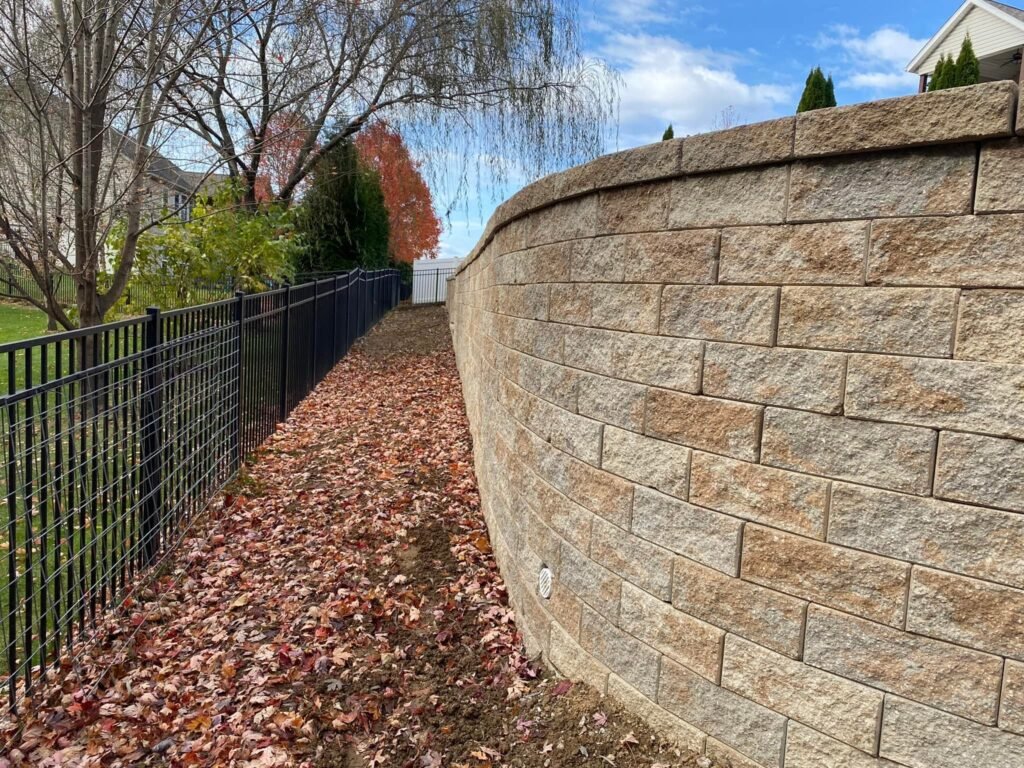
Most of what determines whether a retaining wall is still straight in twenty years happens before the first visible block goes down. The base, the drainage and the backfill do the work. The face is just what you see.
A wall installed properly in Pittsburgh starts with excavation below grade, a compacted gravel base that is level across its whole run, and a buried first course. Behind the wall goes clean drainage stone, geotextile fabric to stop soil migrating into it, and a perforated drain line that runs to a point where water can actually get out. Backfill goes in compacted lifts, not dumped in one go.
Skip the drainage and the wall becomes a dam. Every rain loads it, every freeze pushes it further out, and somewhere around year five it starts leaning. That is why we quote drainage as part of the wall rather than as an upgrade.
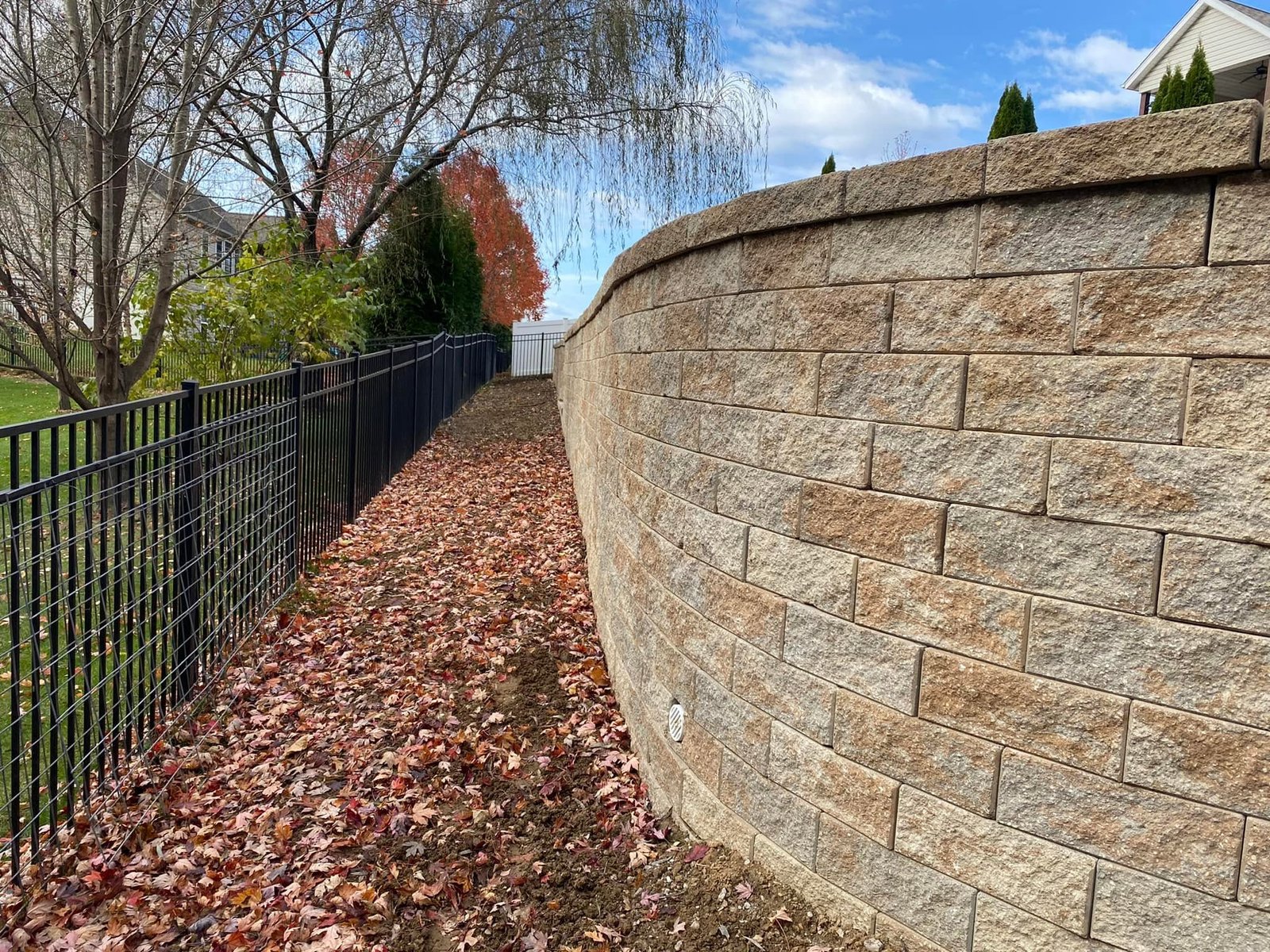
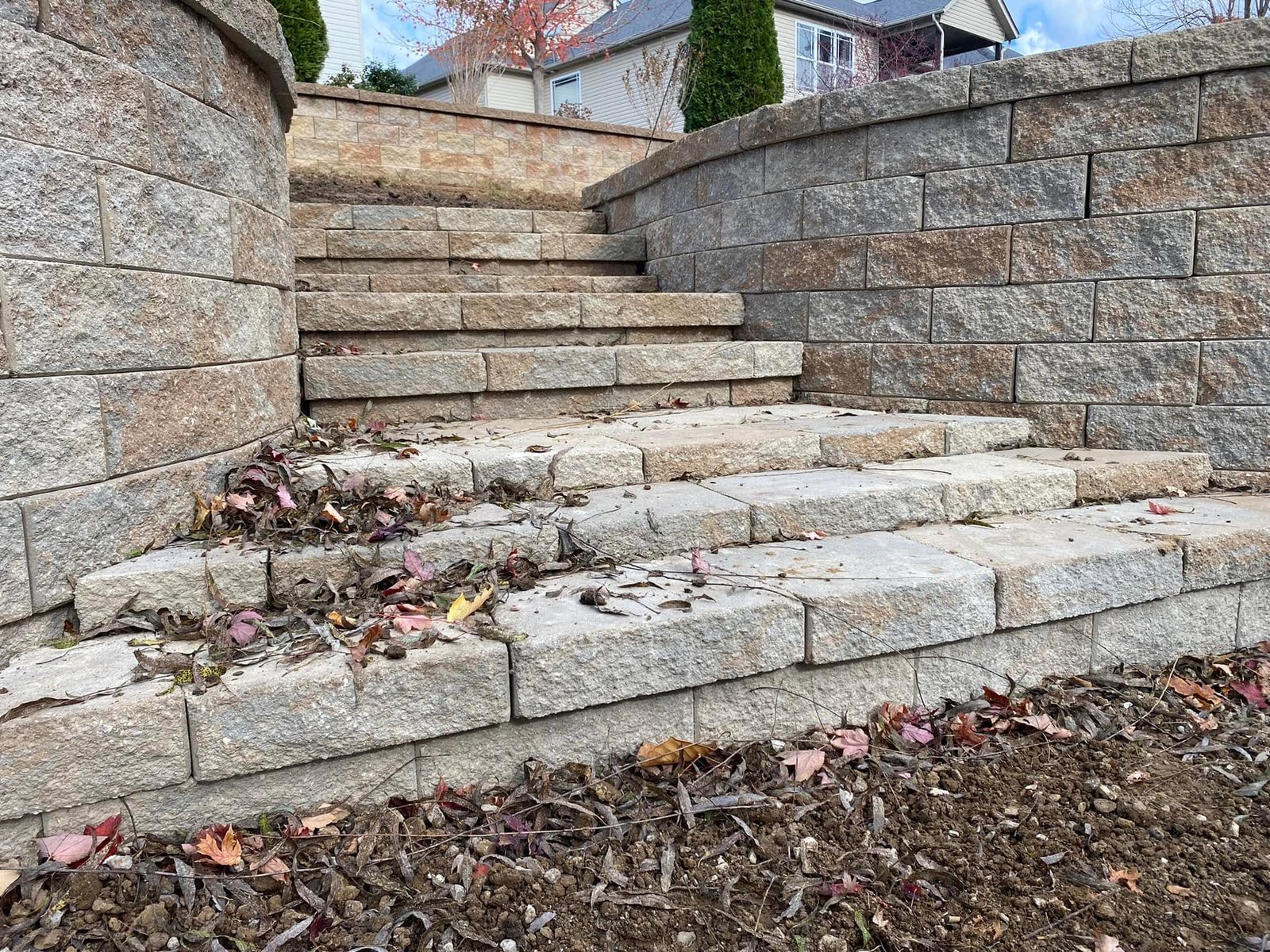
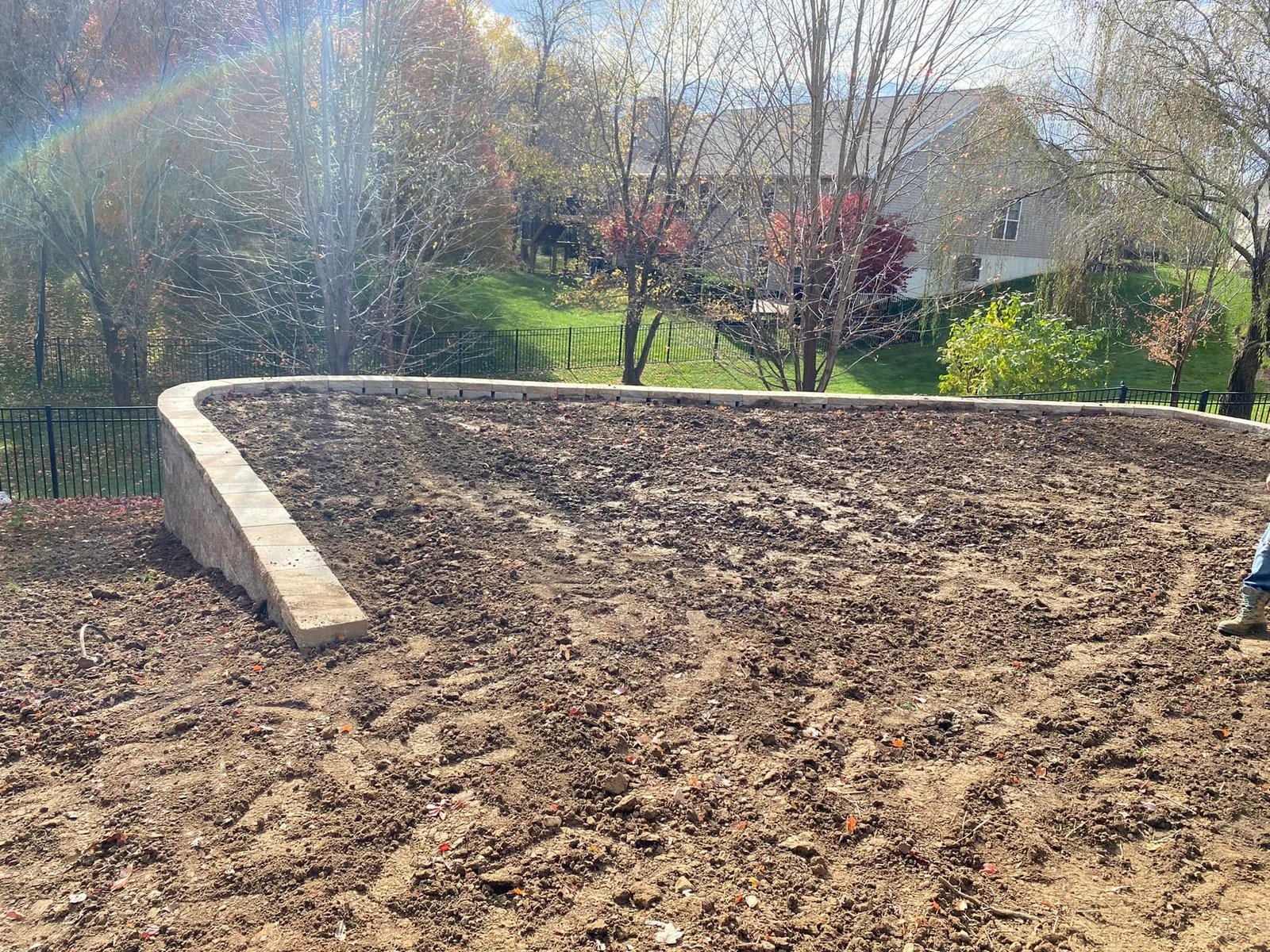
Recent Retaining Wall Projects
Block walls, terraced steps, seat walls and curved garden walls built across the Pittsburgh area.
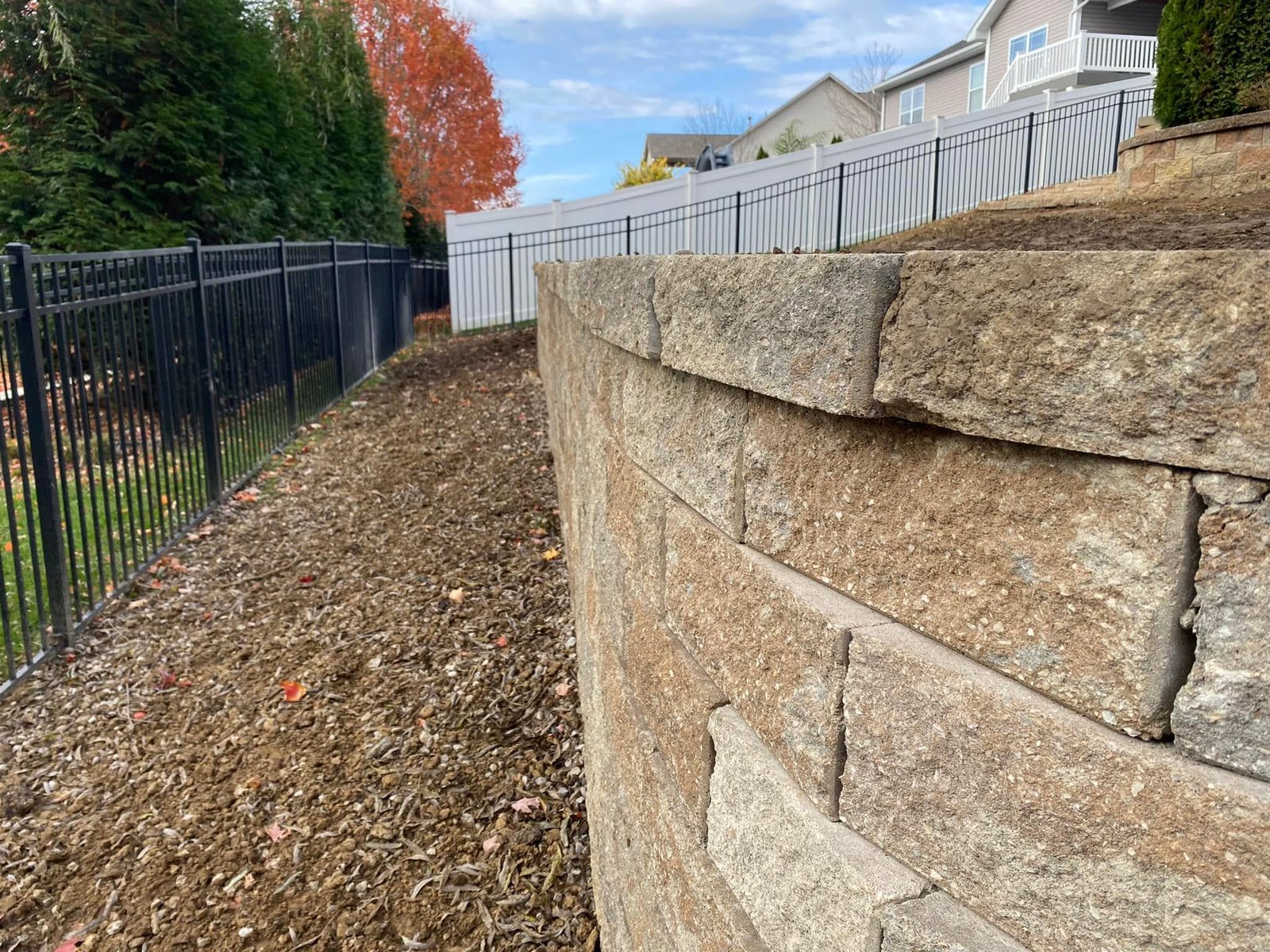
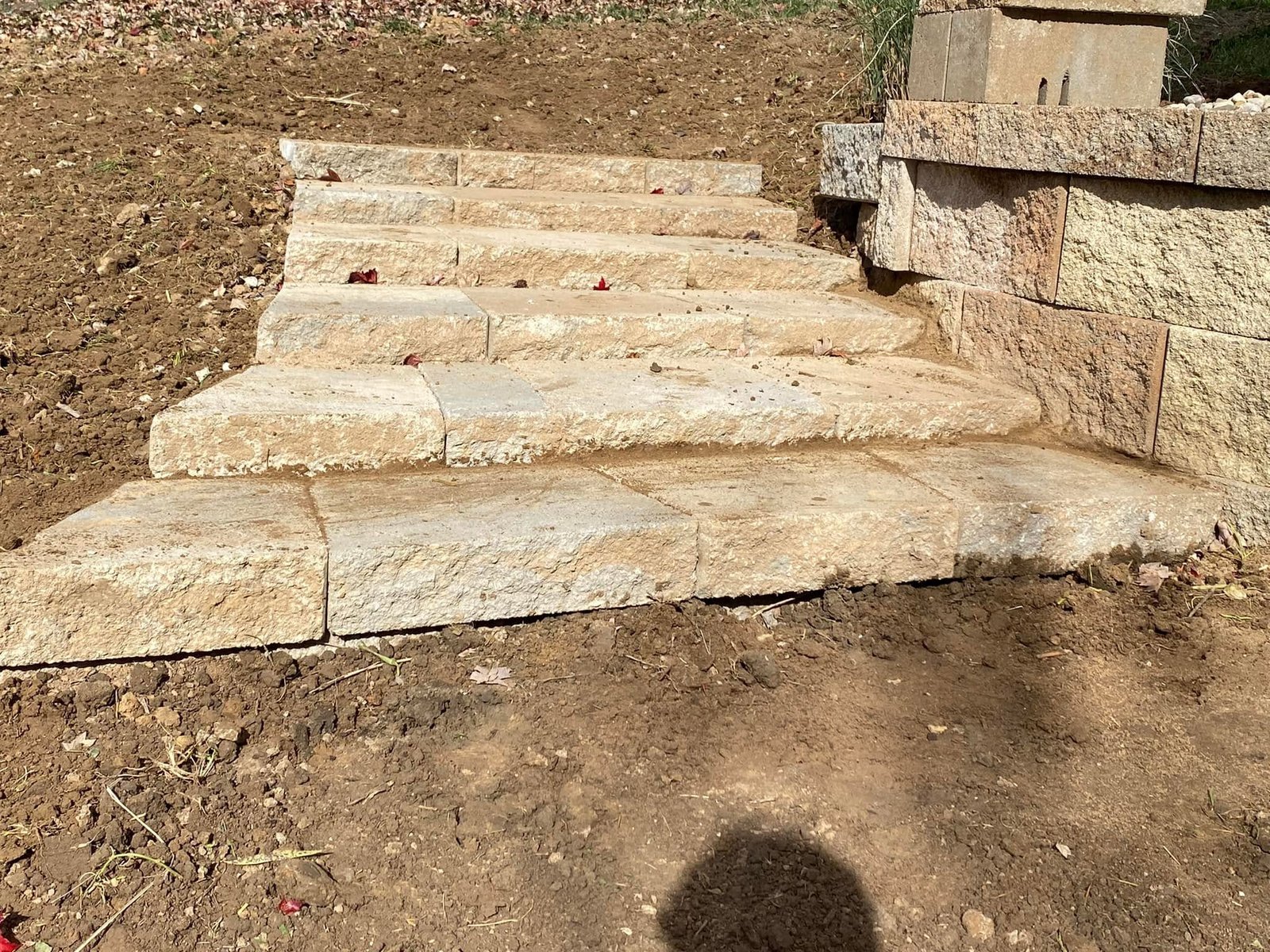
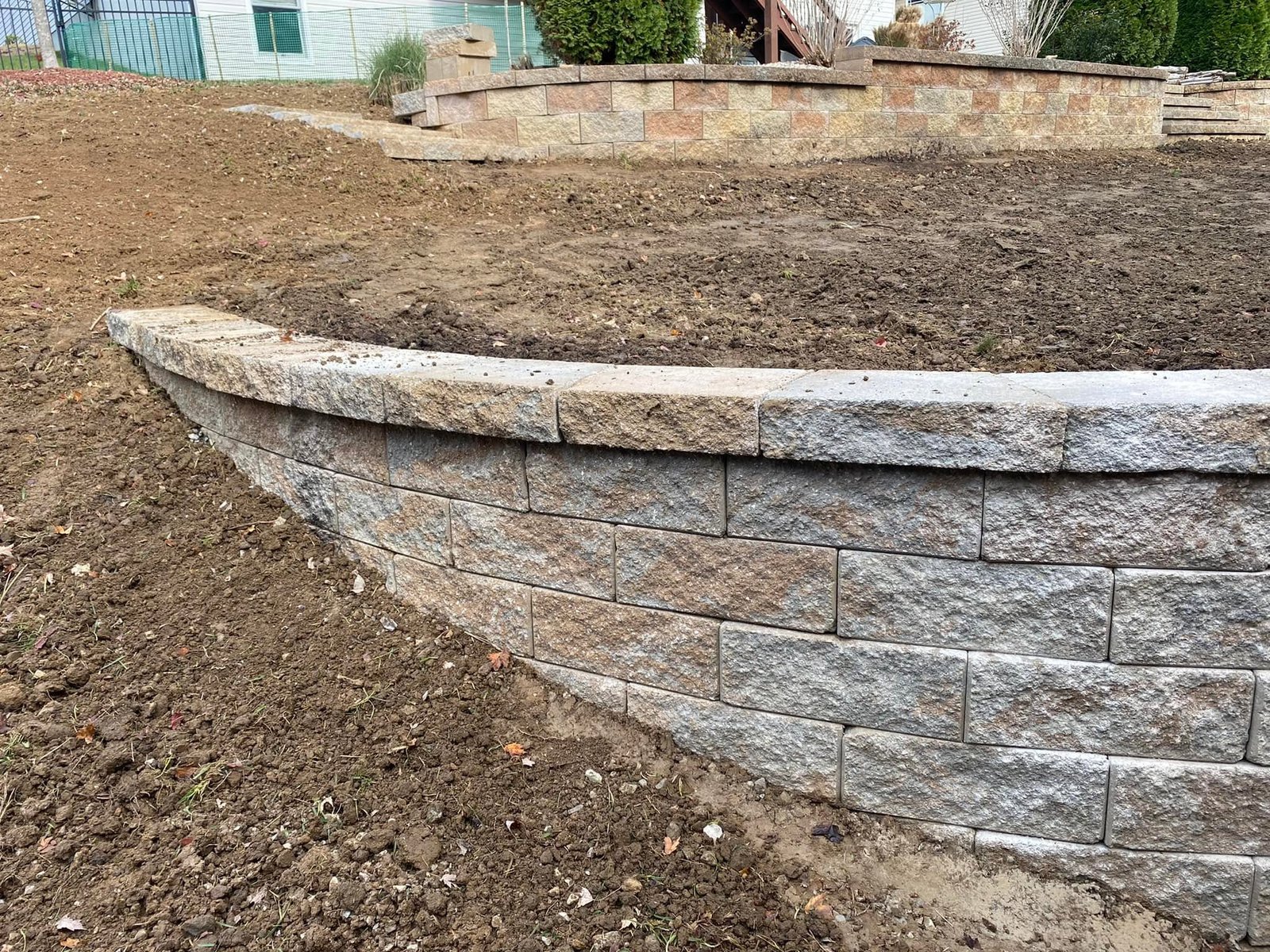
Retaining Wall Installation Services We Provide
- Terracing and slope cuts. Turning an unusable bank into level, planted or lawn space.
- Driveway and parking walls. Holding a cut where vehicles load the ground above or below.
- Patio and seating walls. Level areas carved out of a slope, often with integrated steps and seat walls.
- Garden and planter walls. Lower walls that shape beds and define space rather than hold major load.
- Multi-tier wall systems. Two or more walls stepped up a slope, engineered so each one is not loading the next.
- Steps and access. Block or stone steps built into the wall run so the terrace is actually usable.
Which Wall Material Is Right for Your Property
There is no single best material. What suits your property depends on height, load, access and how you want it to look.
- Segmental block is the default for most Pittsburgh residential walls. Good height range, engineered systems available, wide colour choice. See block and segmental retaining walls.
- Poured concrete suits taller and more structural applications, or tight sites where a block footprint will not fit. See concrete retaining walls.
- Natural stone and boulder where the wall is part of the landscape design. Highest cost, longest life, most character. See natural stone and boulder walls.
- Timber is the cheapest up front and the shortest lived here. We build them, but we tell people plainly what the lifespan is. See timber and railroad tie walls.
Our Installation Process
- Site visit and measure
We look at the slope, the soil, the drainage and the access, and work out what the wall actually has to hold. This visit is free.
- Design and written quote
Wall type, height, materials, drainage detail and steps, all in writing before anything starts.
- Permits and engineering
Walls over four feet in Pennsylvania generally need a permit and stamped drawings. We confirm requirements with your municipality first.
- Excavation and base
Dig out, compact the base, and set the first course buried and level. This is the step everything else depends on.
- Build and drain
Course by course, with drainage stone, geotextile and a drain line to daylight, plus geogrid reinforcement where the height requires it.
- Backfill, grade and clean up
Compacted backfill in lifts, restored grade above the wall, and the site left clean.
What Affects Retaining Wall Installation Cost
We give you the figure in writing after seeing the site, with drainage included rather than added later as a change order.
- Height. Past four feet the wall needs engineering and reinforcement, and cost per square foot climbs sharply.
- Length and total face area. Priced by the square foot of wall face, not the linear foot.
- Material. Timber lowest, segmental block mid, poured concrete and natural stone highest.
- Access. A yard a skid steer can reach costs a fraction of one where everything moves by wheelbarrow.
- Drainage and grading. If water has nowhere to go, solving that comes first.
- Removal. Taking out an existing failed wall adds labour and disposal before the new one starts.
Areas We Serve Around Pittsburgh
Related Services
- Wall already built and moving? See retaining wall repair.
- Water is the usual culprit. See drainage and wall waterproofing.
- Building on unstable ground? See wall anchors and slope stabilization.
Frequently Asked Questions
How long does it take to install a retaining wall?
A straightforward residential wall of thirty to fifty feet usually takes three to five working days. Taller walls, difficult access, multi-tier systems and drainage retrofits add time. Weather matters too, since base compaction cannot be done properly in saturated ground.
Do I need a permit to build a retaining wall in Allegheny County?
In Pennsylvania, walls over four feet in height generally require a permit and engineered drawings stamped by a licensed engineer. Municipalities set their own thresholds and some are stricter. We confirm with your borough or township before work starts.
What is the best time of year to install a retaining wall in Pittsburgh?
March through late November. Once the ground freezes, excavation and base compaction cannot be done to standard. Spring books up quickly, so scheduling over winter for an early spring start is usually the smart move.
How close to my property line can a retaining wall be built?
That is set by your municipality, and setbacks vary. Walls near a boundary may also need your neighbour’s awareness if excavation or drainage affects their ground. We check local requirements as part of the quote.
How deep does a retaining wall foundation need to be?
As a general rule the base trench is dug so that roughly one tenth of the wall height sits below finished grade, on top of a compacted gravel base. Taller walls and poor soils need more. The buried first course is what stops the wall sliding forward.
Can you build a retaining wall on a steep slope?
Yes, and it is most of what we do here. Steep sites often call for a tiered system rather than one tall wall, with geogrid reinforcement into the slope. Very steep or previously slipped ground may need engineered stabilization first.
Get a Free Retaining Wall Installation Quote in Pittsburgh
Free on-site assessment anywhere in the Pittsburgh area. We will look at the site, tell you what is actually needed, and put the figure in writing.
Call (412) 484-3358