Block & Segmental Retaining Walls in Pittsburgh, PA
Block retaining walls Pittsburgh property owners actually get value from, built with Versa-Lok, Allan Block, Keystone and Techo-Bloc systems. The most common retaining wall in Pittsburgh, and the one most often built wrong.
- Retaining Wall Repair
- Residential & Commercial
- Drainange and Water Proofing
- 200+ Five-Star Reviews
Why Segmental Block Is the Default Wall in Pittsburgh
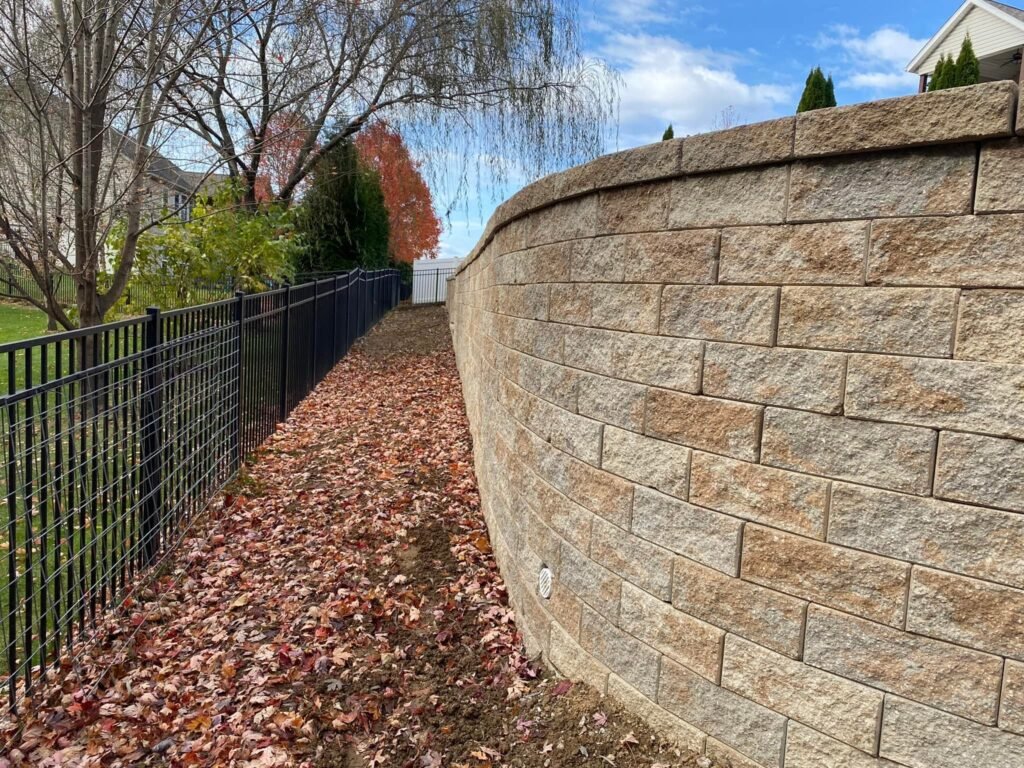
Segmental block has taken over residential retaining wall work for good reasons. The units are engineered to lock together, they flex slightly rather than cracking as the ground moves, they come in heights and finishes that suit most properties, and a properly built block wall will outlast a timber wall two or three times over in this climate.
The catch is that segmental block is easy to build badly. The blocks stack so readily that a crew with no wall experience can put up something that looks correct on day one. What is missing is underneath and behind, where nobody can see it, and that is what fails in year five.
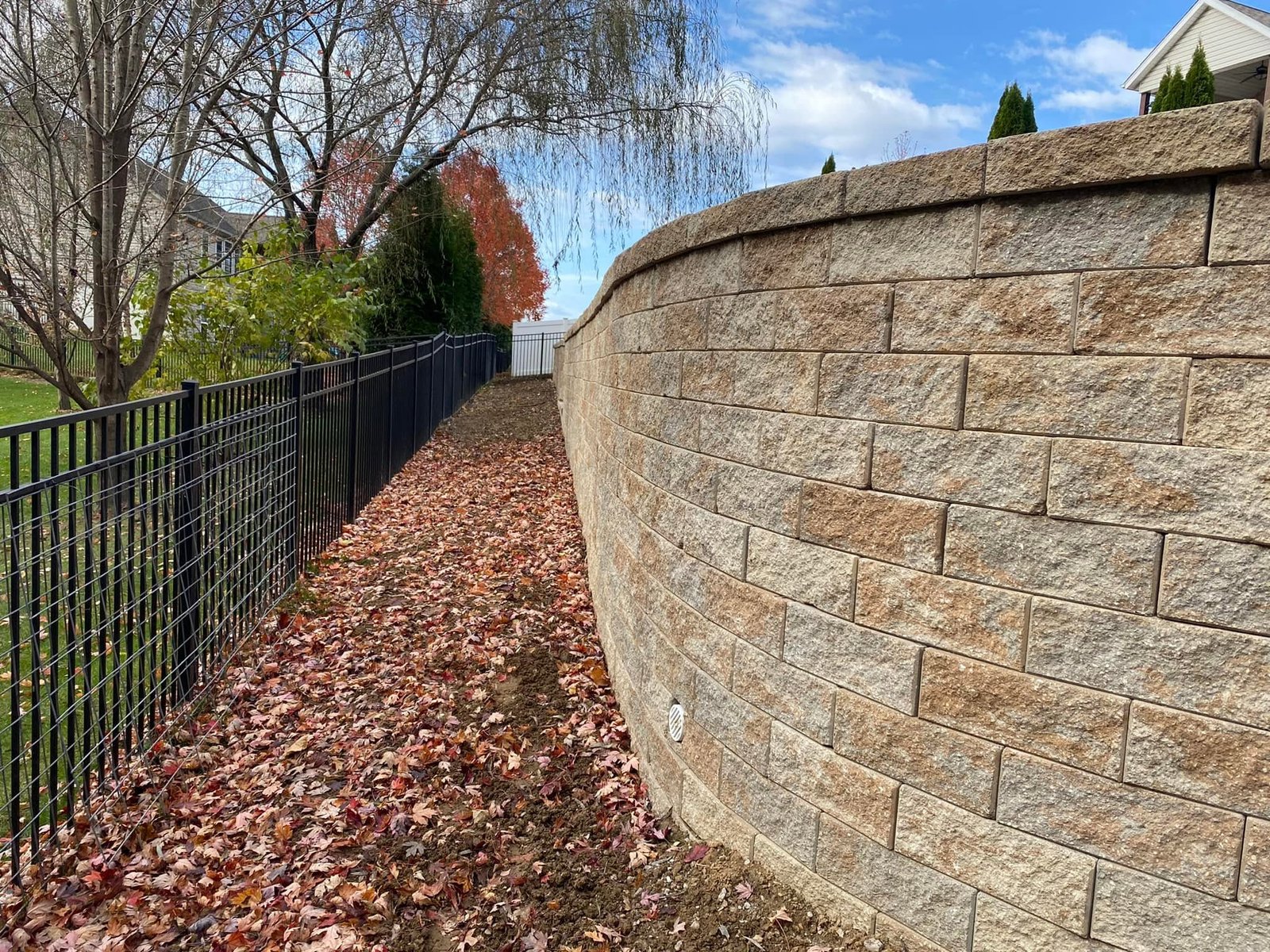
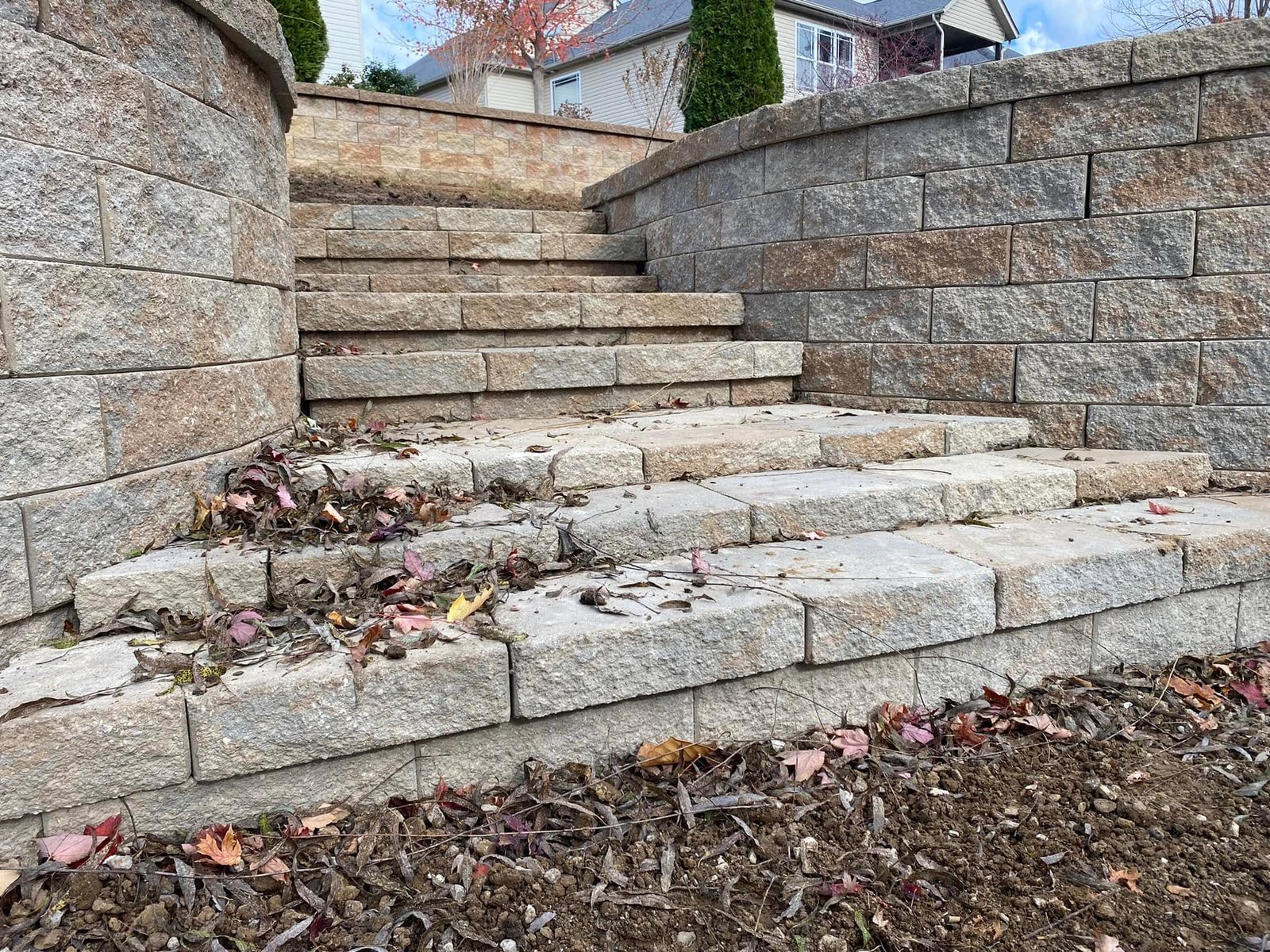
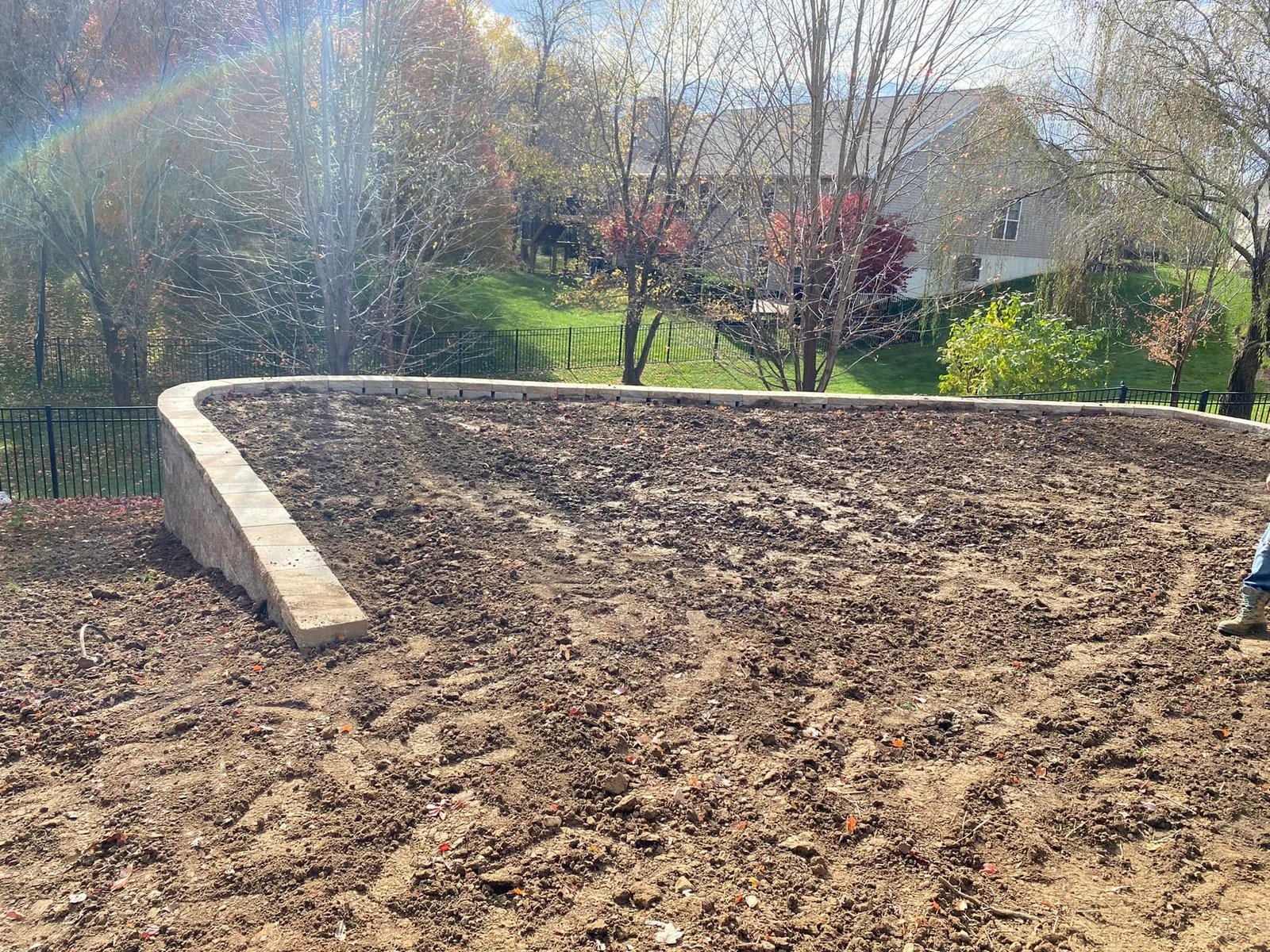
Recent Retaining Wall Projects
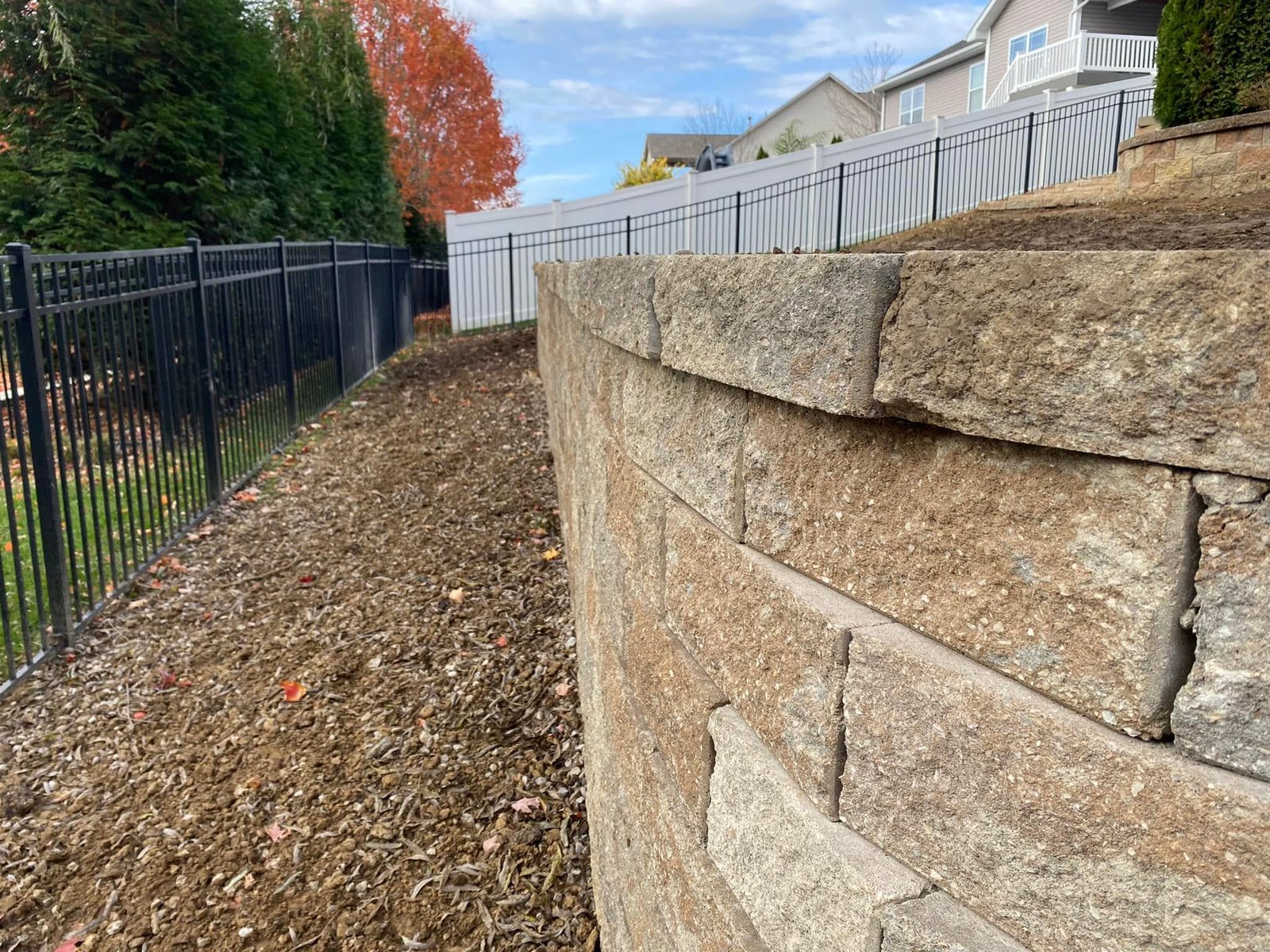
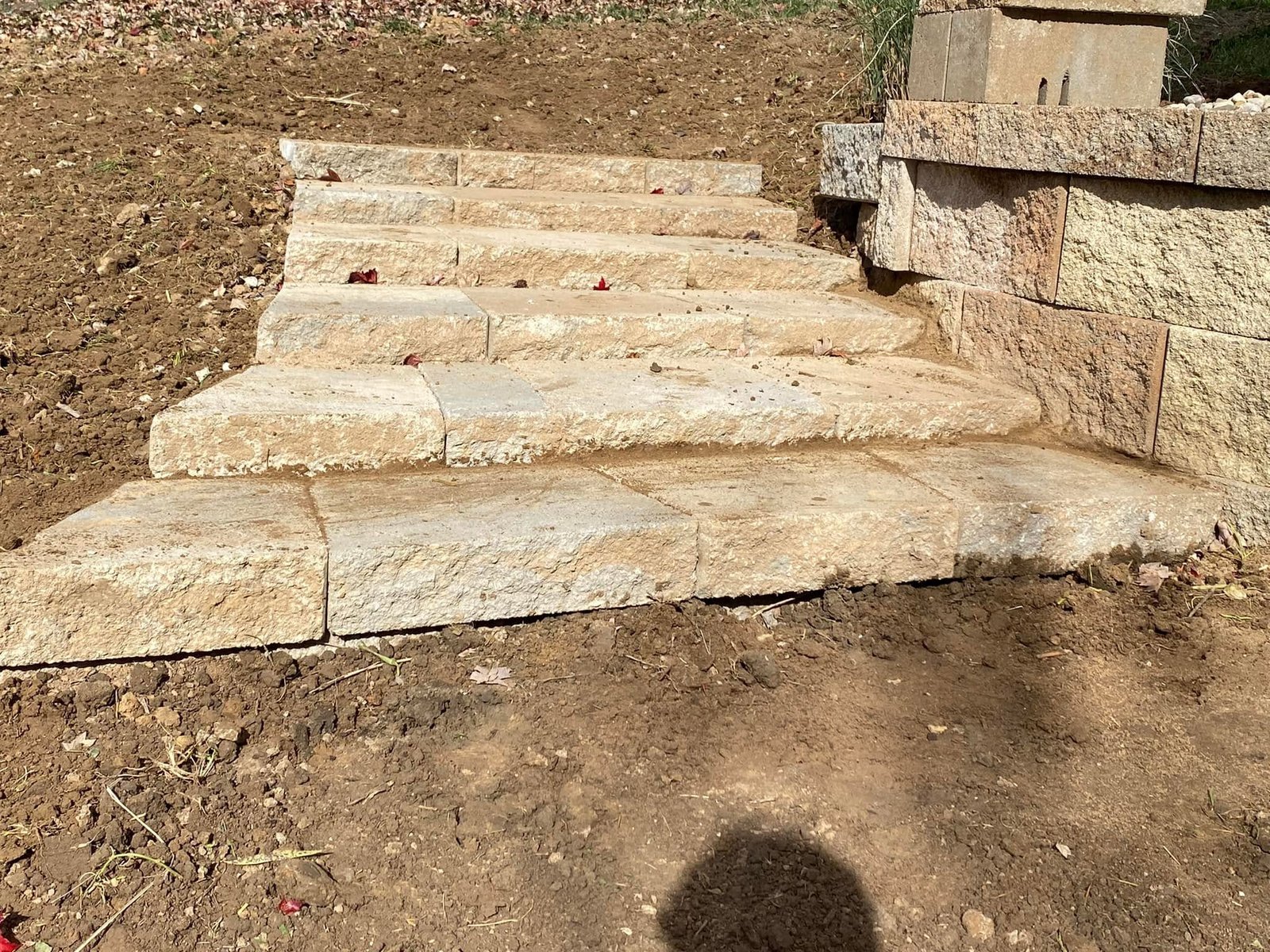
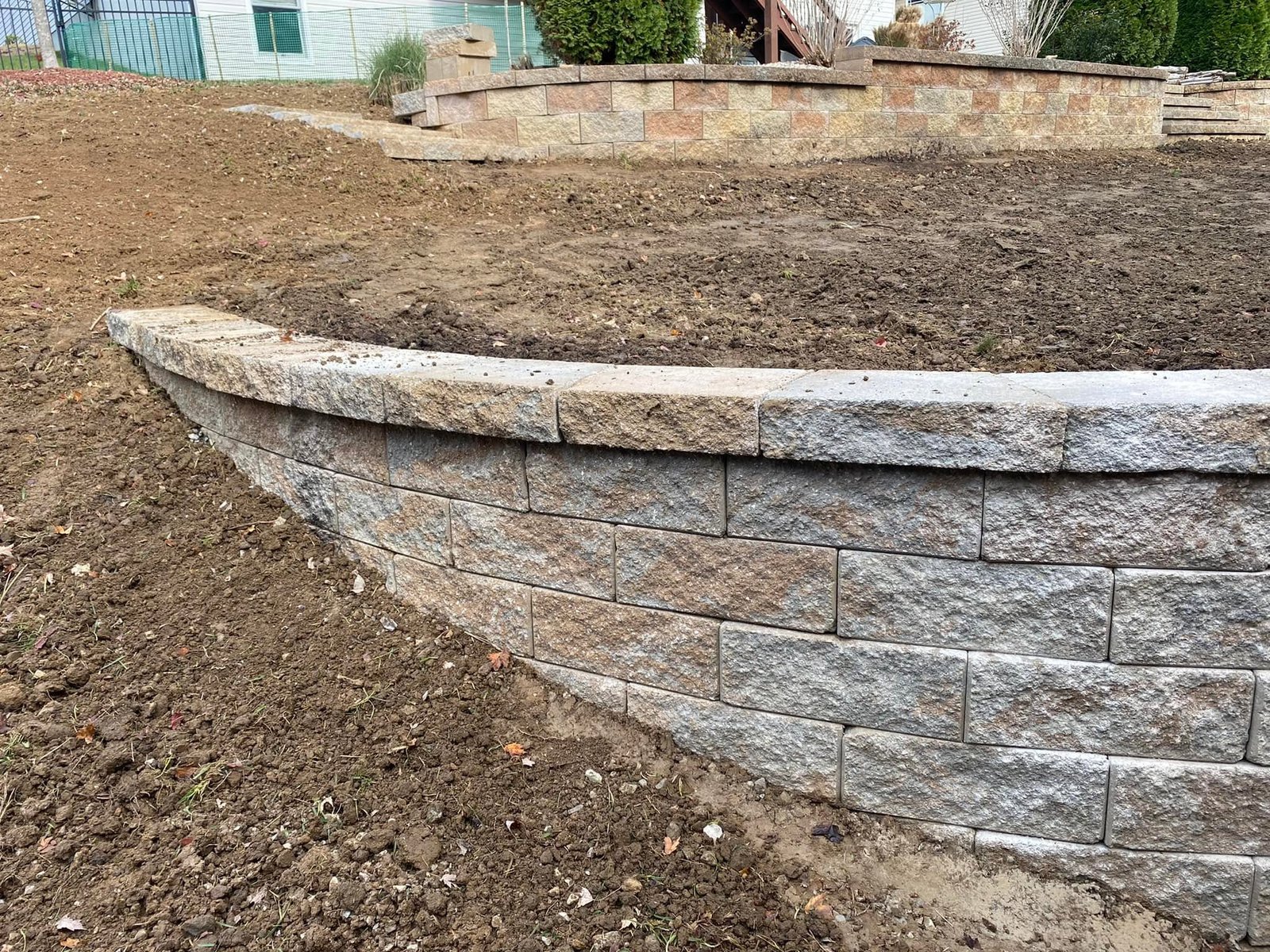
Block walls, terraced steps, seat walls and curved garden walls built across the Pittsburgh area.
Block Systems We Build With
We are not tied to one manufacturer. The right system depends on wall height, whether reinforcement is needed, what is available locally, and how you want it to look.
- Versa-Lok. Solid units, pinless setback, strong choice for curves, steps and taller engineered walls. Widely available across Western PA.
- Allan Block. Hollow core filled with aggregate, good drainage characteristics built into the unit, well suited to geogrid reinforcement.
- Keystone. Pin-connected system with consistent setback, common on both residential and light commercial walls.
- Techo-Bloc. Wider range of finishes and colours, popular where the wall is a visible part of the landscape rather than purely functional.
- Belgard and Unilock. Both offer wall systems that coordinate with matching paver ranges, useful when the wall ties into a patio.
What Separates a Block Wall That Lasts from One That Does Not
- A compacted gravel base, level along its full length. An unlevel base means every course above it is out, and the error compounds with height.
- A buried first course. Roughly one tenth of wall height below finished grade. This is what resists the wall sliding forward.
- Clean drainage stone behind the blocks, not backfilled soil. Twelve inches minimum.
- Geotextile fabric separating the drainage stone from the soil, so fines do not migrate in and clog it.
- A perforated drain line that exits to daylight. A drain pipe that goes nowhere is decoration.
- Geogrid reinforcement on taller walls, laid into the backfill at set intervals so the wall and the soil behave as one mass.
- Compacted backfill in lifts, not one dump and a tamp on top.
- Capping units adhered properly so the top course does not walk off over time.
Block Wall Heights and When Engineering Is Needed
Under four feet, a well-built segmental block wall on a good base is generally straightforward. Above four feet, Pennsylvania requirements typically call for a permit and drawings stamped by a licensed engineer, and the wall will usually need geogrid reinforcement tied back into the slope.
There is a common shortcut of building two shorter walls instead of one tall one to dodge the engineering threshold. That only works if the tiers are far enough apart that the upper wall is not loading the lower one. Built too close together, a two-tier system behaves like a single tall wall with no reinforcement, which is worse than what it replaced. We space tiers properly or we get the taller wall engineered.
Block Wall Repair
Segmental block is one of the more repairable wall types. Because the units are not mortared, a wall that has moved can often be taken down through the affected courses, the drainage corrected, and the same block reset. Where the base has failed or the wall is badly out of plumb, rebuilding is the honest answer. See retaining wall repair for how we assess it.
One thing to know: block ranges get discontinued. If your wall is fifteen years old and needs partial rebuilding, matching the existing units exactly may not be possible. We will tell you before starting rather than after.
Areas We Serve Around Pittsburgh
Related Services
- New wall from scratch? See retaining wall installation.
- Taller or structural walls may call for concrete retaining walls.
- Drainage behind the block is what determines lifespan. See drainage and wall waterproofing.
Frequently Asked Questions
How long do block retaining walls last?
A segmental block wall built on a compacted base with working drainage should last thirty to fifty years in the Pittsburgh climate. The block itself outlasts that. What ends a block wall’s life is almost always drainage failure or base settlement, not the units wearing out.
How tall can a segmental block wall be built?
Unreinforced, generally around three to four feet depending on the system and the soil. Beyond that the wall needs geogrid reinforcement tied into the backfill, and in Pennsylvania walls over four feet typically require a permit and engineered drawings.
What is the difference between Versa-Lok and Allan Block?
Versa-Lok units are solid with a pinless setback system, which makes curves and steps easier to build. Allan Block units are hollow and filled with aggregate on site, which adds drainage capacity within the wall itself. Both are sound engineered systems and both suit Pittsburgh conditions.
Do block retaining walls need drainage?
Yes, always. Segmental block is not waterproof but it is not free draining either, and soil behind an undrained wall becomes saturated and pushes with several times the force the wall was designed for. Drainage stone, geotextile and a drain line to daylight are not optional extras.
Can I build a block retaining wall myself?
Under about two feet, on flat ground, holding a garden bed, plenty of people do. Above that you are dealing with real structural load, and the parts that matter most are the parts that are easiest to skip. The failures we get called to repair are usually walls where the base and drainage were done by eye.
Why is my block wall bulging in the middle?
Water pressure behind it. The wall is holding at the ends and giving way where load is highest. This means drainage stone or the drain line is missing, crushed or clogged. Resetting the face without fixing the drainage will not solve it.
Get a Free Block & Segmental Retaining Walls Quote in Pittsburgh
Free on-site assessment anywhere in the Pittsburgh area. We will look at the site, tell you what is actually needed, and put the figure in writing.
Call (412) 484-3358